Retractable Roof Pergola

How Retractable Roof Pergolas Change Outdoor Living

Retractable roof pergolas enhance your outdoor living because you can use the space comfortably and efficiently throughout the year.

In fact, Buyers touring homes in Naperville and Hinsdale actively ask about these weather-responsive features during showings. 48% of experts reveal that the combination of a porch and patio is what most people desire in a home. And retractable roof pergolas make that patio space usable far beyond the usual three perfect weather months.

In this article, you’ll see the reason homeowners with retractable pergolas use their outdoor spaces more often than those with fixed structures. You’ll also learn how the adjustable louver mechanism functions, the size configuration that works for your patio dimensions, and how these systems compare to shade sails.

Let’s find out all the ways retractable pergolas can upgrade your outdoor space.

What Makes Retractable Roof Pergolas Different?

Retractable roof pergolas use adjustable aluminum louvers instead of fixed crossbeams, which gives you full control over sun and rain. On the contrary, traditional systems force you to accept whatever weather conditions exist.

Here’s what makes these pergola designs work so well.

The Adjustable Louver System Explained
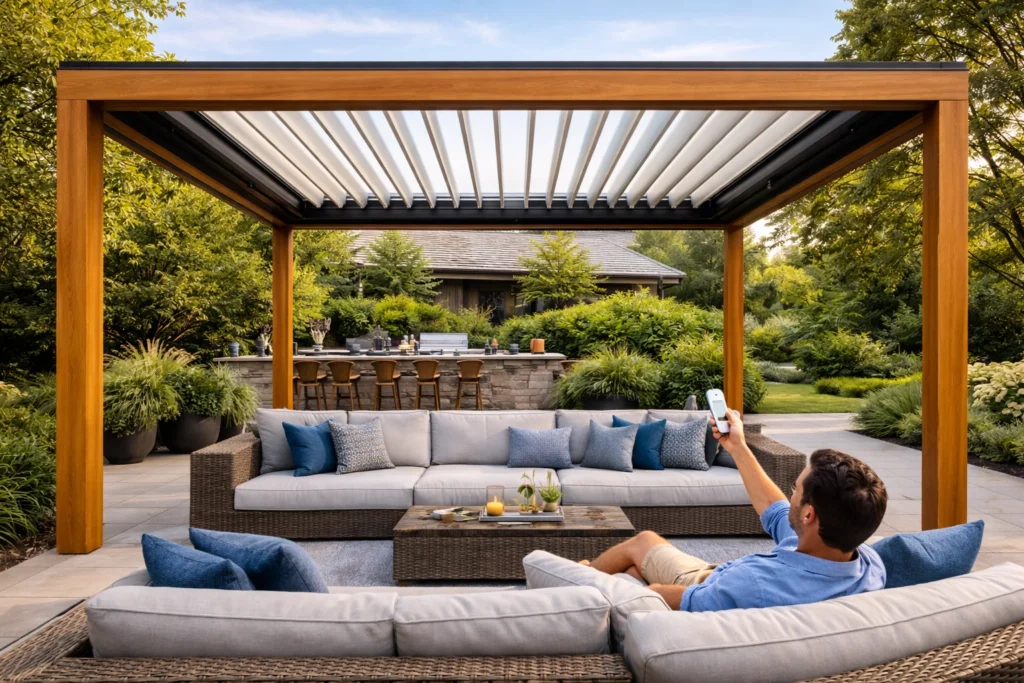
The Adjustable Louver System Explained

Adjustable louvers can rotate from fully open to completely closed, letting you control sunlight angles throughout the day. Usually, each louver panel spans around 24 inches wide and operates smoothly using motorized controls or manual cranks if you prefer hands-on adjustments.

Along with that, you get a motor system that adjusts all louvers simultaneously with a single button press or through smartphone apps. When closed, louvers create a waterproof seal that keeps rain off your outdoor furniture, and when opened, they allow full sun and air circulation through the canopy.

Aluminum vs. Traditional Wood Construction

Aluminum forms a protective layer on its own, resisting corrosion from rain and humidity without needing annual sealing treatments. Conversely, wood pergolas need monthly maintenance and face replacement after 10-15 years due to rot and sun damage (yearly wood treatments run around $300-500 just for materials).

Meanwhile, metal construction stays light yet sturdy enough to handle snow loads that would crack traditional wooden beams. The weight difference is particularly important when you’re mounting a pergola to your home or building freestanding posts in your backyard.

How the Motorized Controls Function

Motor systems adjust all louvers at once with a single button press or smartphone app control options. It has built-in sensors that detect rain and automatically close louvers to protect furniture and cushions below (saves you from running outside during sudden storms).

There’s also a manual override that lets you operate the system during power outages using a simple hand crank mechanism. This backup feature means you’re never stuck with louvers in the wrong position when the power goes out.

Retractable Pergola Benefits for Your Outdoor Space

Homeowners report using their patios 4-5 times more often after installing retractable roof systems. Think about how often you check the weather before planning outdoor time. These pergola systems eliminate that hesitation.

Take a look at the benefits of these pergolas that extend beyond convenience.

  • Extended Furniture Lifespan: Your outdoor furniture and cushions last 3-5 years longer when protected from constant sun bleaching and rain damage. You’ll spend less time replacing weathered pieces and more time truly enjoying your space. 
  • Increased Property Values: Usually, you can get 20-30% of your investment back with quality outdoor structures, according to local real estate data (appraisers specifically note weather-controlled outdoor spaces in their reports). That translates to real equity added to your home’s worth when you decide to sell.
  • Weather-Flexible Entertaining: You create a usable outdoor living space for hosting guests even during light rain or brutal afternoon sun. So you can have your morning coffee outside more often when you dial in the exact shade levels you want, and dinner parties don’t get cancelled because of unpredictable weather.
  • Lower Energy Bills: Pergolas that shade windows and doors keep interior rooms cooler during summer without watching your utility bills skyrocket every August. The aluminum louvers block heat before it penetrates your home, which means your air conditioner can run less frequently throughout the season.

These advantages of retractable pergolas work together to upgrade how you use your backyard. Once you install this system, you’ll wonder how you ever managed with a fixed pergola or simple patio umbrella.

Does An Aluminum Pergola Stand Up to Chicago Winters?

Aluminum pergolas handle extreme weather better than wood or fabric alternatives. They also stay firm through snow, wind, and summer storms. When Midwestern weather throws everything but the kitchen sink at your backyard, aluminum holds steady.

This is how these systems perform when brutal February snowstorms and July thunderstorms roll off Lake Michigan.

Snow Load Capacity and Drainage Design
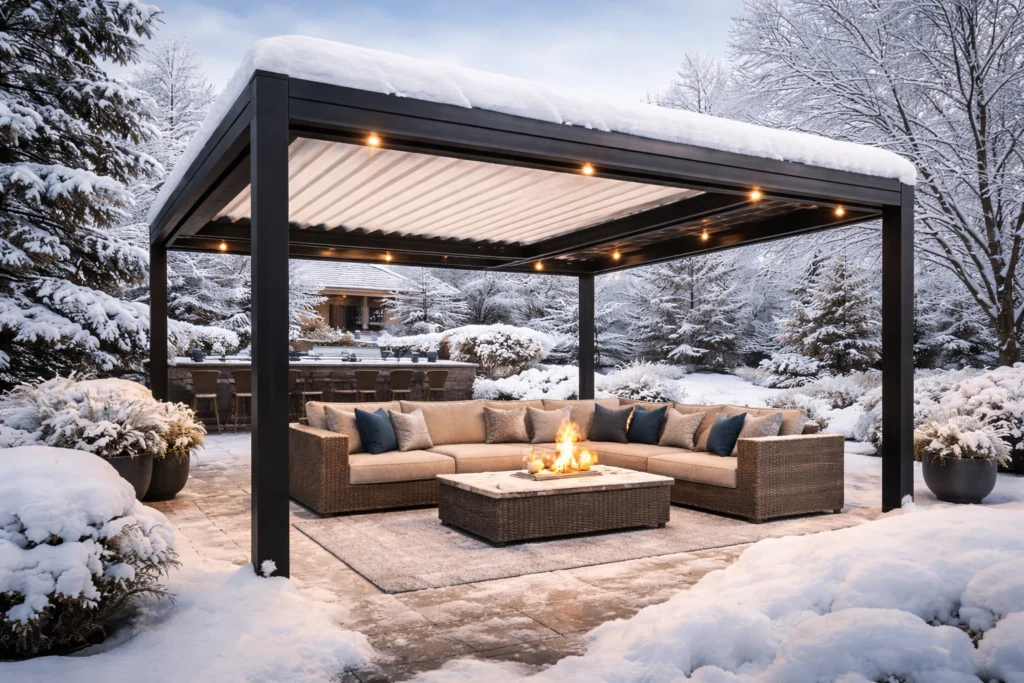
Snow Load Capacity and Drainage Design

These systems can easily tank February snow loads. Aluminum beams handle 30-40 pounds per square foot, which exceeds typical Chicago snowfall accumulation rates by a comfortable margin.

Plus, closed louvers create a pitched surface that sheds snow and ice rather than collecting weight on top of your pergola. These built-in drainage channels direct melting snow away from your foundation and prevent pooling under the structure. It protects your patio surface from freeze-thaw damage.

Protection from Summer Storms

Wind ratings usually reach 90 mph (the upper limit for moderate wind threat) for quality systems, and they stand firm during severe thunderstorms that blow through from Lake Michigan. After three decades of pergola installations across the Chicago area, we’ve watched these aluminum systems hold their ground through storms that ripped apart neighboring shade structures.

What’s more, rain sensors close louvers within 30 seconds of detecting moisture, and protect your outdoor furniture before you even notice it’s raining. Lightning-safe aluminum construction also includes proper grounding to direct strikes into the earth below your pergola.

Sizing Your Retractable Roof System

Through countless installations in Naperville and Hinsdale, we’ve learned that most homeowners underestimate their coverage needs by about 2 feet. It’s best to get the measurements right from the start to save you from costly adjustments later. Once you nail down the measurements, everything else falls into place.

Let’s walk through the necessary sizing decisions for your outdoor space.

Panel Configuration for Different Spaces

If you have a fompact patios, it needs fewer panels with tighter spacing, while sprawling decks require full coverage systems that span the entire area. Along with that, corner installations use L-shaped configurations to wrap around house angles and protect multiple seating areas (we’ve faced that issue countless times with Hinsdale homes).

On the other hand, freestanding models work for pool areas or gardens away from house mounting points. These standalone pergola structures need their own post systems but offer flexibility for backyards where attaching to the home isn’t possible.

Coverage Area Measurements

Width measurements span between your mounting beams where the canopy attaches above your patio. And projection measures how far the canopy extends outward from your house wall or freestanding posts into the yard.

Usually, single-section canopies work for spaces up to 16 feet wide, while larger areas need two sections to maintain proper structural support.

Pro Tip: Add 6-12 inches beyond furniture edges so rain doesn’t splash onto seating during storms. This buffer zone keeps your outdoor space usable in any weather.
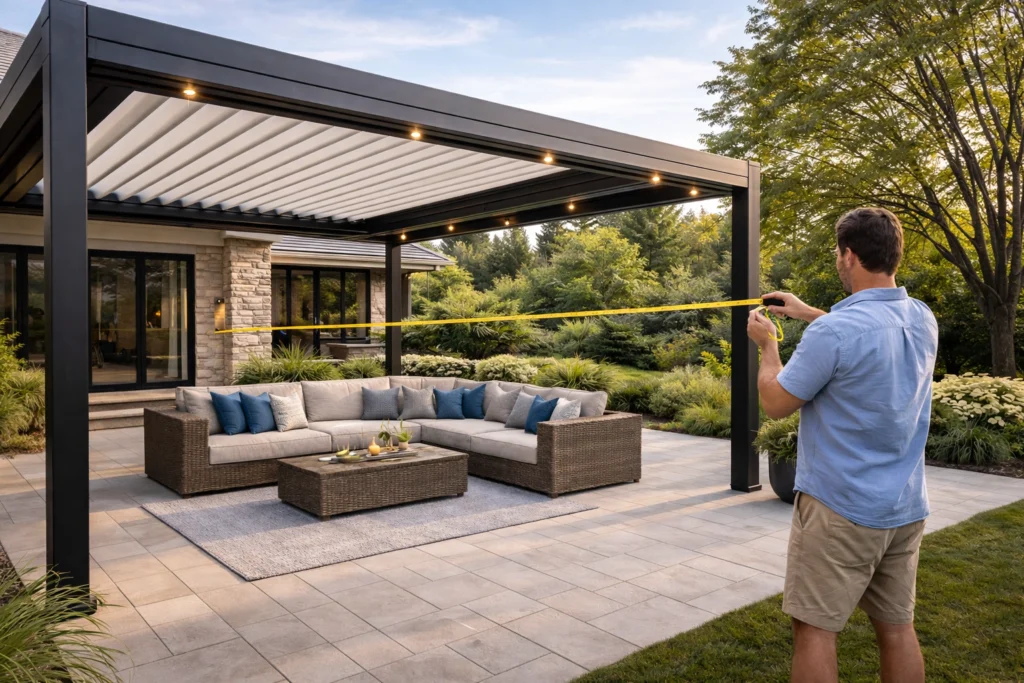
Coverage Area Measurements

Custom Fabric and Color Selection

You can get good fabric options like light-filtering mesh and complete blackout materials, depending on the sun exposure in your backyard. In general, neutral tones like beige and gray match most home exteriors in Naperville and Oak Park neighborhoods.

In contrast, multicolor effects with two fabrics for striped patterns add visual interest to plain yards. You can customize the combinations to match your home’s existing outdoor color scheme and landscaping features around your property.

Composite Materials and Durability

Aluminum pergola frames pair with composite fabric canopies that resist UV damage and mildew growth better than traditional canvas materials. These engineered fabrics maintain their color for 10-15 years without fading, which means your outdoor living space looks newer longer.

The composite construction also handles temperature changes like -20°F Chicago winters and 95°F summer heat without cracking or warping. Each system includes 2-9 panels, depending on your projection length. It comes with two-section installations that feature a 1-inch gap between sections. So it can flex during wind and temperature changes.

Comparing Retractable Pergolas to Shade Sails

Once you understand retractable pergola benefits, you’ll see why they outperform shade sails in durability and function. The upfront price difference looks negligible when you factor in replacement cycles over 10-15 years.

Here’s how these two outdoor shade options stack up against each other:

FeatureRetractable PergolasShade Sails
Installation Cost8,000-$25,000$800-$3,000
Lifespan20-30 years5-7 years
AdjustabilityMinute-by-minute controlFixed once installed
Wind Resistance90+ mph40-50 mph
Additional FeaturesSupports lighting, fans, and heatersCannot support add-ons safely
Property ValuePermanent increaseNo resale appeal
Replacement CostMinimal maintenanceFull replacement every 5-7 years

Shade sails might cost less initially, but you’ll have to buy three or four sets over the lifespan of one aluminum pergola system (one good storm and you’re shopping for new sails). Overall, the advantages are more prominent when you compare long-term outdoor living performance between these two options.

Your Next Step to Better Outdoor Living

Retractable roof pergolas give you weather control, furniture protection, and property value increases that fixed structures can’t match. The aluminum construction handles Midwestern seasons while adjustable louvers let you customize shade and ventilation daily.

After considering all these options, you can start with the measurements of your patio or deck. Then explore fabric colors and panel configurations that fit your home’s style and your family’s needs.

If you’re ready to upgrade your outdoor space with a system built for Chicago weather, Paper Crown Gallery brings over 30 years of pergola experience to every installation on our website. Our design team works with homeowners across Naperville, Hinsdale, and Oak Park to create outdoor living spaces that function beautifully year after year.
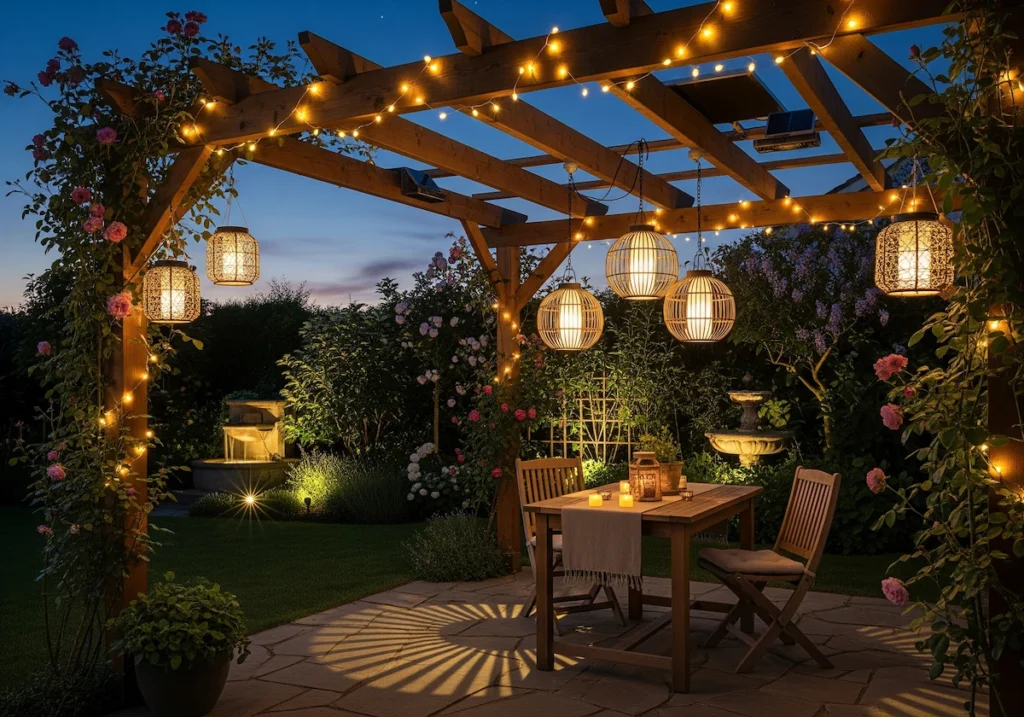
Lighting Ideas That Bring Your Pergola to Life After Dark

Lighting Ideas That Bring Your Pergola to Life After Dark

Looking for fun and easy lighting ideas for your pergola? In this article, our design experts are going to share their top tips for creating stunning outdoor atmospheres, selecting the right fixtures for your space, and keeping costs surprisingly low.

Adding lights to your pergola is actually way easier and cheaper than most people expect, and anyone can do it in about 10 minutes flat. You’ll have neighbours asking for your secret while enjoying countless evenings under your beautifully lit outdoor space.

Here’s what we’ll cover to light up your pergola perfectly:

  • String lights that add instant character
  • Downlights for clear visibility
  • LED strips for sleek appeal
  • Clever combinations that work

Ready to turn your pergola into an evening showstopper? Let’s dive in.

Popular Pergola Lighting Options

Three lighting styles consistently top homeowners’ wish lists: string lights, LED lights and solar-powered lights. They’re popular because they work well, look great, and fit most budgets. Each of them offers something different for your outdoor space.

Let’s look at some popular ways to light up your outdoor space:

String Lights

String lights feature many small bulbs connected along a flexible cord. They produce that soft, romantic glow that instantly makes spaces feel intimate. That’s why they’re the first choice for most pergola owners looking to create a welcoming atmosphere.

When it comes to style options, classic homes love Edison bulb strings for that vintage charm. But, modern spaces often use sleek LED versions or curtain lights that hang vertically down pergola sides. Whatever your home’s style, you’ll find plenty of string light options for your pergola.

Energy-Efficient LED Solutions

If you want bright, reliable lighting that won’t spike your electricity bill, LED options work brilliantly because they deliver brightness while handling all weather conditions. They’re great for homeowners who use their pergola regularly for dining or entertaining.

The great thing about LEDs is their versatility in placement and brightness levels. You can dim them, brighten them, or even change colours with smart versions, giving you complete control over your pergola’s mood.

Also, recessed fixtures sit flush with the surface and provide focused light exactly where you need it.

Solar Power for Illumination

Popular Pergola Lighting Options: Solar Power for Illumination

Looking for alternatives to mains-powered lighting? Then solar-powered fixtures offer the perfect solution for pergolas located far from power sources. They’re the favourite choice for eco-conscious homeowners who want hassle-free installation.

Most solar lights come with simple clips or stakes that attach in seconds, and they require no tools to install (isn’t that great?). Since there’s no wiring, you can place them anywhere that gets decent sunlight.

There are many options available for you to choose from:

  • Post cap lights add subtle accent lighting
  • Hanging solar lanterns create charming focal points
  • Solar fairy lights charge during the day and automatically illuminate at dusk

Renters who can’t make permanent electrical changes will find them handy. You can even move them around seasonally to change your garden’s look.

Now that you know the main lighting types, let’s explore how to use them creatively for maximum impact.

Enhancing Ambience with Creative Lighting

Your outdoor living area doesn’t have to look like everyone else’s pergola setup. You can use architectural touches, fire elements, and decorative features to approach your pergola’s lighting more creatively. In this way, you’ll build a pergola that reflects your personality (instead of looking like a garden centre display).

Here are some creative lighting ideas to try out:

Architectural Lighting with Wall Sconces and Uplights

When you add wall sconces to your pergola posts or nearby walls, you’re highlighting the structure’s best features in a way that feels natural and welcoming. They create gentle pools of light that make the space feel more intimate and less like a car park.

For something more dramatic, try pointing uplights from below to create interesting shadows and eye-catching effects. These thoughtful additions can completely change how your garden feels and help your pergola become the centrepiece it deserves to be.

The Warmth and Charm of a Fire Pit

A fire pit creates the perfect warm, flickering focal point in your outdoor area. There’s something about gathering around live flames that makes conversations flow more easily and evenings feel more special.

So position your fire pit where everyone can enjoy its warmth and light. When you combine a fire pit with overhead lighting, you get that perfect ambience that makes neighbours peek over the fence with envy.

Decorative Lanterns

Enhancing Ambience with Creative Lighting: Decorative Lanterns

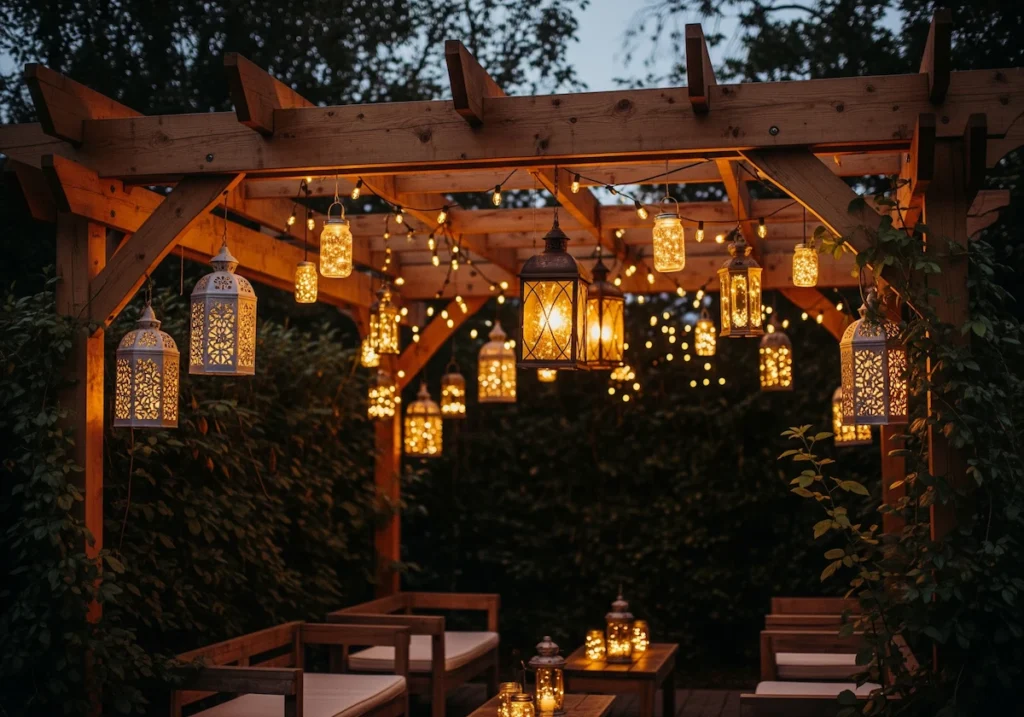
You can hang fairy lights or charming paper lanterns to add that dreamy, intimate atmosphere that makes spaces feel more personal. They soften the harder lines of your pergola.

If you want to try something new, get creative with different hanging options. Add Mason jars with tiny LEDs or vintage-inspired lanterns that look like they belong in a Harry Potter film. Things that showcase your personal touch create that warm, welcoming vibe that makes everyone want to stay outside just a bit longer.

As you now know all these creative lighting ideas, you may want to rush to the store and buy some lights for your pergola. But there are some important things to sort out first before you start your lighting project.

Important Considerations for Installing Pergola Lighting

Before you start adding lights to your pergola, you need to think about safety requirements, installation methods, and lighting specifications to ensure your setup works well and lasts for years. Think of it like building a house. You wouldn’t skip the foundation of your home, would you? These considerations create the foundation of a reliable lighting system you can count on.

Here are the main things to consider:

  • Safety with Outdoor-Rated Fixtures: Why do some pergola lights fail within months while others last for years? The answer usually comes down to choosing the right fixtures for outdoor conditions. Always select lights specifically designed for outdoor use to maintain safety and durability. When you buy lights, check the IP rating. The International Electrotechnical Commission recommends an IP65 rating, which means complete dust protection and water jet resistance from any direction. 
  • Measure the length: If you plan ahead, you can avoid making your pergola a messy disappointment. Start by mapping out where everything goes and calculating how long your string lights need to be. As the old saying goes, measure twice, buy once. 
  • Optimal Brightness and Light Colour: You want enough light to see clearly, but not so much that it feels like a football stadium. Beyond brightness, colour temperature creates a balance too. Warmer light colours (think soft white) create a more inviting, cosy atmosphere than cool white options, which can feel harsh and unwelcoming.

Pro tip: Experiment with different lighting options to discover what works best for your space. What looks perfect on your neighbour’s pergola might not suit your setup or your family’s needs. Every outdoor space has its own personality.

If you install your lighting properly, regular maintenance will keep everything working beautifully for years to come. Let’s see how to keep your pergola lights running smoothly for the long haul.

Maintaining Your Pergola Lighting

Maintaining Your Pergola Lighting

Simply hanging up some lights isn’t enough to keep your pergola looking brilliant year after year. You need to take care of them through regular maintenance, troubleshooting, and seasonal adjustments to ensure they continue working safely and beautifully for seasons to come.

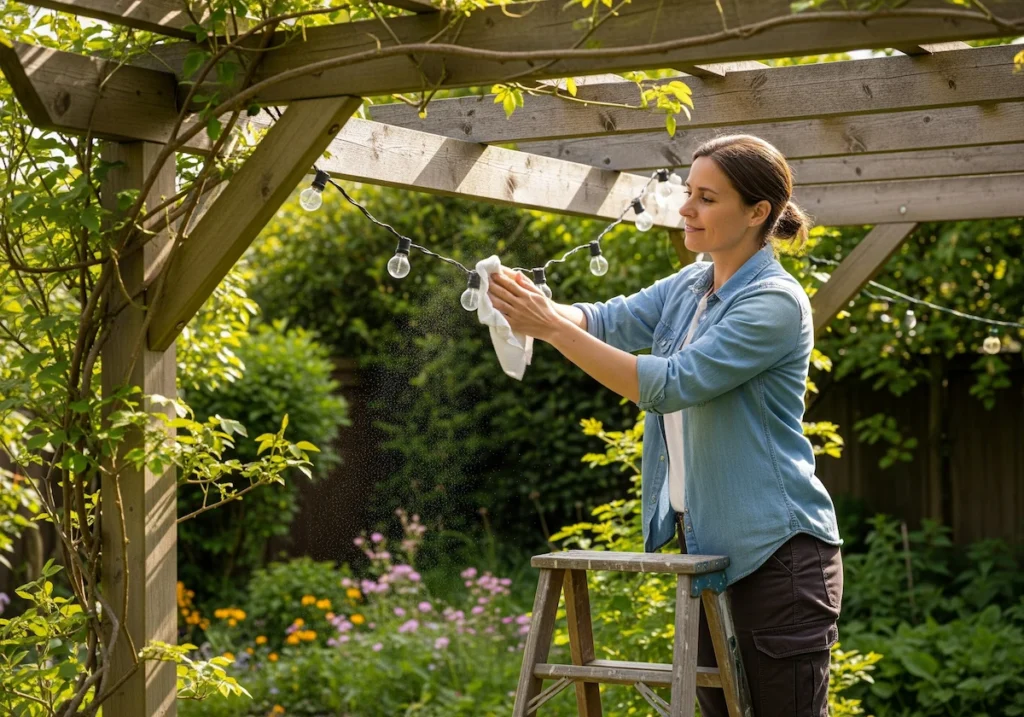
What makes this even better is that maintenance stays manageable with just routine cleaning and quick inspections. Keep your pergola lighting clean and check it regularly to maintain optimal performance. After storms or harsh weather, it’s especially important to look for any wear and tear or loose connections that might have developed.

Plus, wiping off dust and dirt helps your lights stay bright and attractive while preventing that dull, grimy look that builds up over time.

When problems do pop up, don’t panic. Start by figuring out whether the issue lies with the hanging lights themselves, the power supply, or perhaps a dirty solar panel blocking sunlight. Speaking of solar-powered lights, ensure their panels get plenty of direct sunlight throughout the day.

As seasons change, think about protecting your investment. We recommend storing your outdoor lighting away during particularly harsh weather when possible. Many homeowners find it wise to take down some string lights during the winter or extended periods of non-use.

When you keep up with these simple maintenance tips, your pergola lighting will look amazing and function properly for years to come.

Make Your Pergola an Evening Masterpiece

The hours when your pergola goes unused once the sun goes down are over. If you can get the right combination of string lights, LEDs, or solar options, you’ll create an outdoor space that works both day and night.

We’ve covered everything from basic lighting types to creative installations and practical maintenance tips. Remember to prioritise safety with proper IP ratings, plan your installation carefully, and keep up with simple maintenance.

Ready to turn your pergola into the evening centrepiece your garden deserves? At Paper Crown Gallery, we’ve been helping homeowners create stunning outdoor spaces with our premium pergolas for over 30 years.

Let us help you design the perfect foundation for your lighting dreams.

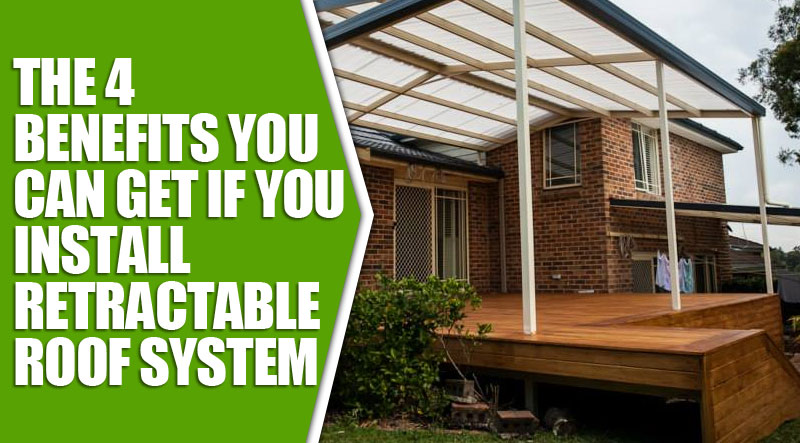
The 4 Benefits You Can Get If You Install Retractable Roof System

There are a lot of advantages that you can get if you decide to install retractable roofs. It is best for family time and a lot more. It also adds enormous value to your home. People usually install retractable roofs as a shade from the sun, but there are more things you can benefit from it. Check out the best benefits you can get so you can make up your mind and have a retractable roof installed tomorrow.

1. Flexible shade solution

With a retractable roof in your home, the family can enjoy the outdoors no matter what time of the day. It is easy to have it on a full block if the sun is at its peak or have it partially drawn depending on how much sunlight you want.

2. Rain protection

The retractable roof is not just for sun protection because if it’s raining, you can still enjoy a hot cup of coffee outdoor with the help of a full block retractable roof. The best thing about this retractable roof is that you won’t have to worry because it comes in with water gutter that is built under the rainy season circumstances.

3. Best for home insulation

If you have a retractable roof set up, it works as an excellent insulation whether it’s summer or the rainy season. It is like a filter that will give your home better insulation for whatever kind of weather.

4. Protect outdoor furniture

Too much sun exposure can cause damage to furniture most especially those that are placed outdoor. In a matter of time, you can notice that the natural color of the furniture fades. If you have a retractable roof, you can prevent the damages that can be inflicted by the sun or water on a rainy day.

Installing a retractable roof in your property is beneficial to you as well as your properties. You should not hesitate to get one so you can start enjoying precious time with your family on the outdoors.