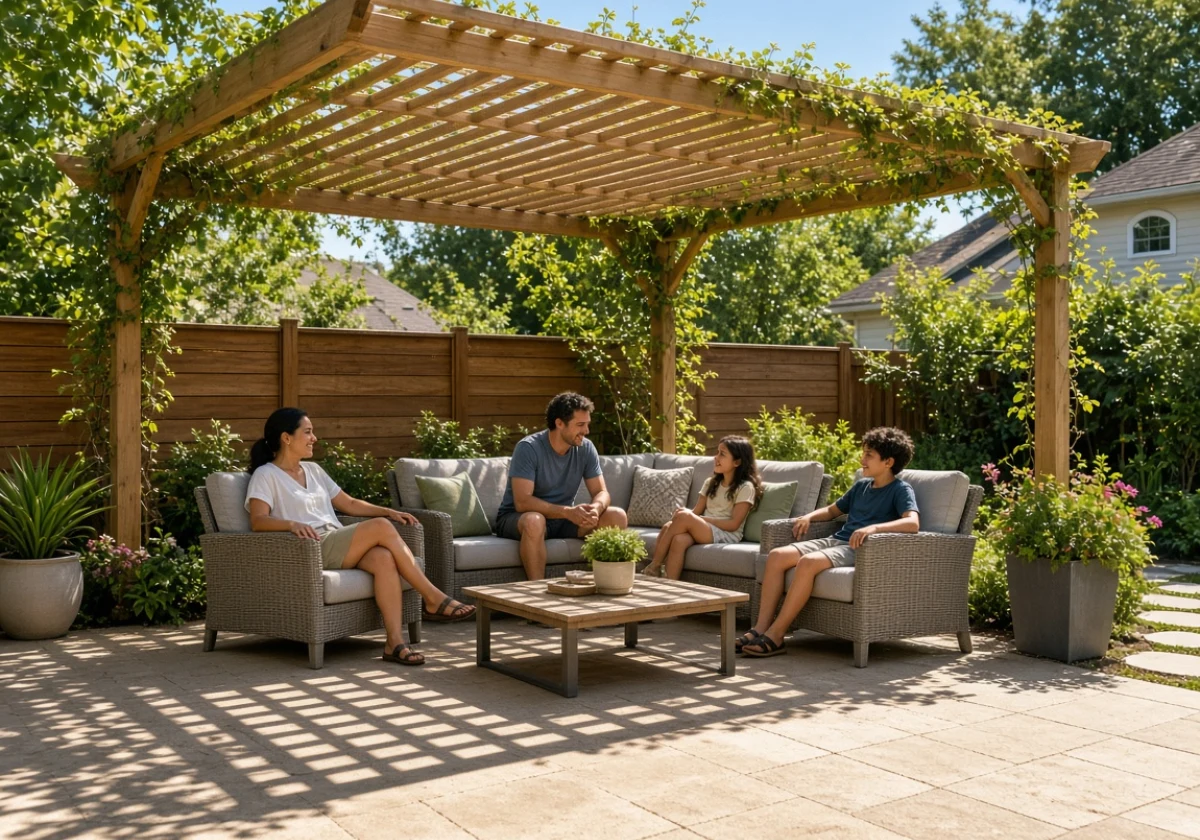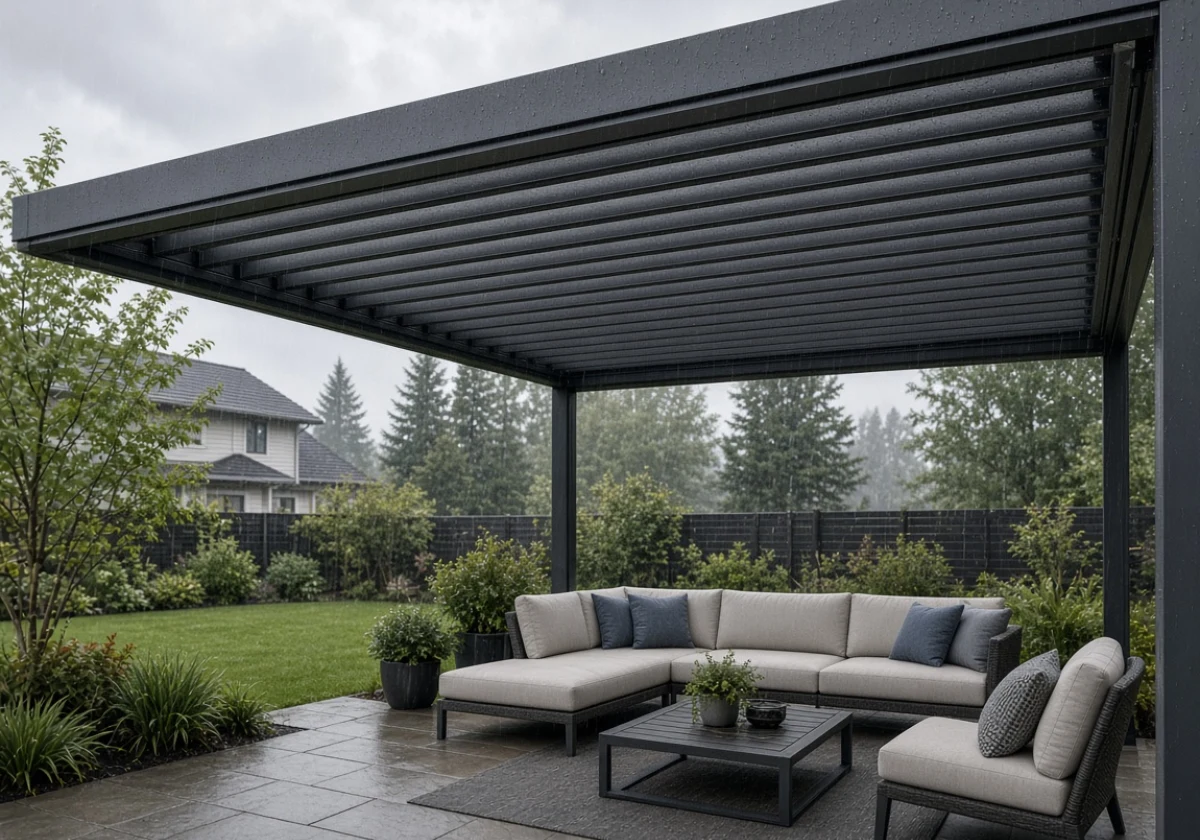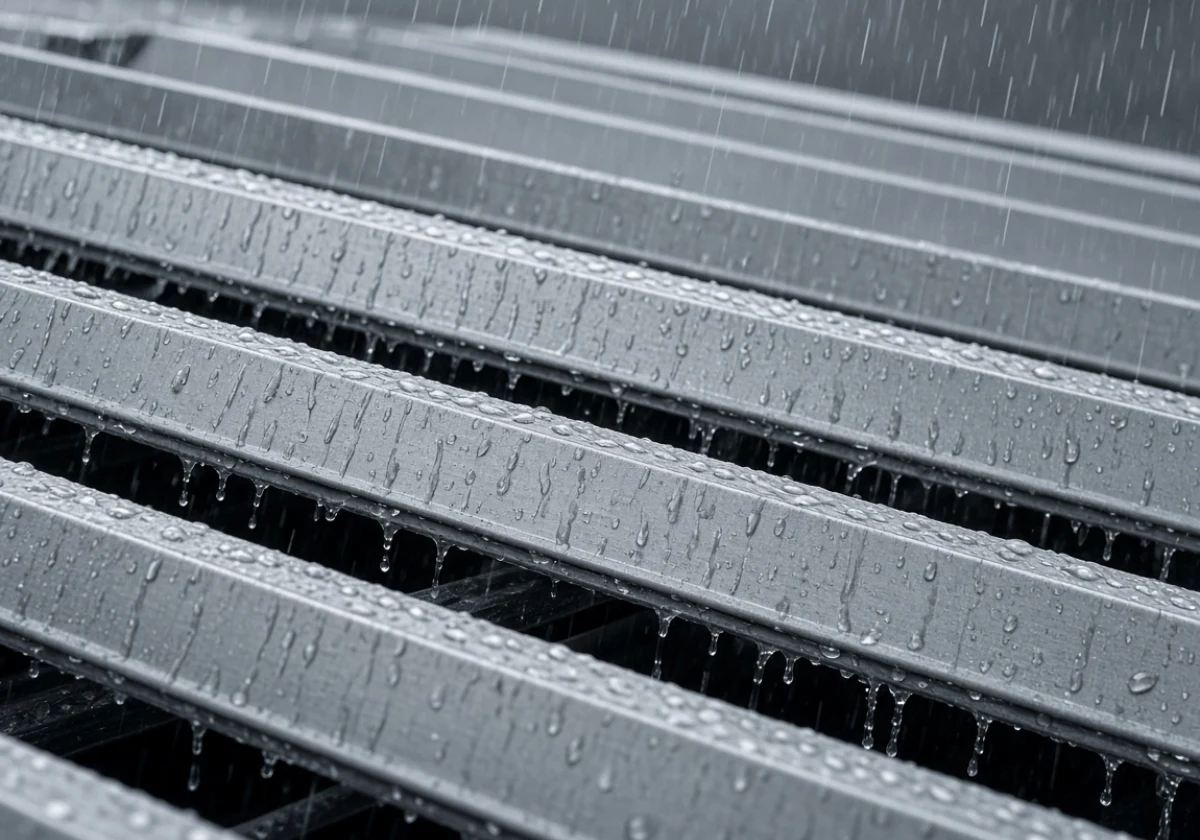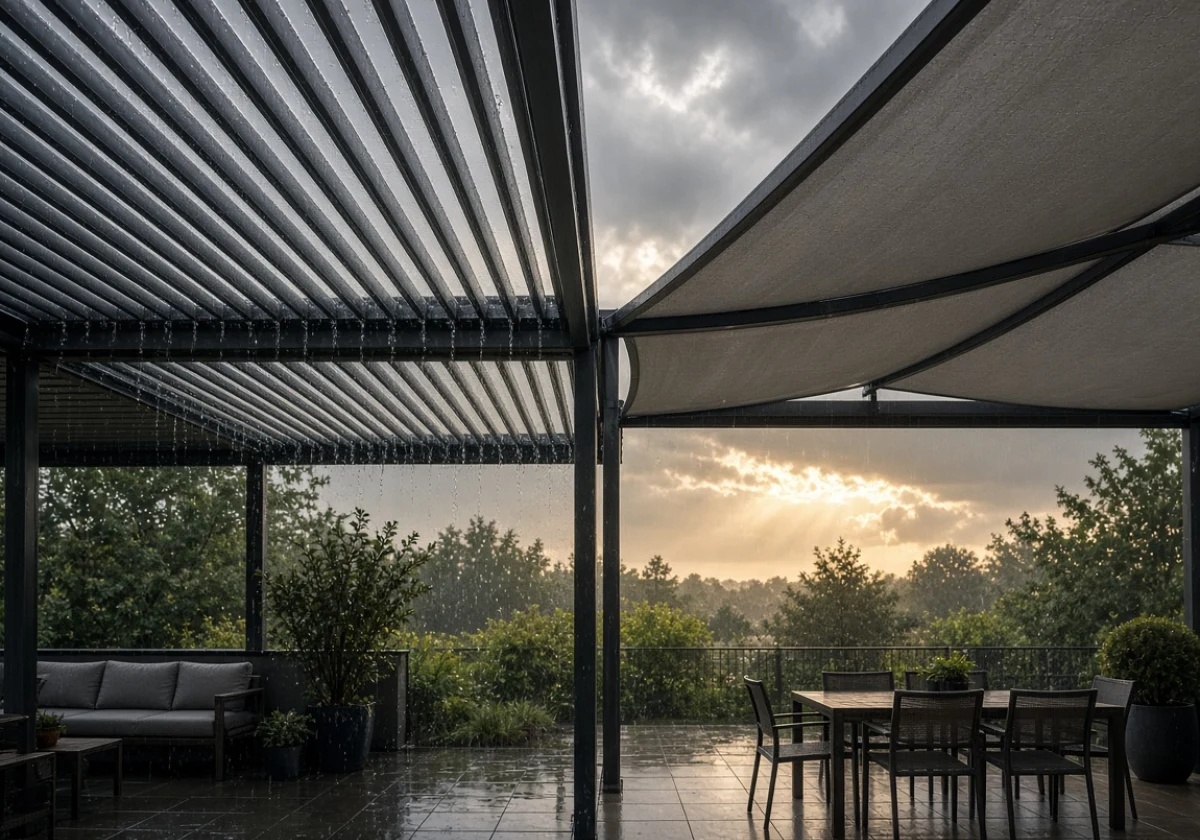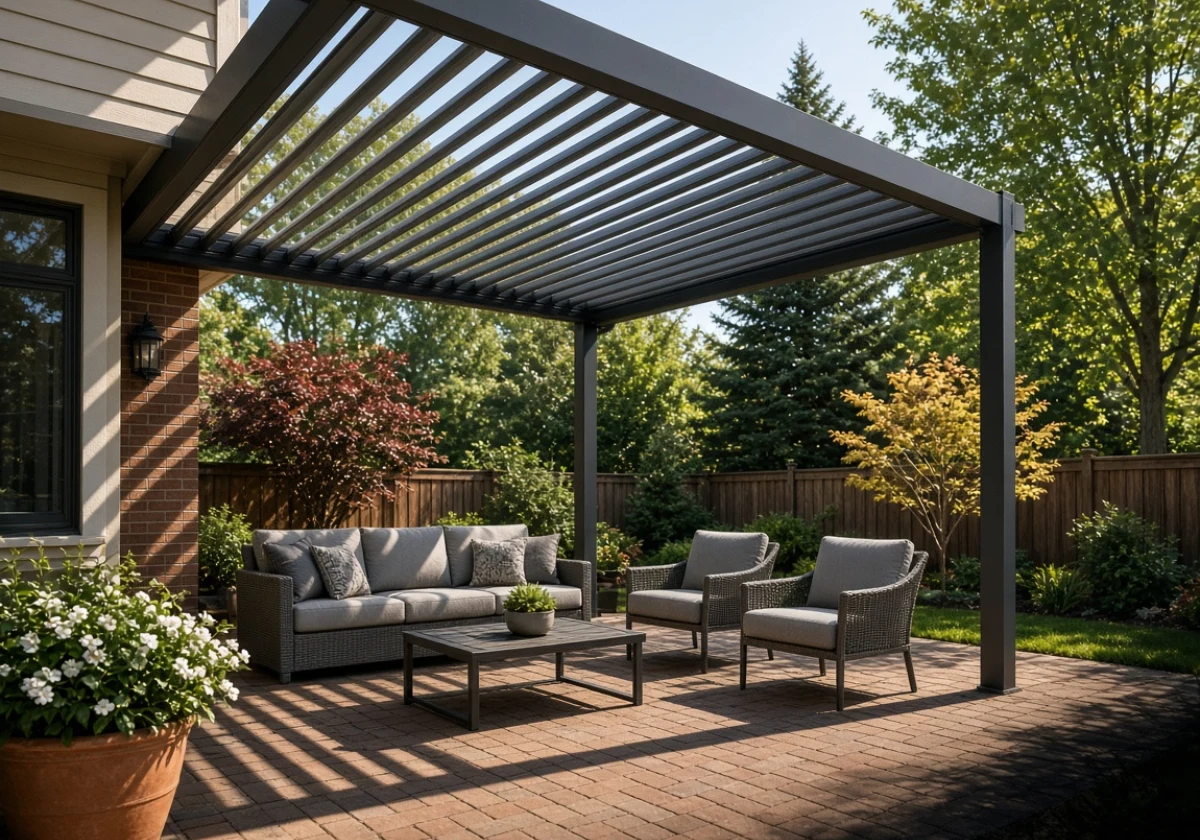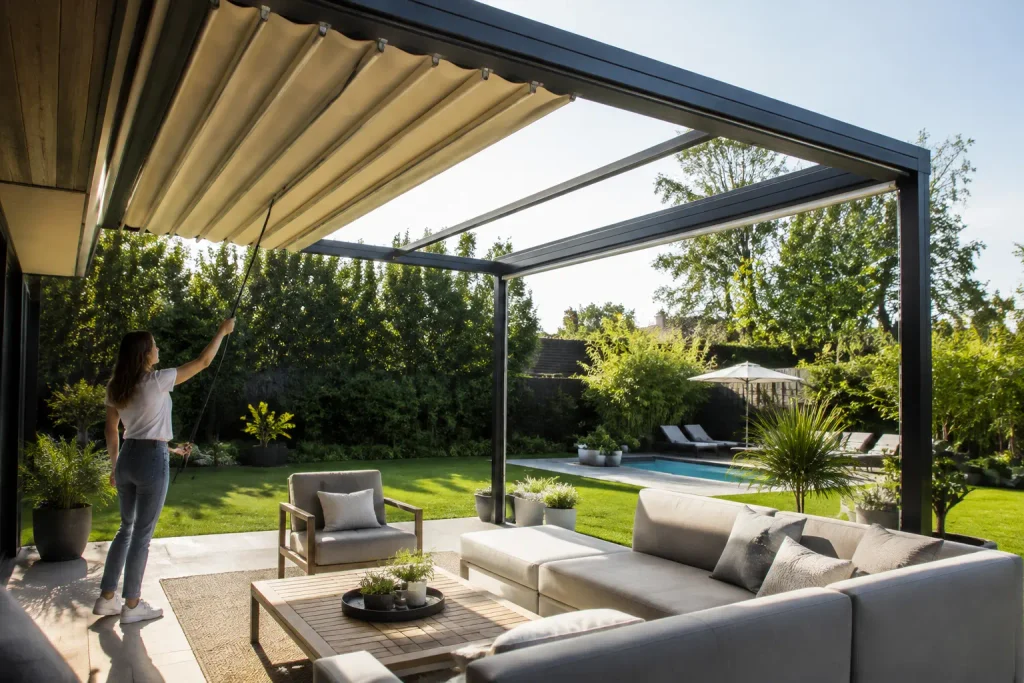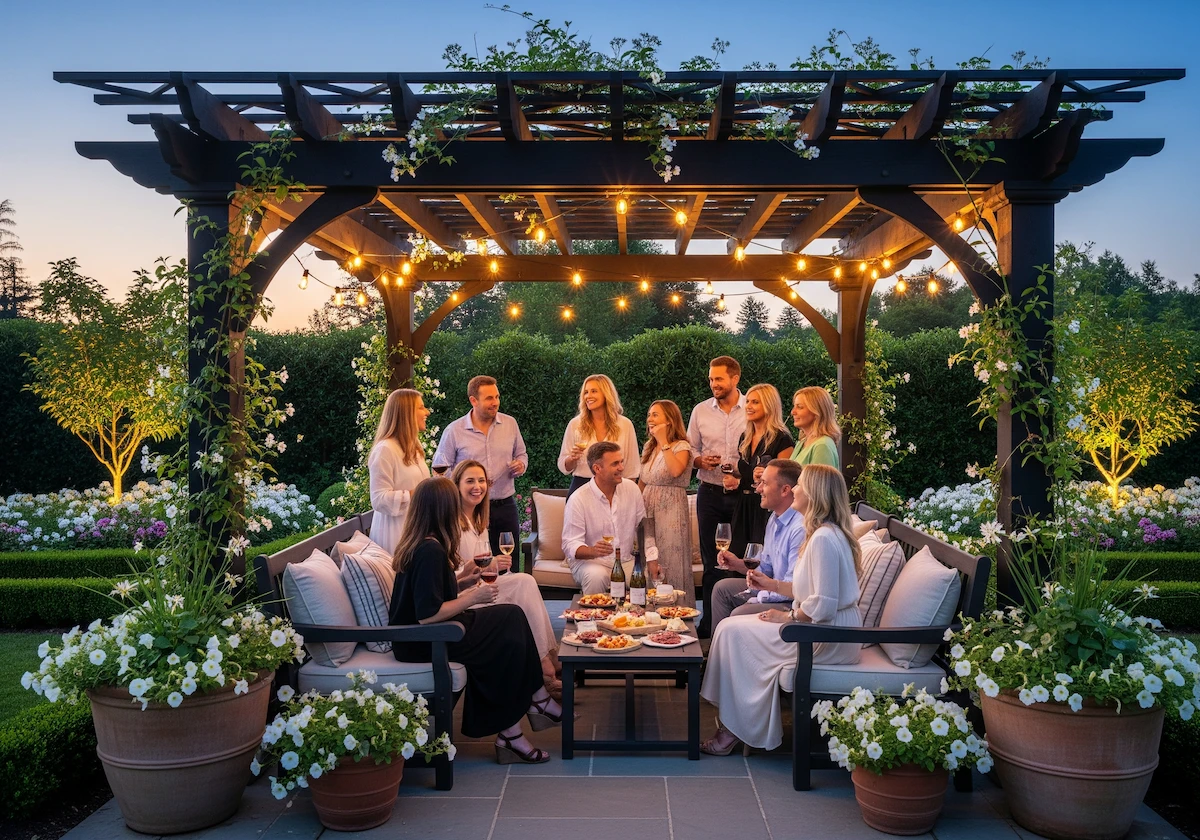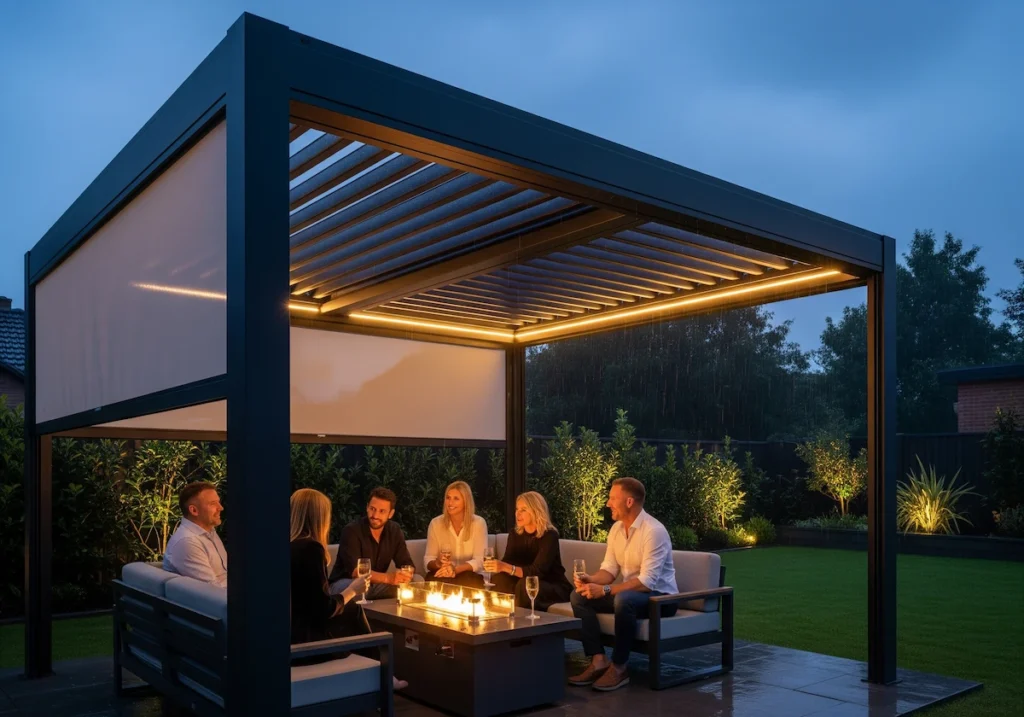
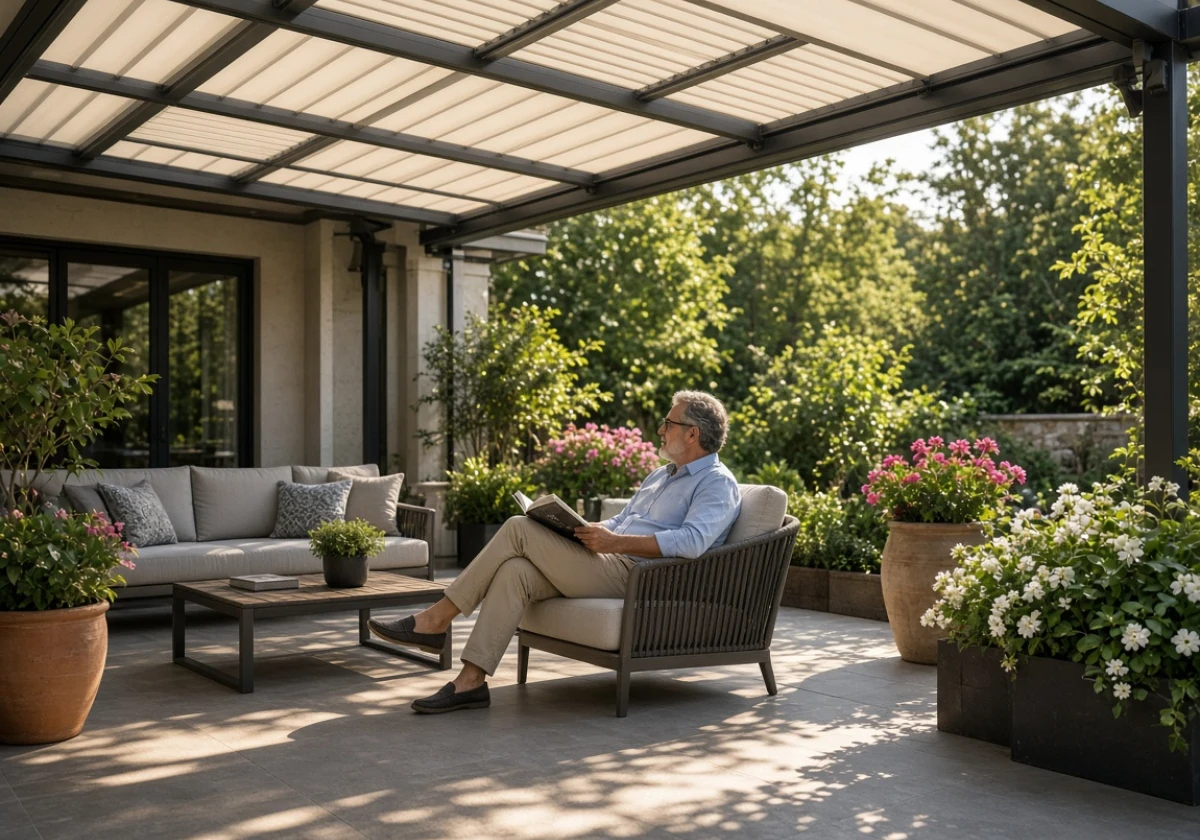
Enjoying a retractable pergola roof during a warm evening

Leaves Keep Landing on the Retractable Roof: Planning Around Nearby Trees Before Installation

Poor pergola placement near trees can leave your retractable roof covered in leaves throughout autumn. The posts went where the patio looked best, with little thought given to the tree canopy overhead.

Once autumn arrives, nearby trees drop leaves across the roof and into its moving parts. The debris collects in the tracks and jams the panels. Careful placement before installation reduces repeated cleaning and prevents costly adjustments later. For homeowners planning a new installation, Paper Crown Gallery offers custom retractable pergola systems for different outdoor spaces.

In this blog, you’ll learn why leaves cause problems for moving roofs and how to check nearby branches, roots, and wind. We’ll also compare roof materials and explain who has the right to trim a neighbor’s branches.

Read on before the first post hole is dug.

Why Does Tree Debris Cause More Trouble for a Retractable Pergola Roof?
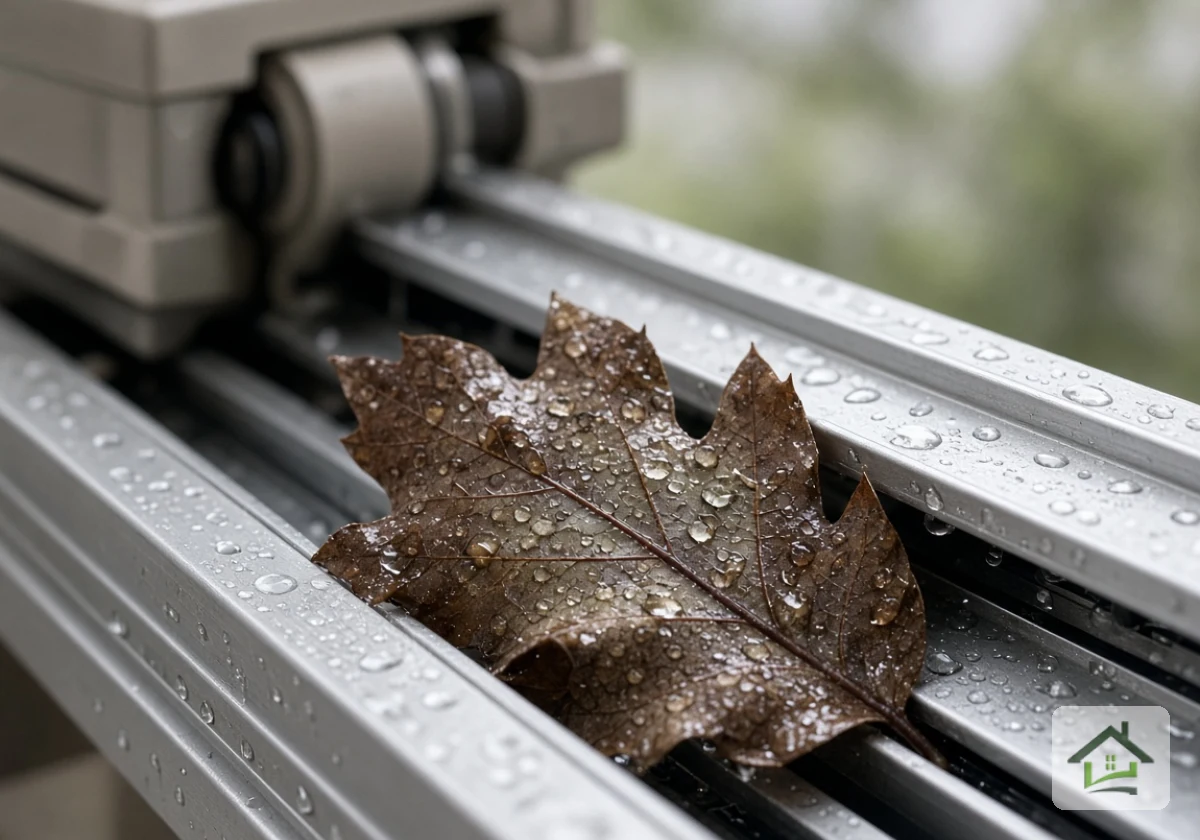
A leave clogging roof tracks

Leaves can clog roof tracks, collect around louvers, and block gutters, depending on the retractable pergola design. A moving roof has to slide or rotate through any debris that collects along its path. Unlike a moving roof, a fixed cover has no tracks or panels for leaves to block.

The damage often starts with wet leaves. They pack into the side tracks of a retractable roof system. Debris puts extra strain on the motor or prevents the roof from moving properly (usually on the one sunny day you wanted shade). Pine needles cause a different problem, since they slip between closed louvers and block the seals that keep rain out.

The gutters inside the frame also need regular cleaning. Louvered designs often route water through the beams and down the posts, so a clog sends rain over the edge and onto your cushions. If you’ve ever pulled a soggy oak leaf out of a louver hinge, you know how long one stuck blade takes to free.

Commercial outdoor spaces face similar problems on a larger scale. On a restaurant patio, a retractable pergola stuck mid-cycle during dinner service costs money because staff can’t seat guests at wet tables.

Mapping Pergola Placement Around Drip Lines, Branches, and Roots in Your Outdoor Space

Measuring the canopy drip line before installing a pergola

Many homeowners choose a pergola spot from the kitchen window without checking the trees overhead. The view might look perfect, but nearby branches can leave the roof covered in debris.

Before you mark the footings, check four things: the canopy, branch clearance, root spread, and wind direction.

Measuring the Canopy Drip Line Before You Mark the Footings

A tree’s drip line is the outer edge of its canopy, where rain falls from the outermost leaves. Stand under the widest branch and push a stake into the ground right below its tip.

From there, walk around the tree and place stakes beneath the outermost branches to mark the canopy’s outline. Much of the leaf fall lands inside or just past that ring, so placing footings farther out means less sweeping.

Once you’ve marked the area, compare it with your planned pergola location. Keep the roof clear of the canopy where possible. In smaller yards, look for a spot with fewer branches overhead to reduce leaf buildup.

How Much Branch Clearance a Retractable Roof System Needs to Open Fully

Your retractable pergola needs a clear gap above the frame so its louvers or panels don’t hit nearby branches. Some louvered roofs rotate upright, so measure with the roof fully open.

Branches also sag after heavy rain and grow longer each year. For this reason, leave extra clearance above the blades so wet branches don’t hit them (oak limbs often droop lower after rain).

Check the spec sheet for the blade height when the roof is fully open. Then use your tape measure to confirm the available clearance before placing your order.

Keeping Post Footings Out of the Root Zone

Tree roots spread well past the drip line, and digging a post hole through a major root can weaken the tree. That damaged root can also rot and let your footing settle unevenly.

To avoid cutting major roots, dig a test hole by hand before using an auger. If you find a large root, stop and ask an arborist to check the area. They can help you choose a safer footing location. Properly placed footings support the frame and help keep the roof tracks aligned.

Which Way the Wind Carries Leaves Across the Yard

Wind direction affects where leaves land, even when trees stand across the yard. During a breezy fall week, watch where leaves collect along fences and patio edges.

Those piles show where the wind blows leaves. In Florida, for example, afternoon storms often blow live oak leaves across patios and outdoor living areas. Use those clues to choose a spot upwind of the trees, or plant a hedge on the tree side as a windbreak.

Why Choose Aluminum Louvers: Functionality, Style, and Durability Under Falling Leaves

Aluminum louvers win on a retractable pergola under trees because they tilt to shed leaves, resist damage from fallen branches, and never rot. Fabric and polycarbonate can still work in some yards, though each one handles debris differently.

The table compares how aluminum louvers, fabric, and polycarbonate side by side.

Roof TypeFunctionality Under DebrisStyleDurabilityCleaning Effort
Aluminum louvered roofBlades tilt so leaves slide off before you open the roofClean, modern lines on an aluminum pergolaWon’t rot and shrugs off small twigsRinse blades and clear gutters each fall
Retractable fabric canopyFolds leaves into its pleats as it retractsSoft, casual look with many colorsStains and mildews under sap and wet leavesBrush pleats often and replace fabric sooner
Sliding polycarbonate panelsPanels stack and trap debris between layersBright, glass-like look that lets light inScratches from grit dragged during slidingClear tracks before every slide

For a pergola near trees, gutter access deserves attention before you choose a roof system. Ask your installer to show you how to open them, since you’ll need to clean them each fall. Also, check how easily you can reach the roof panels to clear leaves after a storm.

Tree Rights Reserved: Who Decides About the Branches Hanging Over Your Property Line
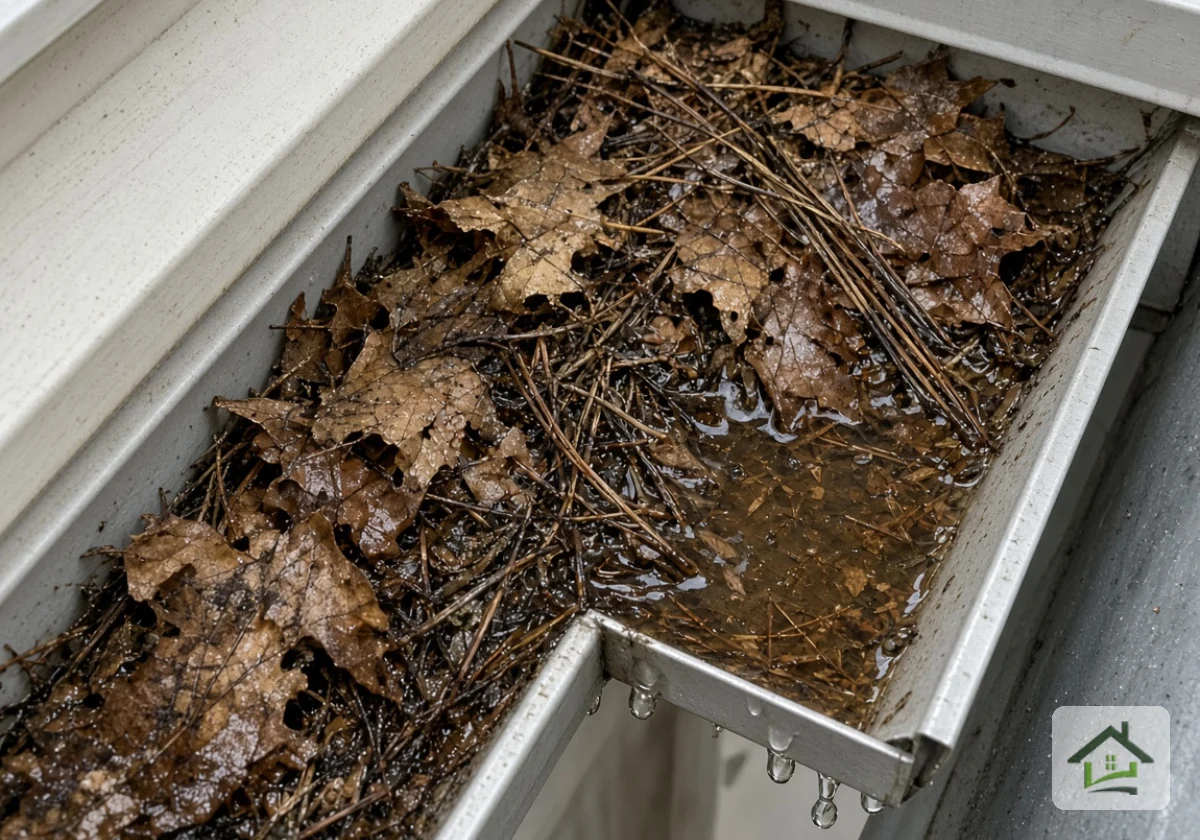
Trimmed branches from hanging trees

Sorting out trimming rights before installation saves you from a yearly argument with the neighbor. Trimming nearby branches may solve a clearance problem without changing your pergola design, but you need permission to make certain cuts.

In some areas, you can trim a neighbor’s branches that hang over your property. Local rules differ, though, so check your city’s tree-trimming rules before making any cuts.

Experienced installers usually ask about overhanging limbs at the first site visit, because a branch dispute can pause a project mid-build. You’ll get further with your neighbor by showing them the plan early and offering to share the trimming cost.

Before you call a tree service, have a look at who holds a say in what gets cut:

  • Your Own Tree: You usually decide which branches to trim. However, some cities protect certain trees, so check local rules before cutting.
  • The Neighbor’s Overhang: Confirm where your property ends before planning any cuts. Speak with your neighbor about the branches and agree on a trimming plan where possible.
  • Protected Species: Not every tree is free to trim. For certain oaks and other protected trees, your local planning office may require a permit before work begins.
  • Homeowners Association (HOA) Setback Rules: Your HOA may have rules about tree trimming and pergola placement. Check these rules against your site plan and get written approval before work starts.
  • An Arborist’s Sign-Off: For large branches, an arborist’s advice is useful. A written assessment also gives you something to share if your neighbor raises concerns.

Once you’ve agreed on the trimming plan, keep copies of any permits, approvals, and written agreements. Share them with your installer before work begins. You don’t want to find out halfway through installing your retractable pergola roof that a branch everyone planned to remove has to stay.

A little planning now could save your outdoor living space from an awkward dispute with the neighbor later.

Walk the Yard With a Tape Measure Before You Order the Pergola

Now you know what to check before placing a retractable pergola roof near trees. Leaves can clog tracks, while low branches and spreading roots may cause trouble later. Checking these risks early helps you choose a suitable location before installation begins.

Your next step is to measure the canopy, check branch clearance, and identify any roots near the planned footings. Compare roof materials and local trimming rules before finalizing your design.

With those details in hand, you can discuss your plans with Paper Crown Gallery. Our team offers retractable pergola systems for different outdoor spaces. Contact us to discuss your yard, nearby trees, and installation options.
Custom Retractable Roof Systems vs Ready-Made Outdoor Shade Solutions

Custom Retractable Roof Systems vs Ready-Made Outdoor Shade Solutions

A custom retractable roof gives you a precise fit and year-round use, while ready-made shade costs less upfront. That one trade-off settles most patio projects before anyone picks a fabric or a color.

Both options arrive wrapped in the same promise of outdoor living, so the real differences stay hidden until the quotes land. One gets built around your structure, and the other asks your structure to accept a standard size.

This guide covers how motorized systems handle rain and wind, where pergola systems save money, and what each option costs across its lifespan. You’ll also see which choice fits a backyard patio and which one suits commercial spaces. Let’s get into it.

Custom Retractable Roof Systems Put You in Control of Your Outdoor Space

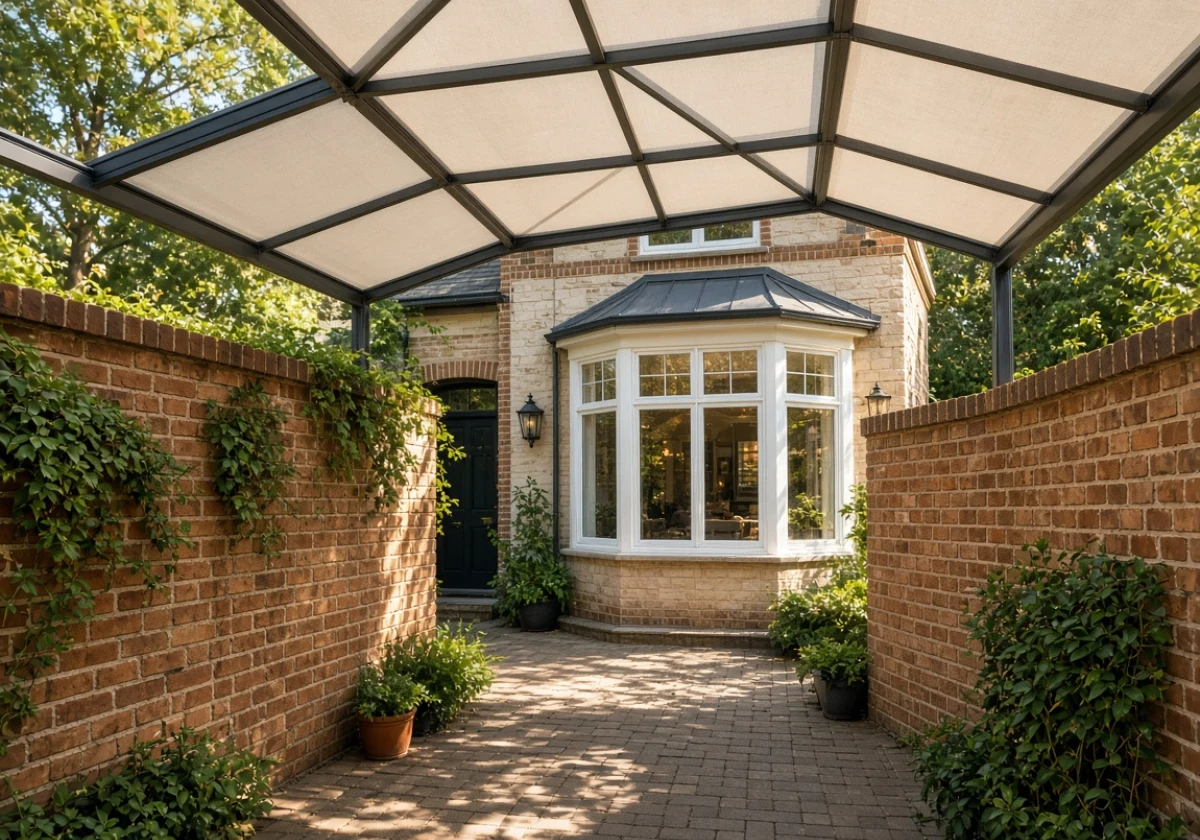
A uniquely-shaped patio with angled brick walls and a bay window

Most patio covers force you to work around their limits instead of your plans. Retractable roofs built to order start from the opposite end: your dimensions, your sun angles, and the way you already use the space.

Here’s how three parts of the build turn that control into a patio you’ll enjoy season after season:

Built to Fit Your Patio

Your patio sets the measurements before anything else does. Custom outdoor design begins there, spanning odd angles, bay windows, and walls that aren’t square, which a boxed kit can’t cover.

Because of this, the roof meets your house cleanly, with no gap where rain sneaks through. Posts land where you want them rather than where a standard frame demands. That way, a retractable patio cover sits inside the space you already use.

If you’ve ever held a tarp over the gap between an awning and a wall, you already know that limit firsthand. You also keep the sight lines that made you pick the spot (that view is usually the whole point of the patio).

Electric Retractable Panels That Respond to Rain, Sun, and Wind

Motorized retractable panels move at the press of a button, so you can close the roof as the first drops hit. Sensors handle it for you when nobody’s home.

That speed is important because the National Weather Service defines severe thunderstorms by hail at least one inch wide or wind gusts above 58 mph. An electric retractable system that pulls back early keeps fabric and frame out of that load.

In our experience, the roof you close in time outlasts the one you leave open through a squall. Open it again ten minutes later and the patio will go back to fresh air and natural light.

Materials Made for Year-Round Protection

Aluminum frames and retractable fabric carry the weather load together. The frame supports the structure against wind and snow. Fabric roofs let rain run off, while louvered systems use adjustable solid blades to provide shade from the sun.

That gives you weather protection in January and shade in July. A retractable PVC roof adds a waterproof membrane. Powder-coated finishes also hold their colour instead of chalking after a few summers.

Glass panels and Zip Screen sides then close the gaps at ground level (most wind hits a patio sideways rather than above). What you end up with is an enclosure you can heat, screen, or open at will.

Why Choose a Ready-Made Outdoor Shade Solution?

A rectangular residential patio on a bright sunny day

Ready-made outdoor shade solutions make sense when you want lower cost, quick installation, and simple seasonal coverage. They fit best on standard rectangular patios in areas with strong sun and little snowfall.

In those conditions, much of what you’d pay for in a custom build goes unused. A shade cover that only works from spring through early fall still matches how you spend time outside.

If that sounds like your patio, here are three reasons so many homeowners start with a pergola kit or a retractable awning:

  1. Lower Upfront Price: Pergola systems and retractable awnings cost less than a custom build. Most of that saving comes from standard sizing rather than thinner materials, so check this against supplier specs.
  2. Faster Setup: Many off-the-shelf shading systems install in a day or a weekend. Because the frame arrives pre-cut, you skip engineering drawings and the wait for fabrication.
  3. Easy Replacement: Swapping a worn canopy system takes an afternoon when the parts are stock sizes. Fabric, tracks, and hardware stay available for years after the sale.

These three advantages all point at the same buyer: someone covering sun during peak hours rather than building a room for every month. The CDC guidance on peak UV hours puts the strongest rays between 10 a.m. and 4 p.m. daylight saving time. A louvered pergola or awning covers that window well.

Cost and Fit: Comparing Custom Builds with Ready-Made Pergola Systems

Putting retractable roofs and pergolas side by side makes the budget decision much easier to read. Price is only one line of the comparison, though, and lifespan usually changes the math more than the sticker price does. Fit, weather use, and installation time are just as important, because together they decide how often you’ll use the space.

For example, a cover that leaves a gap at the wall or can’t handle a windy evening ends up sitting empty for months. Installation timing also affects the first year, since waiting on a frame built to order can delay your outdoor season.

The table below lines up the five factors that decide most projects:

FactorCustom retractable roofReady-made shade solution
Price rangeHigher, built to specLower, standard sizing
FitExact match to your structureClosest standard size
Weather useRain, wind, and sun year-roundMostly sun and light rain
Lifespan15 to 25 yearsFive to ten years
InstallationProfessional, two to six weeksDIY or same-day pro install

Across 20 years, one retractable roof can outlast two or three replacement awnings, which closes much of the price gap. Your choice also decides how often you’ll repeat this whole job.

Each replacement brings new fabric, fresh hardware, and another installation day, so the upfront savings shrink with every swap. That’s why we suggest comparing cost per year of use rather than the price printed on the first quote.

Choosing the Right Option for Your Patio and Commercial Spaces

A home improvement workshop table in natural window light showing

Now that you know the trade-offs, let’s match each option to how you use your space. Start with how many months a year you want the patio open, because that single answer sorts most projects.

If you only use the area from May through September, a pergola or patio retractable awning does the job for far less money. Shade covers the table, you store the fabric in fall, and you swap it out when it fades.

Year-round plans change the answer completely. Once you want to eat outside in February, you need roofs that shed snow and sides that stop wind, and that’s custom territory. We’ve seen plenty of homeowners buy twice, once cheap and once right (the second quote always stings more than the first).

Commercial spaces push harder on that same line. A restaurant terrace or rooftop bar counts every seat, so an electric retractable roof protects revenue on nights that would otherwise clear the patio. Hotels and hospitality venues judge commercial projects by the same measure, which is seats kept open in bad weather.

Bottom Line: Buy ready-made pergolas for seasonal shade on a plain patio. Choose a custom retractable roof if you face harsh weather, odd dimensions, or daily commercial use.

Ready to Start? Contact Us About Your Custom Retractable Roof

Your choice depends on how long you want the space open and how exact the fit must be. Ready-made shade covers summer, while a custom retractable roof covers the whole calendar.

Measure your patio, count the months you’d use it, and hold that against the lifespan column above. That short exercise usually answers the question before you ask anyone for a price.

Paper Crown Gallery designs custom retractable roof systems for homes, restaurants, and commercial spaces. Contact us to walk through your measurements and get an outdoor living plan built for your structure.

retractable pergola roof

The Pergola Roof Is Open, Then the Rain Starts: Where Does the Water Go When It Closes?

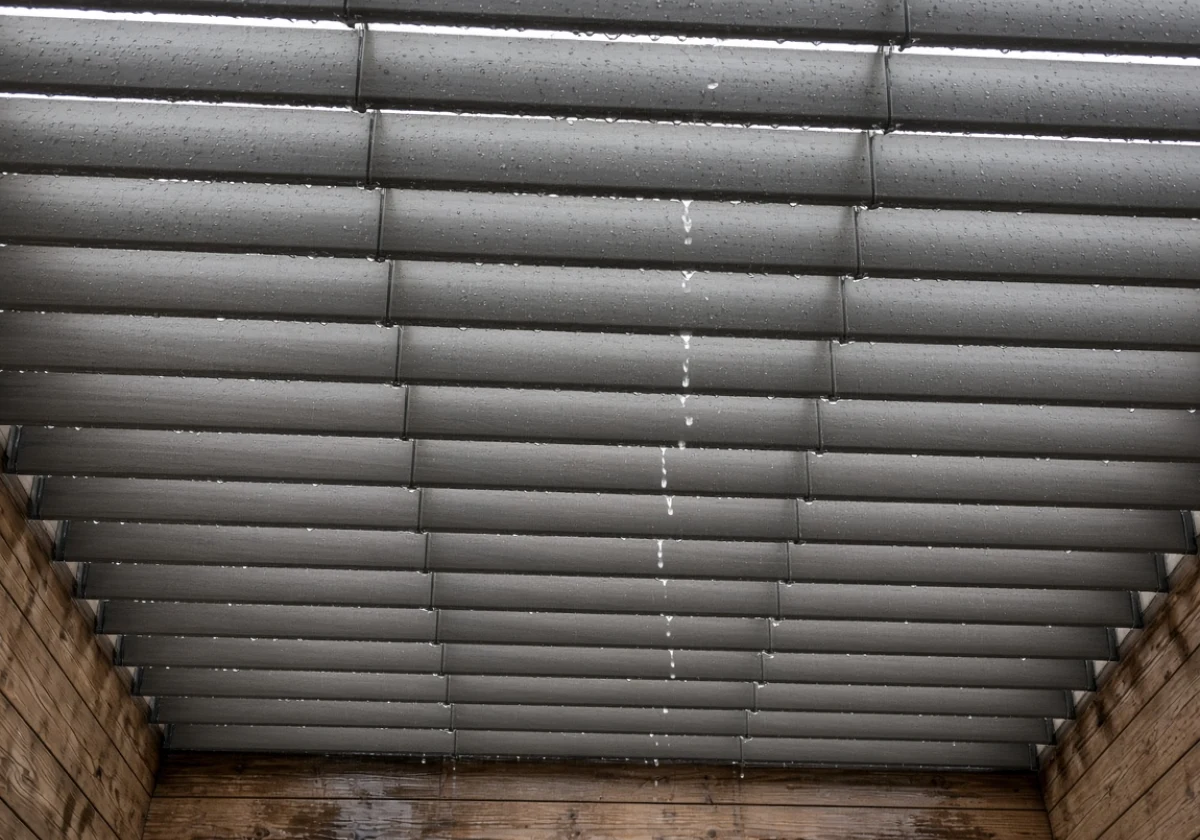
If you’ve ever closed a retractable pergola roof during a rainstorm, you’ve probably wondered where all the water goes. In a louvered system, built-in gutters and hidden post channels carry rainwater away, which keeps your outdoor seating area dry.

That’s quite different from older fabric covers that often sagged under collected rainwater. At Paper Crown Gallery, we’ve spent over three decades installing retractable pergola roofs, so we understand how different roof designs handle rain.

This guide walks the water from blade to gutter to post to ground, then weighs aluminum louvers against fabric canopies. You’ll see which sensors handle the weather for you and what seasonal care keeps the path clear.

Where Does the Water Go When You Close a Retractable Pergola Roof?

Close-up of overlapping aluminum louver blades in a retractable roof

A louvered pergola roof uses four connected parts to control rainwater, and each has a specific job. The blades collect and direct the rain, while the rest of the system carries it away.

Let’s follow the rainwater through each of the four stages, starting with the blades that first catch it.

How Rotating Blades Seal a Retractable Roof System Against Rain

Every blade in a louvered roof pivots on a shaft, and a motor turns the whole bank at once. When the roof closes, the blades rotate into position and overlap along their edges. The overlapping design prevents rain from passing directly through the gaps.

Some systems use rubber gaskets to seal those overlaps. The seals limit water passing through the joints, while the blade profiles guide rain toward the gutters. Even a small gap between two blades can let water drip through, especially during wind-driven rain.

During your spring inspection, check the seals for cracks, gaps, or wear. You can also close the roof and look along the blade joints for uneven alignment or visible openings. Hardened or flattened gaskets may allow leaks, so contact your installer about replacing them before the next storm.

Built-In Gutters: Where the Louvered Roof Collects Every Drop

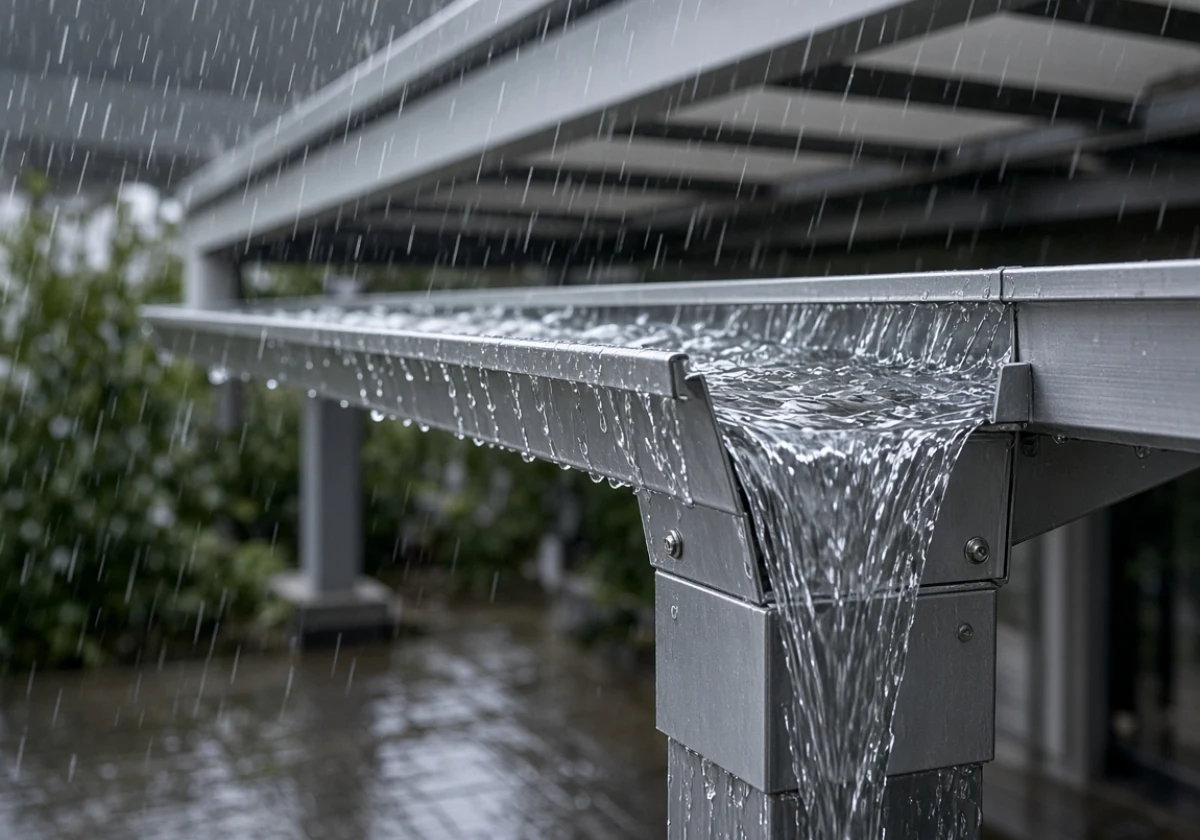
As rainwater leaves the blades, it enters narrow channels along the surrounding beams. Unlike exposed gutters on a house, these channels sit within the pergola frame and remain largely out of sight. Once inside, water travels toward one or more drainage posts, depending on the roof’s design.

However, leaves and other debris can collect near the outlets and slow the flow during heavy rain. On the installs we’ve walked, the frames that drain slowest are the ones someone set dead level. Without the right drainage slope, water sits in the channels and encourages algae growth.

That’s why you should ask your pergola installer to check the slope and water flow before signing off on the job.

Pergola Drainage Runs Hidden Inside the Frame Posts

After leaving the gutters, rainwater enters designated hollow posts that work as downspouts. The water travels down through the columns, so you won’t see pipes running along the outside of your pergola.

The posts carry water toward outlets near their base. Even during a heavy shower, the system keeps draining as long as the channels stay clear and rainfall stays within its capacity.

You’ll usually spot trouble when water spills over one section while the others drain normally. If you notice that, check for leaves around the gutter opening before assuming there’s a problem inside the post. Your installer can show you how to reach these areas safely for cleaning.

The Exit Point: Where Water Leaves at Ground Level

Once water leaves the posts, its direction becomes important. Installers often direct the flow toward a lawn, gravel bed, or another suitable drainage area away from the patio.

The outlet’s position deserves attention, especially if your patio sits close to the house. The US Environmental Protection Agency (EPA) explains how directing downspout runoff toward lawns or gardens helps water soak into the ground. However, poor placement can cause property damage or unsafe conditions.

Quick Tip: Before installation begins, discuss the outlet location with your installer. Check where the water will collect during heavy rain and confirm the drainage plan follows local requirements.

Aluminum Retractable Louvers vs. Fabric Canopies: How Each Protects Your Outdoor Space From Rain

Side-by-side comparison of two adjacent covered patios

That four-stage drainage path applies to louvered systems with built-in gutters. Fabric canopies handle rain differently, which affects how well each roof protects your patio during a storm.

Below, we’ve set both roof types side by side to help you see which better suits your outdoor space.

What to CompareAluminum Retractable LouversFabric CanopyWhat It Means for You
Rain exposureRigid blades close to form a protective roofWater resistance depends on fabric and roof pitchCheck the rain rating for your local weather
PoolingBlades stay rigid under loadFabric stretches and dips over timeAsk how the canopy maintains proper tension
Mid-storm useClosed blades provide protection within rated limitsMany covers must retract in high windCheck operating limits for both roof types
UpkeepInspect seals, moving parts, and drainage outletsClean the fabric and inspect seams and tensionCompare replacement parts and service costs

Your patio’s size and layout also affect which roof will work best. A wide span, nearby walls, or an awkward roofline can influence the support structure and installation cost. So ask your installer to measure the space and explain any limits for each roof type.

The frame’s durability is another factor to consider. According to The Aluminum Association, aluminum is lightweight, strong, durable, and corrosion-resistant. These properties make it suitable for outdoor pergola frames exposed to sun and rain.

Smart Sensors Deliver Pergola Rain Protection Before the First Drops Land

Draining itself is only half the job, since the roof still needs to close when rain starts. With a modern retractable roof system, a sudden shower costs you seconds rather than an evening.

Pergola rain protection starts with a sensor that detects the first drops and signals the motor to close the blades. Wind sensors also monitor gusts and adjust the roof according to the system’s safety settings. These features help protect the outdoor area when the weather changes unexpectedly.

You’ll appreciate the automation when unexpected rain arrives during dinner or while you’re away. Manual control still belongs within reach, though. One button lets you adjust the blades yourself when you’d rather watch the rain come in (without having to reach for your phone or find the remote).

Beyond the automatic controls, a few features are worth discussing with your installer before you sign:

  • Rain and Wind Sensors: Some roofs close when rain starts but open their blades during strong winds to protect the frame. Your installer can explain how the sensors respond and which settings suit your roof.
  • Wall Switch or Remote: A wall switch near the patio door is handy when the remote disappears between the cushions. You’ll still have an easy way to adjust the roof.
  • Side Screens: Rain sometimes blows across the patio even with the roof closed. A screen on the exposed side protects your seating area without enclosing the whole space.
  • Integrated Lighting and Heaters: Add built-in lights and heaters during installation to avoid extra wiring work later. This way, dinner can carry on after sunset, even when the evening turns chilly.
  • Zoned Control: One bay might cover the dining table while another sits over the lounge chairs. Separate controls let you adjust each area to suit what’s happening underneath.

Choose the features you’ll use regularly and discuss them early, since adding electrical controls or screens later often involves extra installation work.

Keeping Retractable Pergolas and Their Drainage Channels Clear Year Round

View from directly underneath a fully closed retractable louvered

Sensors and side screens only earn their keep while the channels behind them stay clear. Leaves, dirt, and seed pods can collect in the drainage system over time, particularly after windy weather.

Three checks cover the whole route, and they follow the same path rainwater takes through the roof:

  • Clear the Gutter Channels: Leaves and seed pods settle in the top rail and block water flow toward the corner. Remove any buildup you can safely reach, then rinse the channel and watch for water flowing toward the post.
  • Flush the Post Downspouts: If your system allows flushing, run water through the post opening and check for a steady flow at the bottom. Water backing up or draining slowly suggests a blockage inside the post that needs further attention (leaf season is the check that counts most).
  • Check the Outlets and Ground Fall: Water should leave the post and travel away from the house. A splash block helps guide runoff when the outlet sits close to the foundation. Damp soil beside the wall is a sign that the drainage route needs attention.

These checks are worth doing throughout the year, with extra attention after heavy leaf fall or whenever water drains slowly. Your installer can explain which parts are safe to access and how often your particular system needs cleaning.

Ready for Outdoor Comfort? Request Your Free Quote Today

A retractable pergola roof gives you greater control over your outdoor space when the weather changes. And the right drainage setup helps keep rain away from your seating area, while regular cleaning keeps water moving through the system. Your roof’s design and local weather still affect how well it performs.

Aluminum louvers, fabric canopies, and automatic controls each offer different benefits. The best choice depends on your patio layout, local rainfall, and how often you use the space.

Paper Crown Gallery helps homeowners build a retractable pergola project around the yard they already have. Contact us for a free quote, and we’ll walk the drainage route with you before anything gets built.

Retractable Pergolas vs Fixed Roof Outdoor Structures: Which Fits Your Lifestyle Better?

Retractable Pergolas vs Fixed Roof Outdoor Structures: Which Fits Your Lifestyle Better?

A retractable pergola fits changing weather best, while a fixed roof structure suits homeowners who want constant coverage. Your climate and weekly habits settle the question faster than any catalogue photo does.

Most people compare these outdoor structures from pictures, then learn the difference during the first hard rain. By then the cushions are soaked, and rebuilding the roof costs far more than choosing well once.

This guide draws on Paper Crown Gallery’s 30-plus years of retractable pergola installation experience. It covers how louvers, solid panels, and fabric canopies each handle sun, rain, and airflow. You’ll also see what the upkeep and installation look like before you commit to one design.

Retractable Pergola vs Fixed Roof: What Sets Each Design Apart

Woman in sunglasses sitting at a wooden outdoor dining table

Some homeowners pick a roof on looks alone, then wish they’d chosen for the weather. The real split is how much control you keep over the light and water above your head.

Louvered roofs, fixed panels, and fabric canopies each hand you a different amount of that control. Here’s how each design behaves when the weather turns.

How Louvered Roofs Control Shade and Airflow

Shade control on a louvered roof pergola comes from aluminum slats, called louvers, that rotate within a fixed frame. You angle them against the sun, or open them flat so hot air rises out of the space.

That control pays off during peak heat. CDC advice on outdoor timing recommends you do outdoor activities during the coolest parts of the day or evening, if possible. Tilted louvers widen that window by cutting heat without blocking the breeze.

Closing the louvers fully sends water into gutters hidden inside the beams and posts. So one structure gives you rain protection on Saturday and an open sky on Sunday.

What Fixed-Roof Pergolas Offer Year Round

Fixed pergola roofs hold one setting that never changes, and that steadiness is the whole point. Rain, falling leaves, and midday sun all stop at the panels above your table.

Because nothing opens, a fixed-roof pergola has no moving parts to service and no motor to replace. Owners who want a patio cover they can forget about land here. If your weekends are already full, simplicity counts (fewer moving parts now means fewer service calls later).

The trade-off shows up on mild days, when the patio stays shaded and you’d rather feel sun on your arms. Dark solid roofs can also make the whole area feel closed in.

Where Retractable Fabric Canopies Fit In

Fabric canopies slide along cables between the beams, so the frame stays open until you pull one across. Retractable systems like these cost less than motorized louvered pergolas, and they retrofit onto many existing frames.

However, fabric provides better protection against sunlight than heavy rain and strong winds. Canopies usually need retracting before high wind or heavy snow arrives, which means somebody has to be home to do it.

Retractable awnings mounted on the house wall answer the same need for decks without posts. Pick that option when you want shade over a doorway rather than a full outdoor room.

Weather Protection Decides How You Use Your Patio

Close-up of water streaming through integrated aluminum gutters

Matching your roof to local weather means more evenings outdoors and less furniture dragged inside. Sun exposure, rainfall and wind all affect the roof you need, while snow loads require extra attention in colder regions.

Start with sun protection. The EPA says nearly half of UV radiation arrives between 10 a.m. and 4 p.m., when the sun’s rays are strongest. Angled louvers keep lunch comfortable through those hours, and glare stops washing out the table.

Rain changes the math again. Drainage comes first, because water has to leave the frame somewhere other than your shoes. Integrated gutters inside the posts carry it away.

Snow deserves its own thought in colder states. Fabric comes down before winter, while an engineered louvered pergola holds a rated snow load with the louvers shut (ask for that rating in writing before you sign). If you’ve ever swept wet snow off a sagging canopy at midnight, you already know which system you want.

Comparing Outdoor Structures on Maintenance and Installation

Motorized louvered pergolas often cost more because of their motors and adjustable parts. Fixed roofs and retractable fabric canopies vary in price depending on materials, size, and installation.

The table compares all three options based on maintenance and installation requirements:

Roof TypeMaintenanceInstallation
Motorized louvered pergolaMotor checks, yearly louver and gutter cleaningPermits, footings, wiring
Solid fixed roofWash panels, clear debrisSimple framing, usually no power
Retractable fabric canopyClean fabric, replace it over timeFits many existing frames

Motor checks may be quick, but clogged gutters can take longer to clear if debris has built up. Louvered and retractable options both have moving parts that need attention. Choose the system whose upkeep you’ll keep up with, because a neglected motor fails long before a dirty panel does.

Which Pergola Design Should You Choose for Your Lifestyle?

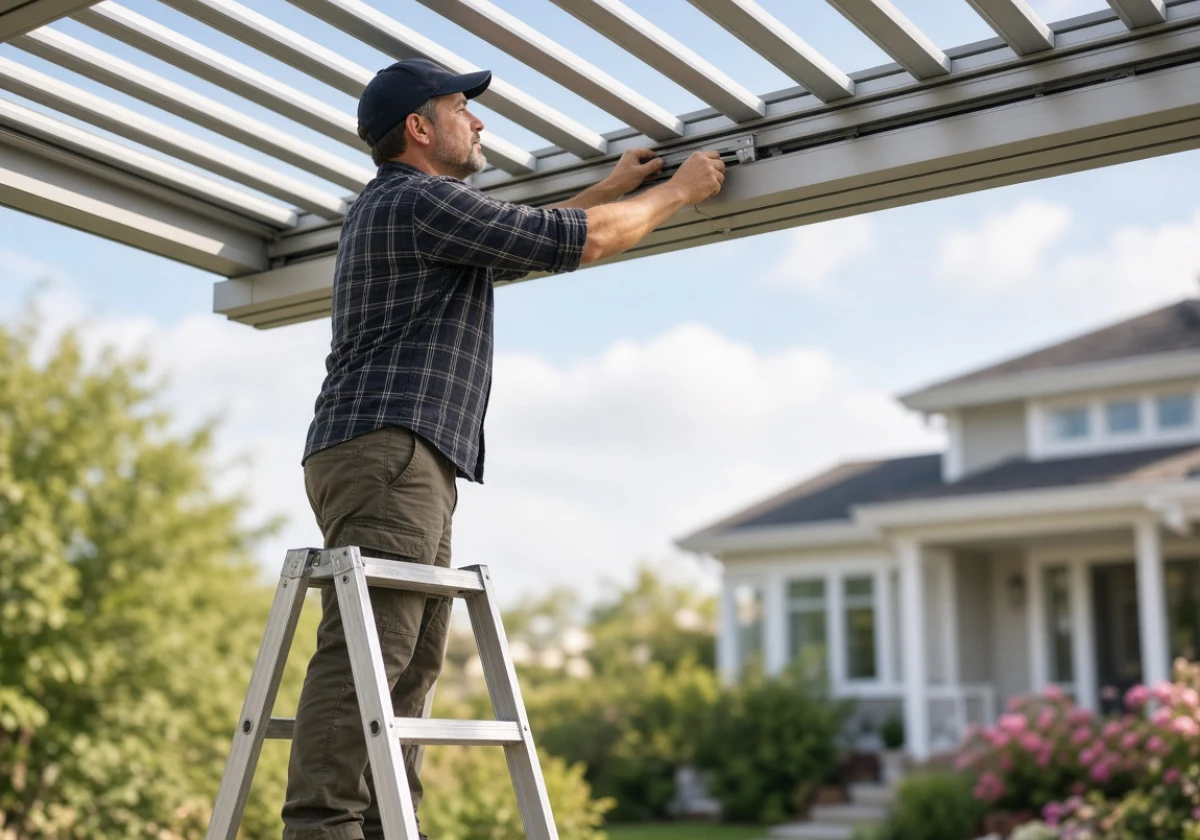
Homeowner on a ladder inspecting and cleaning aluminum louver tracks

You should choose a retractable pergola for flexible shade and a fixed roof for low upkeep and steady shelter. Your routine decides the right fit better than any showroom does.

Picture a typical week on your patio, then find which of these three patterns sounds most like you:

  • Flexible Shade Every Day: Adjustable louvers and retractable roofs suit families who eat outside year-round in changing weather. Open the roof for morning light, then close it before dinner. Louvered pergolas also carry fans, heaters, and LED lighting on the same frame.
  • Steady Shelter, Low Upkeep: Pick a fixed-roof pergola when the space works as an outdoor kitchen or a second living room. With no roof mechanism to operate, fixed structures generally need less upkeep, although gutters, panels and fixings still need checking.
  • Smaller Budget, Simple Setup: On a tighter budget, a retractable fabric canopy covers the basics for much less. Hand operation and seasonal removal come as part of the trade. That suits a deck you use mostly from June through September.

Each pattern starts with how you live outside, then works back to the hardware that supports it. If more than one pattern sounds familiar, consider the habit you repeat most often. Your roof needs to support that routine every week. Get that order right, and the roof choice stops feeling like a gamble and starts feeling like a plan you’ll use.

Ready to Plan Your Outdoor Structure?

Both roof types give you a usable outdoor living space, just on different terms. One hands you control over sun and rain, and the other hands you simplicity.

Walk your yard at noon and again after dark before you decide. Note where the sun lands, where the water runs, and how often you’d open a roof if you could.

Paper Crown Gallery installs custom retractable roof pergolas for families who want outdoor living without watching the forecast. Contact our team for a free quotation and certified installation.

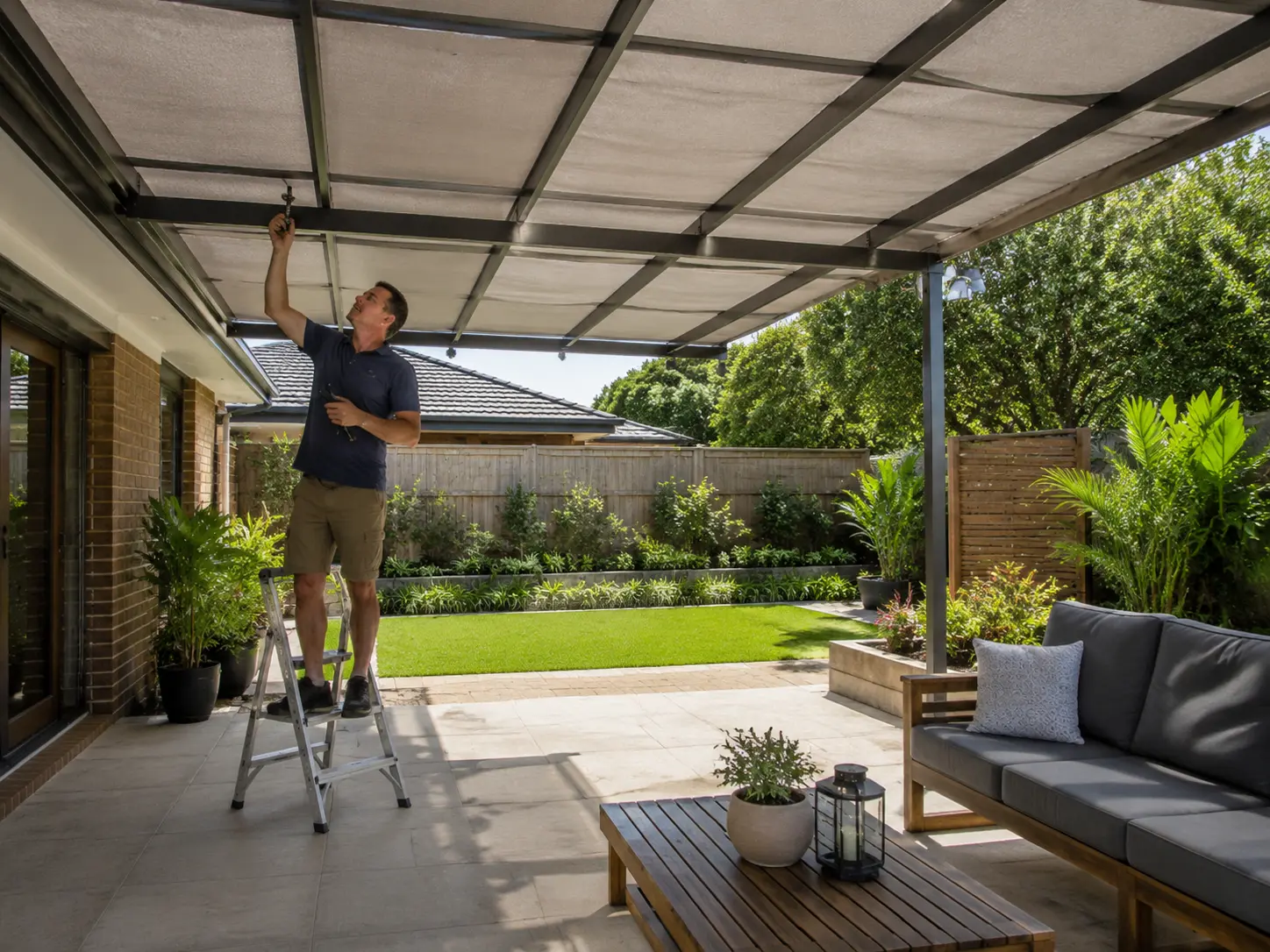
A homeowner fixing a Retractable Shade in his backyard

Why Permanent Shade Is Not Always the Best Outdoor Solution

Permanent shade is not always the best solution because it blocks sun and rain and limits your flexibility. Once a fixed structure goes in, you can’t adjust it when your outdoor space needs change, and that’s where most families run into trouble.

We absolutely get it. We’ve helped Chicago-area homeowners find retractable shade systems that fit their lifestyle year-round, giving them full control over their outdoor space in any season.

In this article, we’ll cover where fixed shade falls short, what retractable pergolas do better, and how to pick the right fit for your space.

If you’ve been settling for less, this one’s for you.

Permanent Shade: Why It Isn’t Always the Answer

A homeowner changing the shade based on the weather

Ever installed a patio cover only to wish you could move it six months later? Most property owners do, because fixed structures don’t adapt to changing needs. A permanent cover structure is like painting your living room before you’ve moved the furniture in. Once you finish it, everything else has to work around it.

And for Chicago residents, that limitation plays out like this:

  • Built for One Setup Only: Most fixed structures aren’t designed to relocate once they’re in the ground. That means if you renovate your patio, add a pergola, or change your layout, the cover stays where it is, even if that spot no longer works for you.
  • No Room to Grow: Fixed covers are built around one aesthetic, color, and style. If your outdoor design evolves, the cover will stay the same, and it’ll clash with every update you make around it.
  • A Costly Obstacle: Chicago residents use their outdoors differently in July than they do in September. A fixed cover can’t adjust to those seasonal shifts, so the structure starts working against you instead of for you.

Frankly, a fixed cover gets more difficult to walk away from with every passing season (we’ve seen people try, and it’s not pretty). UV rays and heavy rain only add to that pressure.

UV Rays, Rain, and What Fixed Structures Can’t Handle

Fixed patio covers take a beating from harmful UV rays and heavy rain every single season. The damage doesn’t appear overnight, though. UV rays work like a slow leak. By the time the damage is obvious, the fabric is already breaking down from the inside (the cover looks fine, but the damage isn’t).

And after two to three years of exposure, fixed cover fabrics can’t block the sun the way they once did. By then, harsh sunlight gets through during summer afternoons, when your patio needs sun protection the most.

Heavy rain then makes things worse. Instead of running off cleanly, it soaks into the weakened fabric.

In that condition, a simple patch job won’t hold. Full panel replacement becomes the only real fix, and that bill lands just as hard as the original installation cost. For Chicago residents, that cycle repeats every few years when Midwest weather stays relentless season after season.

Shade Sails and Fixed Covers: The Practical Limitations

Working with families across Naperville and Hinsdale taught us one thing about shade sails and fixed covers. Both break down under wind pressure and moisture buildup, and wind is always where the trouble starts.

Both failures follow the same pattern:

Shade Sails and Wind

Strong winds put relentless pressure on shade sail fabric. Over time, that sustained force gradually pulls the rope anchors free from the frame. With the anchors loose, the canopy loses its tension and can no longer hold its shape against the wind.

At that point, your patio is left with a structure that flaps around in every storm, offering no real wind protection.

Fixed Covers and Moisture

A shade sail that’s lost its tension sags in the middle, which collects standing water after every rain. Pooled water can also work its way into the fabric and create mold growth, even on mildew-resistant materials.

By the time spring arrives in Chicago, that mold has worked deep enough into the fabric to make the entire cover unusable.

Fixed Shade vs Retractable Pergolas: The Cost Breakdown

A fixed patio cover might run $4,000 at installation, but the real cost reveals itself around year three. The table below shows how fixed shade and retractable pergolas compare when you factor in the full picture.

Factor

Fixed Shade Cover

Retractable Pergola

Average Install Cost

$3,000 to $10,000

$5,000 to $15,000

Avg. Repair Cost (Yr 3)

$1,500 or more

Minimal

Lifespan

5 to 8 years

15 to 20 years

Flexibility

None

Full

Energy Savings

Low

High

As you saw in the table, the lifespan gap between fixed and retractable shades is where the real difference lies. A fixed cover that needs two repairs before year five rarely makes it to year eight. Every repair chips away at whatever savings you thought you had upfront.

Flip the comparison around, and a retractable pergola starts looking like the sounder investment. It runs higher at installation, but it also contributes to long-term energy savings by reducing heat buildup on your patio. That combination of durability and efficiency is something a fixed cover can’t offer over the same timeframe.

The Retractable Canopy and Pergola Roof Alternative

Pulling the retractable shade to protect the outdoor living space

A retractable shade addresses every limitation a fixed cover leaves behind. Unlike a permanent installation, a retractable pergola protects your outdoor living space without locking you into one fixed position.

For example, in Chicago, summers flip between scorching afternoons and sudden storms, and a retractable system lets you respond to both without leaving your seat.

The advantages over fixed shade come down to three practical differences:

  • Open or Close on Demand: A retractable canopy gives you full control over your shaded area as the weather shifts. On a calm morning, you get full sun across your patio. The moment a storm rolls in, the roof closes before the rain reaches your furniture.
  • Fresh Air Without Compromise: Fixed covers force you to choose between shade and fresh air. A retractable pergola roof removes that trade-off entirely. In our experience fitting systems across the Chicago area, families consistently rank open-air shade as the feature they wished they’d had sooner.
  • Motorized Control at Your Fingertips: With a motorized pergola, adjusting the pergola roof via remote control takes seconds from anywhere in your backyard. Systems that include wind and rain sensors retract automatically when strong winds or heavy rain move in.

And unlike fixed covers, a retractable system gets more useful over time, rather than less, as your outdoor space grows and your lifestyle shifts.

Your Outdoor Renovation: Picking the Right Canopy for Your Space

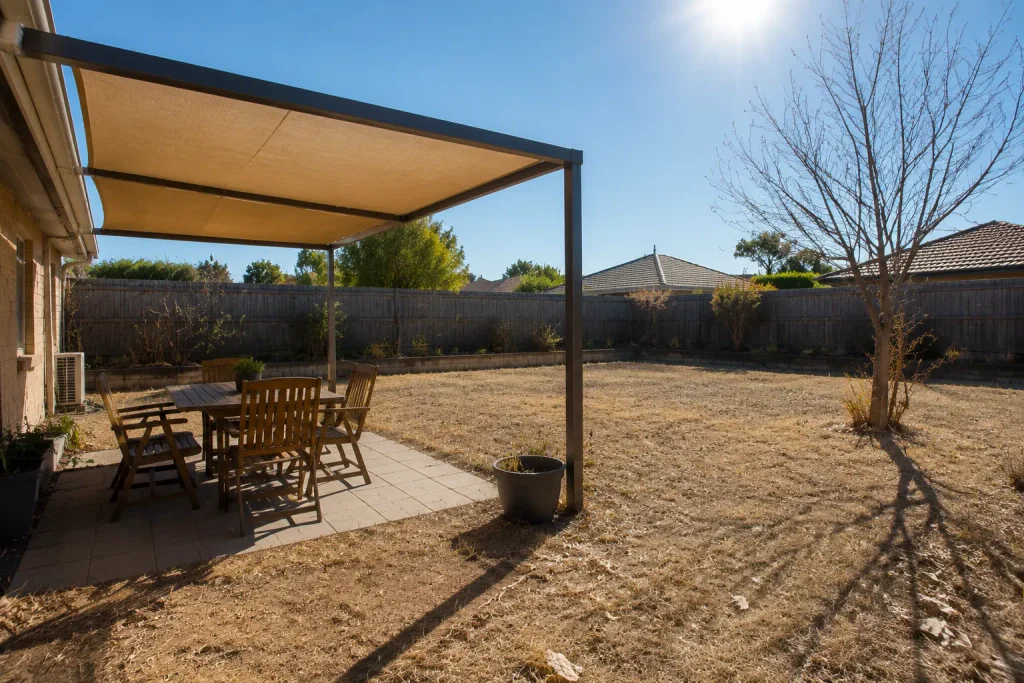
a fixed canopy leaves the patio completely exposed

Every outdoor renovation is different, and the fix that works for one backyard won’t necessarily work for another.

Across Naperville, Hinsdale, and the broader Chicago area, our team has fitted pergolas in all shapes and sizes. One pattern keeps emerging: property owners with larger yards consistently underestimate seasonal wind exposure.

Coverage is the other side of that wind exposure problem. A fixed canopy covers one spot and stays there. As the sun moves across the sky, it leaves the rest of your deck or patio completely exposed.

The EPA notes that shade and vegetation cool surrounding air through evapotranspiration, with urban green areas running an average of 3.0°F cooler. A retractable pergola roof works on that same principle by letting you position shade over the spots on your patio that absorb the most heat.

Going back to what we said earlier, no two outdoor renovations are the same. Our team sizes and fits every retractable pergola around your specific backyard layout, lifestyle, and local weather patterns.

Ready to Rethink Your Outdoor Shade?

Outdoor shade is one of those decisions that looks simple on the surface, with factors like material durability, wind resistance, and long-term costs all playing a role. And once you dig into those factors, the limitations of fixed structures become hard to overlook. The very reason we suggest one flexible installation: a retractable canopy system.

This article laid out why permanent covers wear down, why shade sails fail in strong winds, and where the repair bills come from. A retractable pergola roof sidesteps all of that by giving you control instead of commitment.

For over 30 years, our team at Papercrown Gallery has guided Chicago homeowners through every outdoor covering decision. Reach out today, and we’ll find the right retractable solution for your backyard.

Designing a Pergola for Entertaining: Layouts, Seating & Built-Ins That Impress

Designing a Pergola for Entertaining: Layouts, Seating & Built-Ins That Impress

A pergola can make your outdoor space the perfect gathering spot for friends and family. When you design your pergola with smart layouts, seating arrangements, and built-in features, you create a space where memories happen naturally.

As a company specialising in retractable roof pergolas, we’ve spent over three decades installing them and learning what works for families. The best entertaining spaces have good planning that puts your guests at ease and keeps you relaxed, too.

In this article, we’ll show you how to design your pergola for amazing gatherings:

  • Space layouts that encourage natural conversation and flow
  • Seating solutions that accommodate more people comfortably
  • Activity zones that work for different group sizes and occasions
  • Weather protection that keeps the fun going no matter what

Let’s get started on designing your perfect pergola for entertaining.

How to Create an Inviting Outdoor Entertaining Space

You can create an inviting outdoor entertaining space with thoughtful planning and furniture choices, along with unique features that bring people together naturally. The biggest difference happens when your pergola feels like an extension of your home rather than just another outdoor structure. Your guests should feel drawn to linger, chat, and genuinely enjoy spending time in your space.

Here’s how to design your outdoor entertaining space for maximum impact and comfort:

Designing the Perfect Layout and Seating

What’s the secret to getting your guests talking and mingling naturally? The answer lies in how you arrange your seating under your pergola.

When you arrange your seating in a circle or U-shape, conversation flows much more easily because everyone can see and hear each other. This setup works brilliantly for backyard parties where you want people to feel included. Also,a sturdy picnic table can centre your space, provide plenty of room for food and drinks, and create a natural focal point for gatherings.

Now, when it comes to defining your space, plants can be your best friend for guiding people’s movements and making your seating area feel cosy. For instance, potted herbs like rosemary or lavender create natural boundaries without blocking sightlines. If you need to define different zones within your pergola space, large planters with ornamental grasses or small trees work wonderfully.

Integrating a Built-In Outdoor Kitchen or Bar

Integrating a Built-In Outdoor Kitchen or Bar

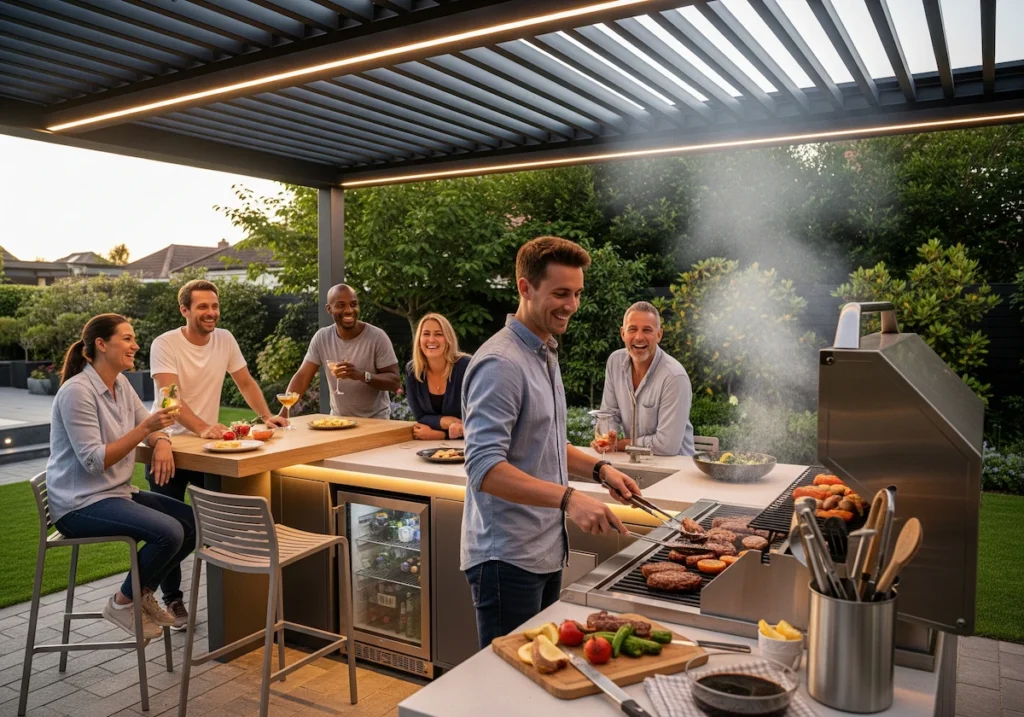
Imagine the convenience of grilling and serving drinks without ever leaving your guests. Sounds too good to be true, right? Well, it becomes possible when you add an outdoor kitchen under your pergola.

This way, you can chat with everyone while flipping burgers on the barbecue or mixing cocktails at your outdoor bar. However, just remember that your outdoor kitchen should match your entertaining style and budget. More often than not, a simple grill station, mini fridge, and prep counter are enough to keep you connected with your guests while handling all the food prep.

Based on our experience, even basic outdoor kitchens change how people entertain. You’ll find yourself hosting more often because the whole process becomes so much easier. Plus, you’ll never again have to sprint back and forth between the kitchen and your guests like you’re training for the Olympics.

Now that you’ve got the functional elements sorted, you might be wondering how to add your personal touch to make gatherings truly memorable. The next step involves adding personality and style that reflects who you are as a host.

Personalising Your Pergola for Themed Gatherings

How do you create the perfect backdrop for special celebrations in your ordinary outdoor space? Well, add personal touches that match the occasion and make your pergola feel custom-designed for that specific event.

Let’s look at how to style your pergola for different occasions:

Setting the Scene for a Birthday Party or Baby Shower

Suppose you’re planning a birthday celebration or baby shower under your pergola. Where do you start with decorations? Wrapping string lights around the horizontal beams is your first step, because they instantly create a festive atmosphere that photographs beautifully. Plus, your guests get that warm, happy feeling the moment they walk into your decorated space.

Different occasions call for different approaches, though. For instance, baby showers need soft pastel decorations and hanging plants that add that gentle, welcoming touch that parents-to-be love. And birthday parties work better with bolder colours and fun elements that match the guest of honour’s personality. Your pergola’s structure gives you plenty of spots to hang decorations without looking cluttered and makes it easy to accommodate friends and family of all ages.

Pro tip: Always hang decorations the night before your party. You’ll thank yourself later when you can focus on food prep instead of wrestling with tangled fairy lights at the last minute.

Adding Ambience with Lighting and Decor

If you want your party to have that warm evening atmosphere, then lighting is the way to do it. It’s an easy way to set the tone and keep the energy going all night long as your guests relax and enjoy themselves. Every time you add the right lights, your outdoor space feels more inviting and party-ready.

Here are your best lighting options:

  • Fairy lights 
  • Lanterns 
  • Citronella candles 
  • Solar pathway lights 
  • String globe lights

Even during daytime celebrations, thoughtful decor makes your pergola more comfortable and inviting for guests seeking shade. When the sun is shining and everyone’s having fun around the pool, colourful banners and themed table settings keep the party energy high. In this way, your pergola becomes the perfect shaded retreat where guests can escape the heat while staying connected to all the action.

Creating a Cosy Fire Pit Zone

Creating a Cosy Fire Pit Zone

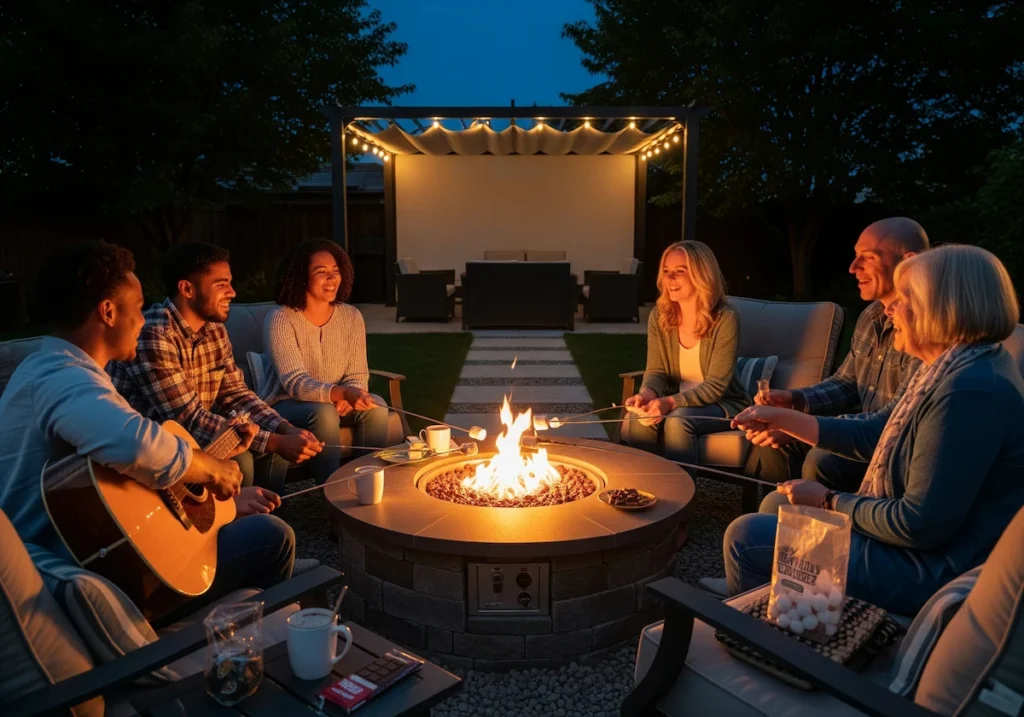
A fire pit near your pergola creates the perfect spot for intimate conversations and extended parties even past sunset. When people gather around a fire, it brings them together naturally and keeps the good times rolling long after dinner ends. Isn’t it amazing how a simple fire pit can make everyone want to stay just a bit longer?

However, safety comes first when you’re dealing with open flames. To reduce risks, keep your fire pit at least 10 feet away from the pergola and any flammable elements such as hanging decorations. And make sure to always have a bucket of water or sand close at hand in case the fire gets out of control.

Also, never leave the fire unattended until it has been fully extinguished. As per standard safety guidelines, a responsible person aged 18 or over should always supervise any backyard fire. Because at the end of the day, your insurance company probably won’t accept “the marshmallows needed toasting” as a valid excuse for a pergola fire.

When you’re enjoying fresh air with friends and having fun around the fire, you’ll appreciate how this simple addition extends your entertaining season. Fire pits work year-round and give you more reasons to gather outdoors.

You know all these personalisation ideas sound great, but they only work with the right pergola foundation. The proper features and materials will determine how well your pergola handles all the decorating, lighting, and activities you have planned.

How to Choose the Right Pergola and Features

You can choose the right pergola by considering your home’s style, your yard’s size, and how you plan to use the space for entertaining. The best pergola complements your house rather than competing with it, fits comfortably in your available space, and includes features that match your lifestyle. Your pergola should feel like a natural extension of your home that makes outdoor entertaining effortless.

Here are the main factors to consider when selecting your perfect pergola:

Selecting a Pergola Design that Fits Your Home

There are lots of styles and materials available, like timber, aluminium, and steel, each with different looks and maintenance needs. When you have so many options to choose from, it can be confusing to decide which direction to go.

You don’t want to pick something that looks out of place with your house, right? So start by matching your pergola’s style to your home’s existing architecture.

If your house has traditional features like brick or weatherboard, a timber pergola with classic proportions will look right at home. However, if you’ve got a sleek modern design, an aluminium or steel structure with clean lines works much better.

One of our clients had a modern brick house with clean lines and wanted a pergola design that wouldn’t clash with their contemporary outdoor space. We installed a sleek aluminium pergola with straight beams that perfectly matched their home’s minimalist style. The outcome looked like it was always meant to be part of their house and yard.

Innovative Solutions for Comfort and Privacy

Innovative Solutions for Comfort and Privacy

What features can make your outdoor pergola more comfortable and private for entertaining? There are smart features available in modern pergolas that automatically adjust to weather conditions and create intimate spaces for your guests. These innovations make your pergola more versatile and user-friendly throughout different seasons.

Here are two options that work best for both comfort and privacy:

  • Modern technology: If you want convenience, rain sensors and wind sensors can automatically close your pergola roof when storms approach. You’ll never have to worry about rushing outside to protect your furniture or guests during unexpected weather changes.
  • Privacy screens and panels: Nobody wants nosy neighbours watching their barbecue technique or party conversations. That’s where retractable screens and decorative panels give you privacy when you need it, as they can be pulled out for intimate gatherings and tucked away when you want an open feel.

These features might seem like luxury additions, but they make your pergola much more practical for regular entertaining. Pretty soon, you’ll be the go-to host because everyone will know your pergola won’t let them get rained on.

The Benefits of a Retractable Roof

A retractable roof is a must-have feature for anyone who wants ultimate control over their outdoor space. You can enjoy full sun when you want a tan, instant shade when it gets too hot, and complete roof coverage for evening entertaining under pergola lighting. This flexibility means you can use your space comfortably during any weather and at any time of day or night.

We recommend retractable roofs for most of our clients because unpredictable weather is the biggest party-killer out there. But with a retractable roof system, rain doesn’t have to ruin your party, and blazing sun doesn’t have to send everyone indoors.

Create the Backyard Everyone Wants to Visit

Your pergola can become the heart of every gathering when you plan it right. You’ll host every party effortlessly, knowing your space works perfectly for both intimate dinners and larger celebrations.

We’ve covered everything from smart seating layouts to retractable roofs that adapt to any weather. You’ve also learned how personal touches and the right features can make your pergola feel custom-designed for your entertaining style.

At Paper Crown Gallery, we’ve spent over 30 years helping families create outdoor spaces that bring people together. Our retractable roof pergolas give you the flexibility to entertain in any weather, and our experience means we know exactly what works for real entertaining situations.

Ready to change your backyard and make it everyone’s favourite gathering spot? Visit us today for a consultation and see how our retractable pergola solutions can make your entertaining dreams a reality.

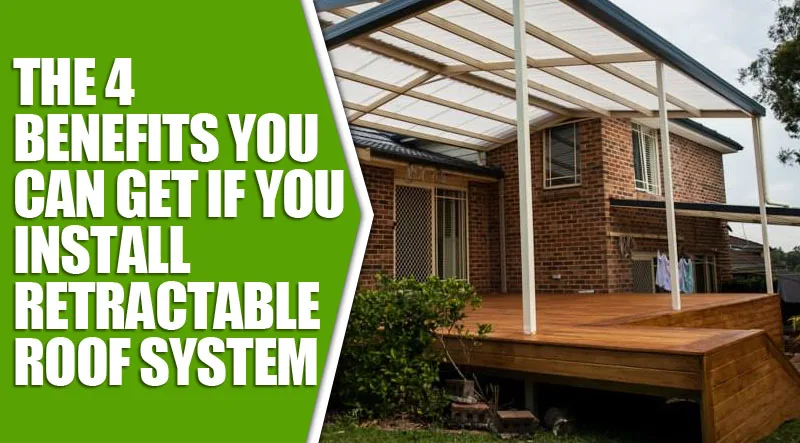
The 4 Benefits You Can Get If You Install Retractable Roof System

There are a lot of advantages that you can get if you decide to install retractable roofs. It is best for family time and a lot more. It also adds enormous value to your home. People usually install retractable roofs as a shade from the sun, but there are more things you can benefit from it. Check out the best benefits you can get so you can make up your mind and have a retractable roof installed tomorrow.

1. Flexible shade solution

With a retractable roof in your home, the family can enjoy the outdoors no matter what time of the day. It is easy to have it on a full block if the sun is at its peak or have it partially drawn depending on how much sunlight you want.

2. Rain protection

The retractable roof is not just for sun protection because if it’s raining, you can still enjoy a hot cup of coffee outdoor with the help of a full block retractable roof. The best thing about this retractable roof is that you won’t have to worry because it comes in with water gutter that is built under the rainy season circumstances.

3. Best for home insulation

If you have a retractable roof set up, it works as an excellent insulation whether it’s summer or the rainy season. It is like a filter that will give your home better insulation for whatever kind of weather.

4. Protect outdoor furniture

Too much sun exposure can cause damage to furniture most especially those that are placed outdoor. In a matter of time, you can notice that the natural color of the furniture fades. If you have a retractable roof, you can prevent the damages that can be inflicted by the sun or water on a rainy day.

Installing a retractable roof in your property is beneficial to you as well as your properties. You should not hesitate to get one so you can start enjoying precious time with your family on the outdoors.