If you’ve ever closed a retractable pergola roof during a rainstorm, you’ve probably wondered where all the water goes. In a louvered system, built-in gutters and hidden post channels carry rainwater away, which keeps your outdoor seating area dry.
That’s quite different from older fabric covers that often sagged under collected rainwater. At Paper Crown Gallery, we’ve spent over three decades installing retractable pergola roofs, so we understand how different roof designs handle rain.
This guide walks the water from blade to gutter to post to ground, then weighs aluminum louvers against fabric canopies. You’ll see which sensors handle the weather for you and what seasonal care keeps the path clear.
Where Does the Water Go When You Close a Retractable Pergola Roof?
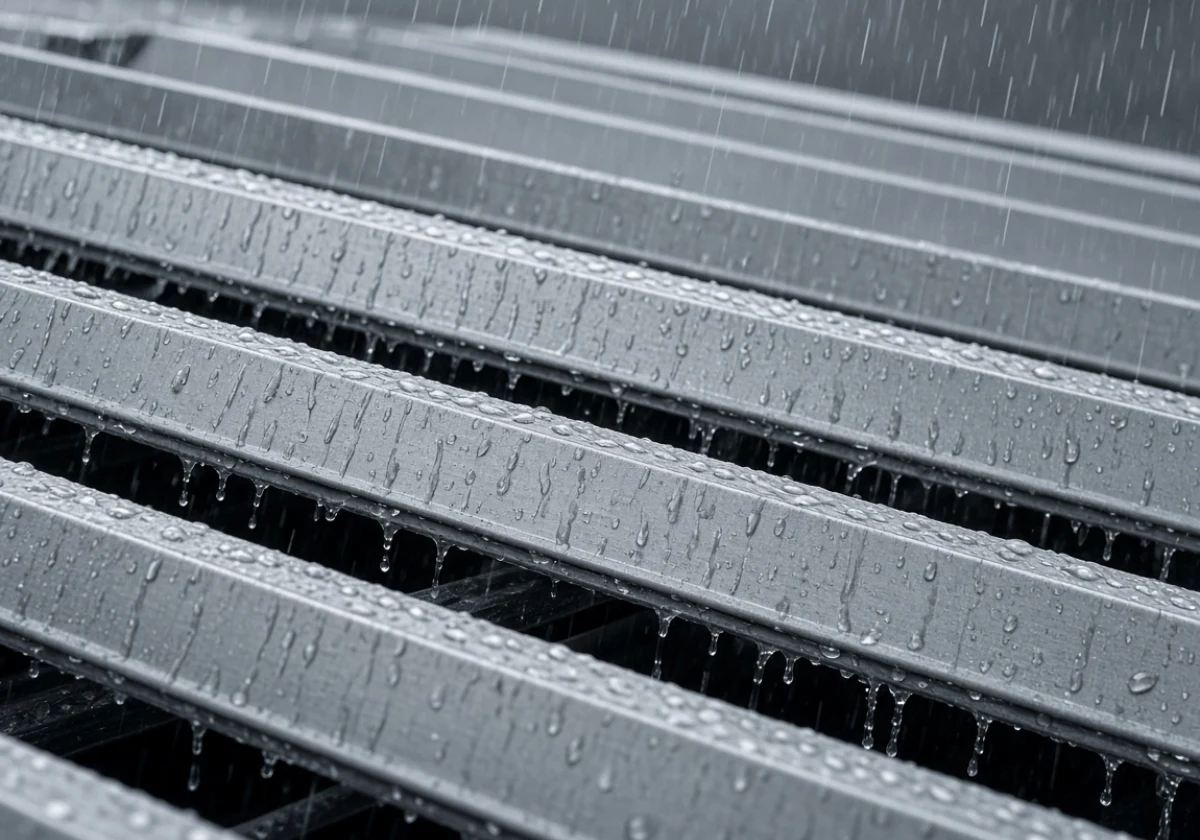
A louvered pergola roof uses four connected parts to control rainwater, and each has a specific job. The blades collect and direct the rain, while the rest of the system carries it away.
Let’s follow the rainwater through each of the four stages, starting with the blades that first catch it.
How Rotating Blades Seal a Retractable Roof System Against Rain
Every blade in a louvered roof pivots on a shaft, and a motor turns the whole bank at once. When the roof closes, the blades rotate into position and overlap along their edges. The overlapping design prevents rain from passing directly through the gaps.
Some systems use rubber gaskets to seal those overlaps. The seals limit water passing through the joints, while the blade profiles guide rain toward the gutters. Even a small gap between two blades can let water drip through, especially during wind-driven rain.
During your spring inspection, check the seals for cracks, gaps, or wear. You can also close the roof and look along the blade joints for uneven alignment or visible openings. Hardened or flattened gaskets may allow leaks, so contact your installer about replacing them before the next storm.
Built-In Gutters: Where the Louvered Roof Collects Every Drop
As rainwater leaves the blades, it enters narrow channels along the surrounding beams. Unlike exposed gutters on a house, these channels sit within the pergola frame and remain largely out of sight. Once inside, water travels toward one or more drainage posts, depending on the roof’s design.
However, leaves and other debris can collect near the outlets and slow the flow during heavy rain. On the installs we’ve walked, the frames that drain slowest are the ones someone set dead level. Without the right drainage slope, water sits in the channels and encourages algae growth.
That’s why you should ask your pergola installer to check the slope and water flow before signing off on the job.
Pergola Drainage Runs Hidden Inside the Frame Posts
After leaving the gutters, rainwater enters designated hollow posts that work as downspouts. The water travels down through the columns, so you won’t see pipes running along the outside of your pergola.
The posts carry water toward outlets near their base. Even during a heavy shower, the system keeps draining as long as the channels stay clear and rainfall stays within its capacity.
You’ll usually spot trouble when water spills over one section while the others drain normally. If you notice that, check for leaves around the gutter opening before assuming there’s a problem inside the post. Your installer can show you how to reach these areas safely for cleaning.
The Exit Point: Where Water Leaves at Ground Level
Once water leaves the posts, its direction becomes important. Installers often direct the flow toward a lawn, gravel bed, or another suitable drainage area away from the patio.
The outlet’s position deserves attention, especially if your patio sits close to the house. The US Environmental Protection Agency (EPA) explains how directing downspout runoff toward lawns or gardens helps water soak into the ground. However, poor placement can cause property damage or unsafe conditions.
Quick Tip: Before installation begins, discuss the outlet location with your installer. Check where the water will collect during heavy rain and confirm the drainage plan follows local requirements.
Aluminum Retractable Louvers vs. Fabric Canopies: How Each Protects Your Outdoor Space From Rain
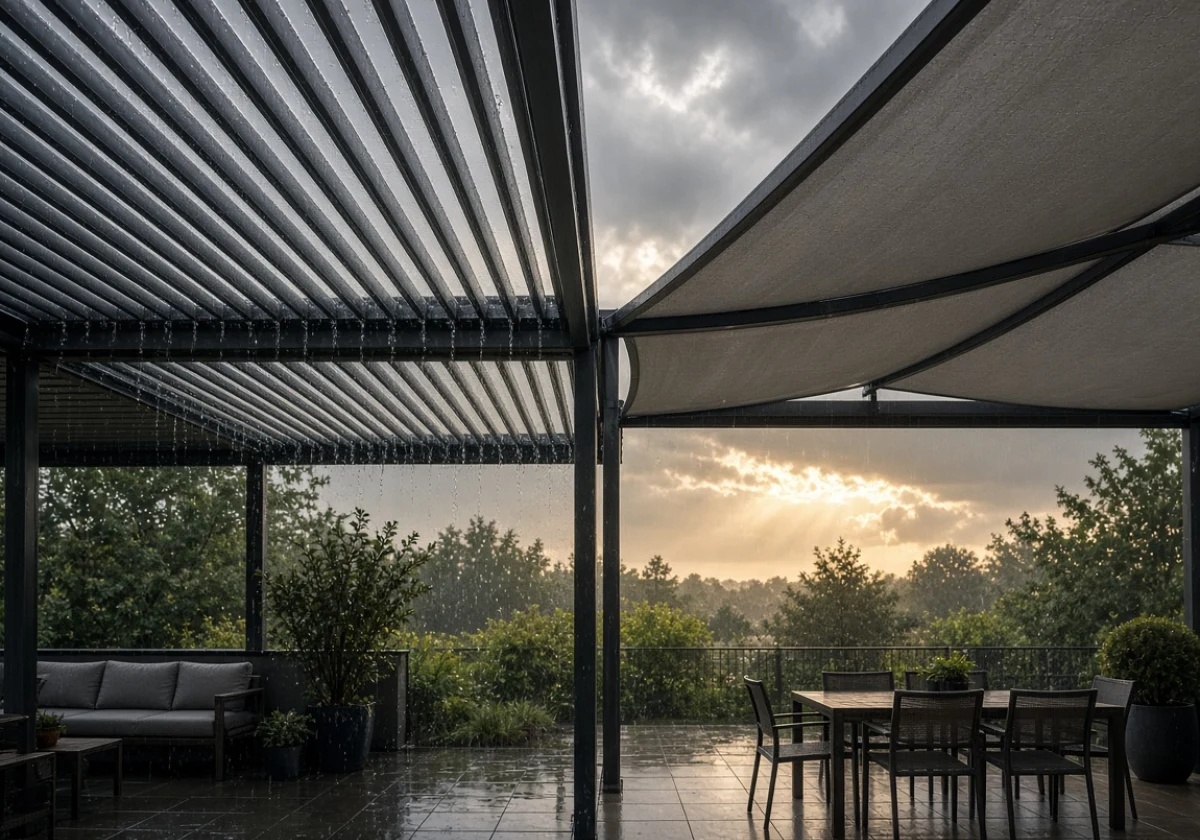
That four-stage drainage path applies to louvered systems with built-in gutters. Fabric canopies handle rain differently, which affects how well each roof protects your patio during a storm.
Below, we’ve set both roof types side by side to help you see which better suits your outdoor space.
| What to Compare | Aluminum Retractable Louvers | Fabric Canopy | What It Means for You |
|---|---|---|---|
| Rain exposure | Rigid blades close to form a protective roof | Water resistance depends on fabric and roof pitch | Check the rain rating for your local weather |
| Pooling | Blades stay rigid under load | Fabric stretches and dips over time | Ask how the canopy maintains proper tension |
| Mid-storm use | Closed blades provide protection within rated limits | Many covers must retract in high wind | Check operating limits for both roof types |
| Upkeep | Inspect seals, moving parts, and drainage outlets | Clean the fabric and inspect seams and tension | Compare replacement parts and service costs |
Your patio’s size and layout also affect which roof will work best. A wide span, nearby walls, or an awkward roofline can influence the support structure and installation cost. So ask your installer to measure the space and explain any limits for each roof type.
The frame’s durability is another factor to consider. According to The Aluminum Association, aluminum is lightweight, strong, durable, and corrosion-resistant. These properties make it suitable for outdoor pergola frames exposed to sun and rain.
Smart Sensors Deliver Pergola Rain Protection Before the First Drops Land
Draining itself is only half the job, since the roof still needs to close when rain starts. With a modern retractable roof system, a sudden shower costs you seconds rather than an evening.
Pergola rain protection starts with a sensor that detects the first drops and signals the motor to close the blades. Wind sensors also monitor gusts and adjust the roof according to the system’s safety settings. These features help protect the outdoor area when the weather changes unexpectedly.
You’ll appreciate the automation when unexpected rain arrives during dinner or while you’re away. Manual control still belongs within reach, though. One button lets you adjust the blades yourself when you’d rather watch the rain come in (without having to reach for your phone or find the remote).
Beyond the automatic controls, a few features are worth discussing with your installer before you sign:
- Rain and Wind Sensors: Some roofs close when rain starts but open their blades during strong winds to protect the frame. Your installer can explain how the sensors respond and which settings suit your roof.
- Wall Switch or Remote: A wall switch near the patio door is handy when the remote disappears between the cushions. You’ll still have an easy way to adjust the roof.
- Side Screens: Rain sometimes blows across the patio even with the roof closed. A screen on the exposed side protects your seating area without enclosing the whole space.
- Integrated Lighting and Heaters: Add built-in lights and heaters during installation to avoid extra wiring work later. This way, dinner can carry on after sunset, even when the evening turns chilly.
- Zoned Control: One bay might cover the dining table while another sits over the lounge chairs. Separate controls let you adjust each area to suit what’s happening underneath.
Choose the features you’ll use regularly and discuss them early, since adding electrical controls or screens later often involves extra installation work.
Keeping Retractable Pergolas and Their Drainage Channels Clear Year Round
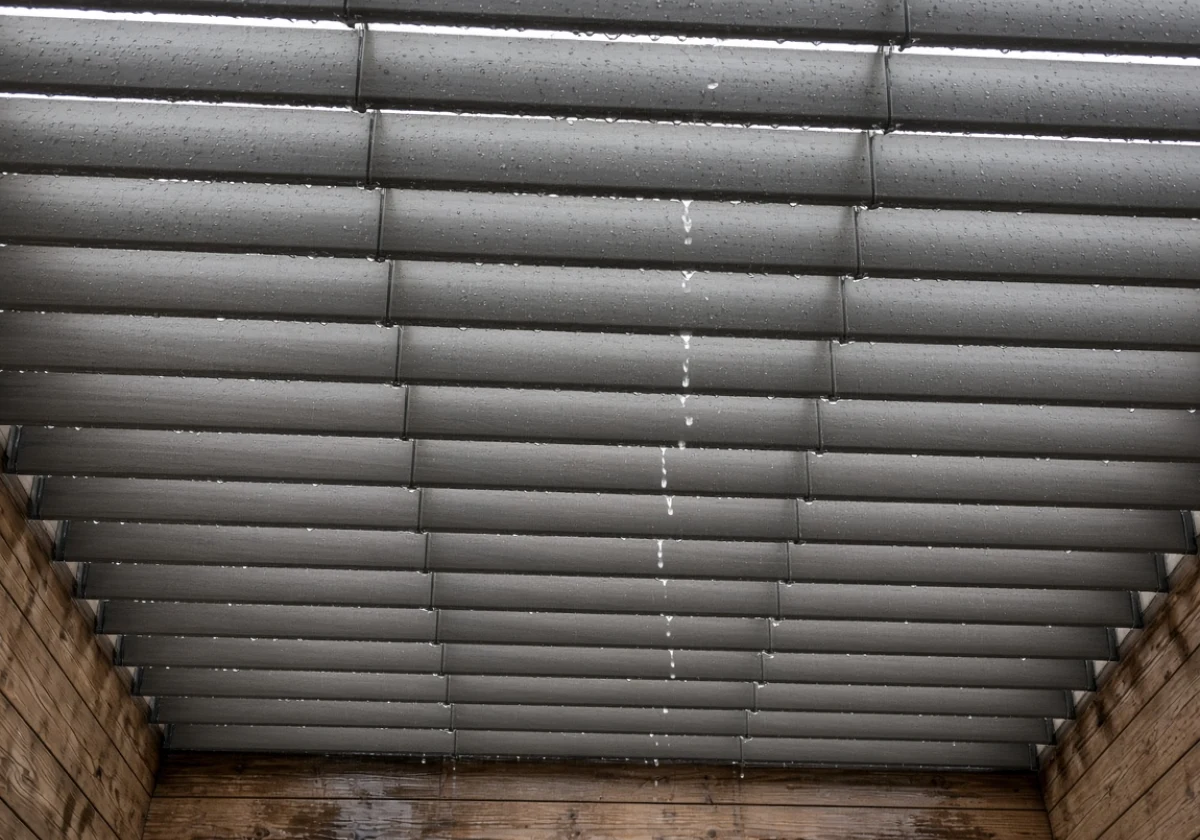
Sensors and side screens only earn their keep while the channels behind them stay clear. Leaves, dirt, and seed pods can collect in the drainage system over time, particularly after windy weather.
Three checks cover the whole route, and they follow the same path rainwater takes through the roof:
- Clear the Gutter Channels: Leaves and seed pods settle in the top rail and block water flow toward the corner. Remove any buildup you can safely reach, then rinse the channel and watch for water flowing toward the post.
- Flush the Post Downspouts: If your system allows flushing, run water through the post opening and check for a steady flow at the bottom. Water backing up or draining slowly suggests a blockage inside the post that needs further attention (leaf season is the check that counts most).
- Check the Outlets and Ground Fall: Water should leave the post and travel away from the house. A splash block helps guide runoff when the outlet sits close to the foundation. Damp soil beside the wall is a sign that the drainage route needs attention.
These checks are worth doing throughout the year, with extra attention after heavy leaf fall or whenever water drains slowly. Your installer can explain which parts are safe to access and how often your particular system needs cleaning.
Ready for Outdoor Comfort? Request Your Free Quote Today
A retractable pergola roof gives you greater control over your outdoor space when the weather changes. And the right drainage setup helps keep rain away from your seating area, while regular cleaning keeps water moving through the system. Your roof’s design and local weather still affect how well it performs.
Aluminum louvers, fabric canopies, and automatic controls each offer different benefits. The best choice depends on your patio layout, local rainfall, and how often you use the space.
Paper Crown Gallery helps homeowners build a retractable pergola project around the yard they already have. Contact us for a free quote, and we’ll walk the drainage route with you before anything gets built.