When the weather turns, a retractable pergola rain sensor or wind sensor signals the motor, and the roof closes or shifts on its own. You don’t need to be home or holding the remote for that response to happen.
That hands-off reaction only protects your patio when each sensor suits the weather it watches and stays clean enough to read it. Rain, wind, and snow sensors each push the roof toward a different position, so the wrong mix leaves gaps.
At Paper Crown Gallery, we help homeowners choose outdoor structures that hold up through every season. And this guide covers how rain detection closes the louvers, what wind sensors do during gusts, and how each sensor changes the roof. You’ll also find the seasonal checks that keep your automatic pergola roof controls working.
Rain Sensors: How Your Retractable Pergola Roof Reacts to the First Drops
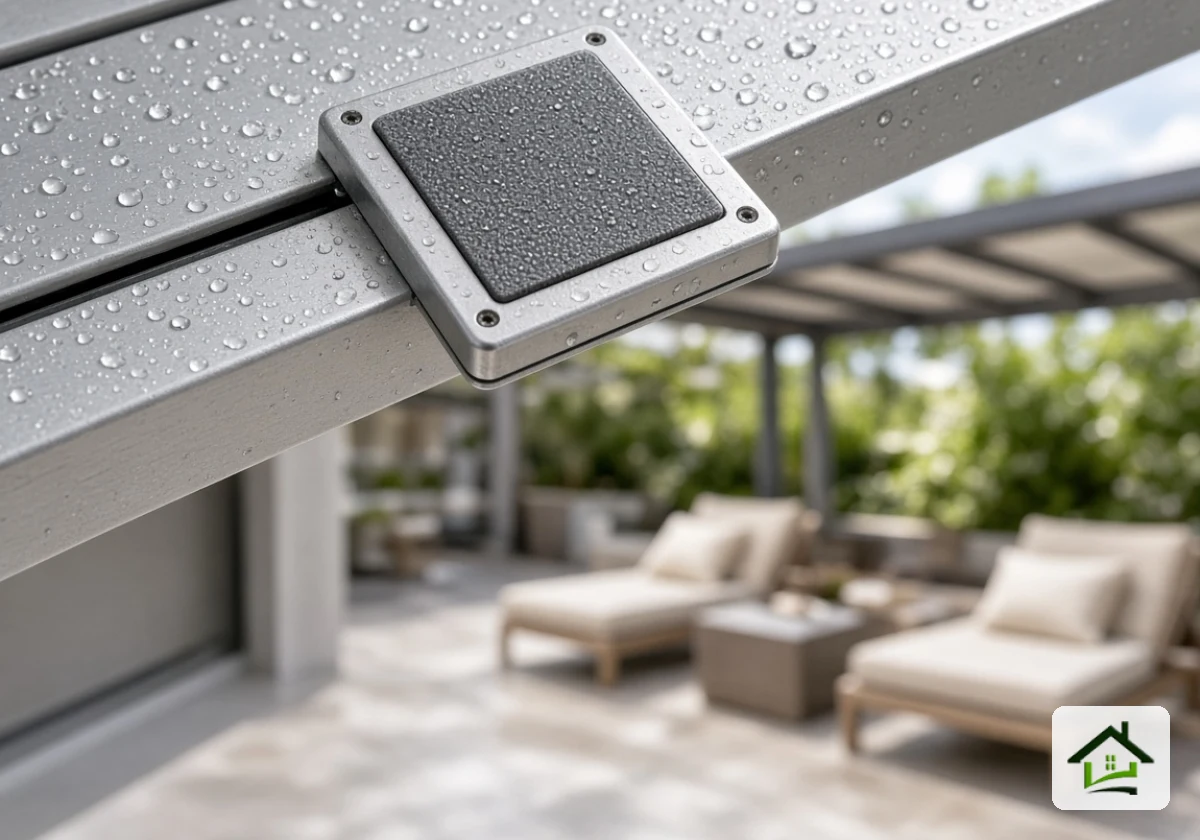
A retractable pergola rain sensor is a small plate mounted on top of the frame and wired to the controller that drives the roof motor. It turns the first drops of a shower into an automatic response, so the roof shuts before water reaches your outdoor furniture.
How the Sensor Plate Detects Moisture
Inside the plate, a grid of conductive tracks sits printed close together on its surface. When raindrops bridge two tracks, current flows between them and the sensor reports rain to the controller.
Because of this design, location decides how fast the plate reacts. A plate tucked under a gutter or tree branch stays dry while your patio gets soaked (an easy placement mistake to make during installation).
Mount it on an open, level part of the frame where rain lands first. Before you tighten the brackets, check that nothing overhangs it.
The Signal That Tells the Motor to Close
Once the plate senses water, it sends a rain signal to the control box. Your controller treats that signal as a command that overrides whatever position you last set by remote or app.
In practice, this override closes the roof even when someone left it open for afternoon sun. Many controllers also let you set a short confirmation time, so one stray drop doesn’t trigger a full close.
That setting deserves a look in your manual. Set it too short, and lawn sprinklers or heavy dew can shut the roof on a clear day.
Closing the Louvers Before the Patio Gets Wet
After the signal arrives, the motor rotates the louvers flat until their edges seal against each other. Gutters built into the blades then carry water toward the posts and away from your seating.
Closing speed counts here, because heavy rain can soak cushions in the time a slow roof takes to seal. If you’ve ever sprinted outside to rescue cushions mid-storm, you already know why.
With that in mind, run a hose over the sensor plate and time the full closing cycle.
Reopening the Roof Once the Rain Stops
A wet plate keeps reporting rain until it dries, which holds the roof shut. On top of that, most controllers add a delay, so a short break between showers doesn’t open and close the louvers repeatedly.
That pause spares the motor extra cycles and keeps water off the patio during stop-start storms. Some systems skip automatic reopening altogether and leave the choice to you (the safer default when nobody is home to watch).
Look up which reset behavior your pergola model uses. If it stays closed, you’ll reopen it by remote once the sky clears.
What Does a Pergola Wind Sensor Do When Gusts Pick Up?
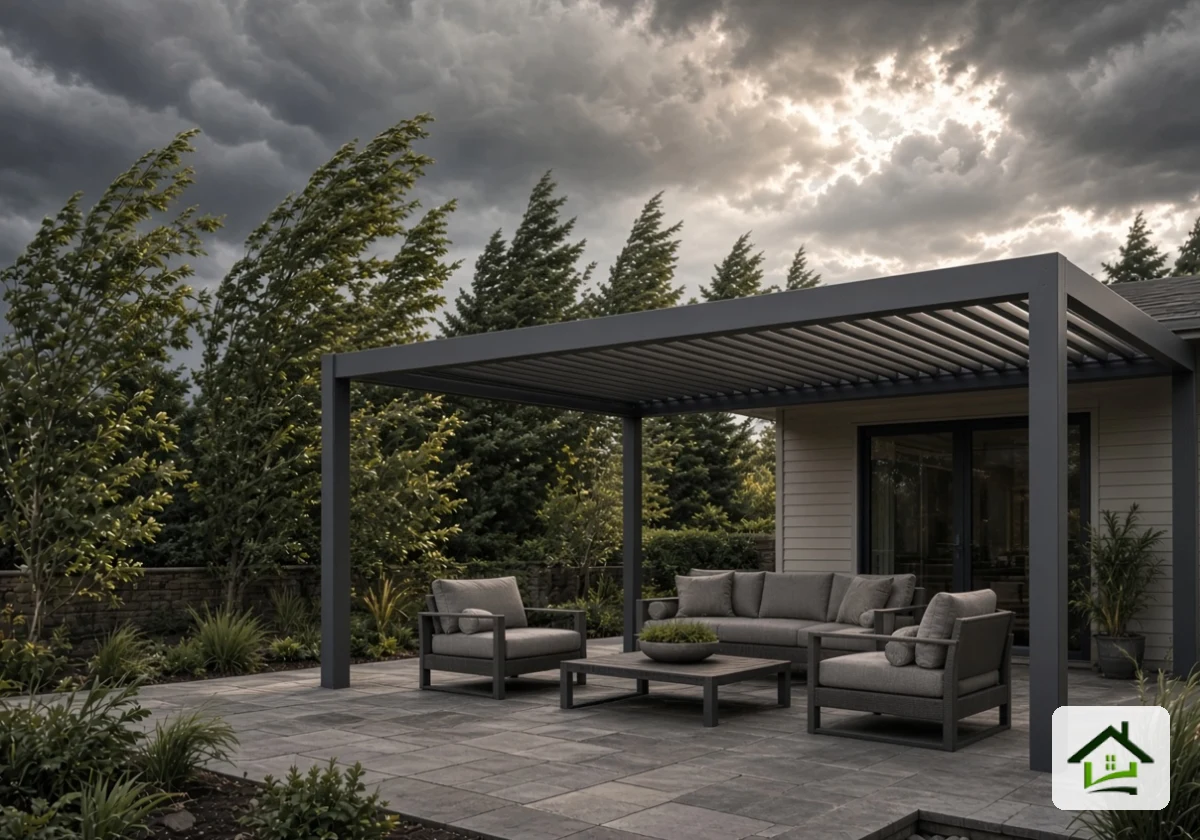
Rain isn’t the only weather that can catch an open roof off guard. A pergola wind sensor measures gust speed with small spinning cups, and it moves the roof to a safe position once wind passes the limit you set.
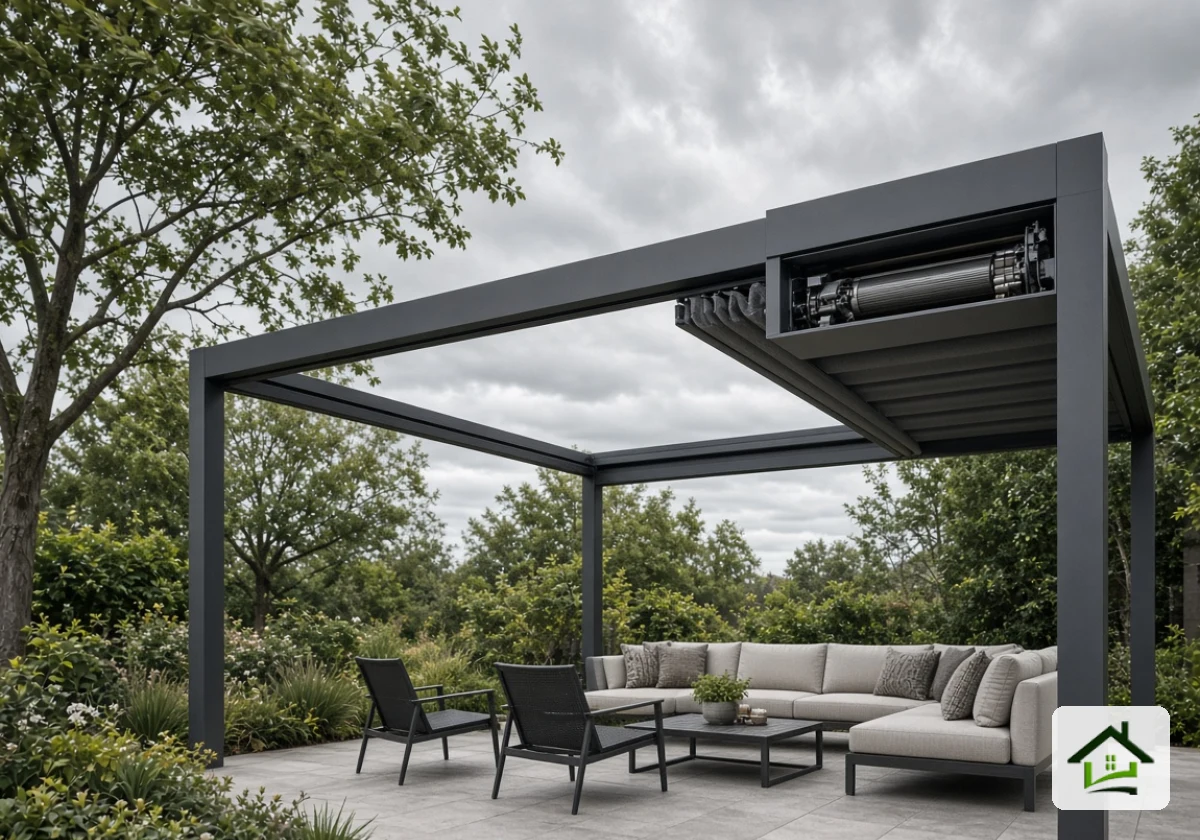
Where that safe position sits depends on the roof type. Louvered aluminum pergolas usually turn their blades upright so wind passes through, while fabric retractable roofs pull back into a full cassette housing to avoid tearing.
Sudden storms show why that reaction has to be automatic. The National Weather Service on thunderstorm downbursts explains that these winds “can reach over 100 mph and are caused by air being dragged down by precipitation.” That means the gust front often hits before the rain does, and your wind sensor reacts first (often well before the rain sensor even gets wet).
Anyone who has set up one of these controllers learns that the factory wind limit rarely suits an exposed yard. If your home sits on a hill or near open water, you’ll likely want a lower trigger.
Before your first windy season, confirm these settings and placement details:
- Gust Speed Trigger: Check the speed that sends the roof to its safe position. Most controllers display this in kilometres per hour and let you adjust it in the settings menu.
- Delay Duration: Confirm how long wind must stay above the trigger before the roof moves. A short delay prevents the roof reacting to a single gust, while a long one risks leaving the roof open during a sustained blow.
- Auto Return: Find out whether the roof returns to your last position once gusts drop. Some models wait for a manual command instead, which is safer if the wind tends to come in waves.
- Rain and Wind Priority: Check which signal your controller obeys first when both trigger together. Closed louvres catch more wind than open ones, so the wrong priority can strain the frame during a storm.
- Sensor Placement: Confirm the sensor sits clear of walls, posts and rooflines that block or redirect airflow. A shielded sensor underreads the true gust speed and reacts late.
Of these, the rain-and-wind priority deserves the closest look. Closed louvers catch more wind than open ones, so check your manual for which signal your controller obeys first.
Rain, Wind, and Snow Sensors Each Trigger a Different Roof Response
With gusts covered, the next step is seeing how the three sensors split the work. Each one watches a single kind of weather, and the controller gives each its own roof position.
| Sensor | What It Detects | Roof Response | What It Means for You |
|---|---|---|---|
| Rain sensor | Water on the plate | Louvers close and seal | Furniture stays dry while you’re away |
| Wind sensor | Gusts above your limit | Louvers turn upright or fabric retracts | Less strain on blades, motor, and frame |
| Snow sensor | Cold plus moisture | Louvers usually open so snow falls through | No snow load building on closed blades |
Of the three rows, snow matters most in the Midwest and Northeast, where heavy snow can pile onto a closed roof overnight. In milder Sun Belt states, a rain and wind pair handles most sudden changes.
Keeping Motorized Pergola Weather Sensors Reliable Through Every Season
Once that sensor mix is chosen, accuracy depends on what builds up on each sensor over the year. Ready.gov guidance on winter storm hazards notes that winter storms “can bring extreme cold, freezing rain, snow, ice and high winds.” Every one of those hazards can coat, freeze, or shift a sensor. These checks keep your sensors reading true:
- Clean Sensor Plate: Dust, pollen, and bird droppings can bridge the tracks and hold the roof shut on dry days. Wipe the plate with a soft damp cloth each spring and fall, and skip abrasive cleaners that scratch the conductive coating.
- Free-Spinning Wind Cups: Frozen cups stop turning, so the controller never registers a gust. After freezing rain, spin the cups by hand, and if they stay stuck, park the roof in its safe position until they thaw.
- Tight Wiring and Brackets: Over time, vibration loosens brackets and lets a sensor tilt off level. Check the screws and cable connections twice a year, then repeat the hose test to confirm the roof still closes.
Put these checks on the same days you change your smoke alarm batteries, so they never slip. A skipped check usually shows up as a roof that ignores the first storm of the year.
Ready to Let the Sensors Watch the Sky for You?
Start by listing the rain, wind, and snow your area sees most. Then check your controller settings against that list before the next season turns.
Ready to plan the right sensors for your outdoor space? Reach out to Paper Crown Gallery for straightforward guidance on choosing and setting up weather controls that suit your home.