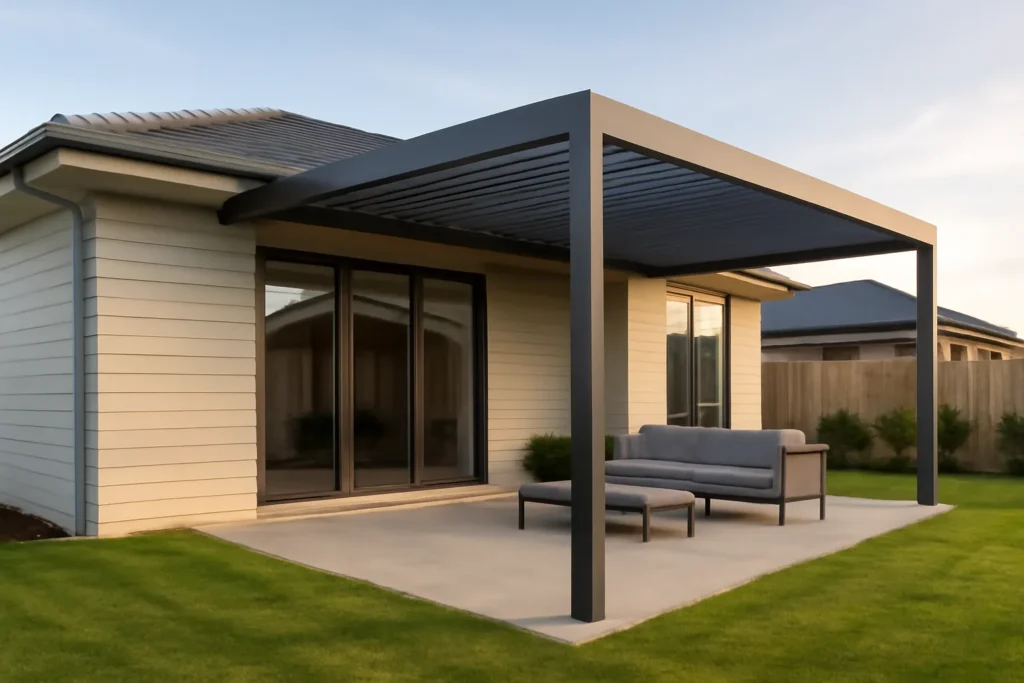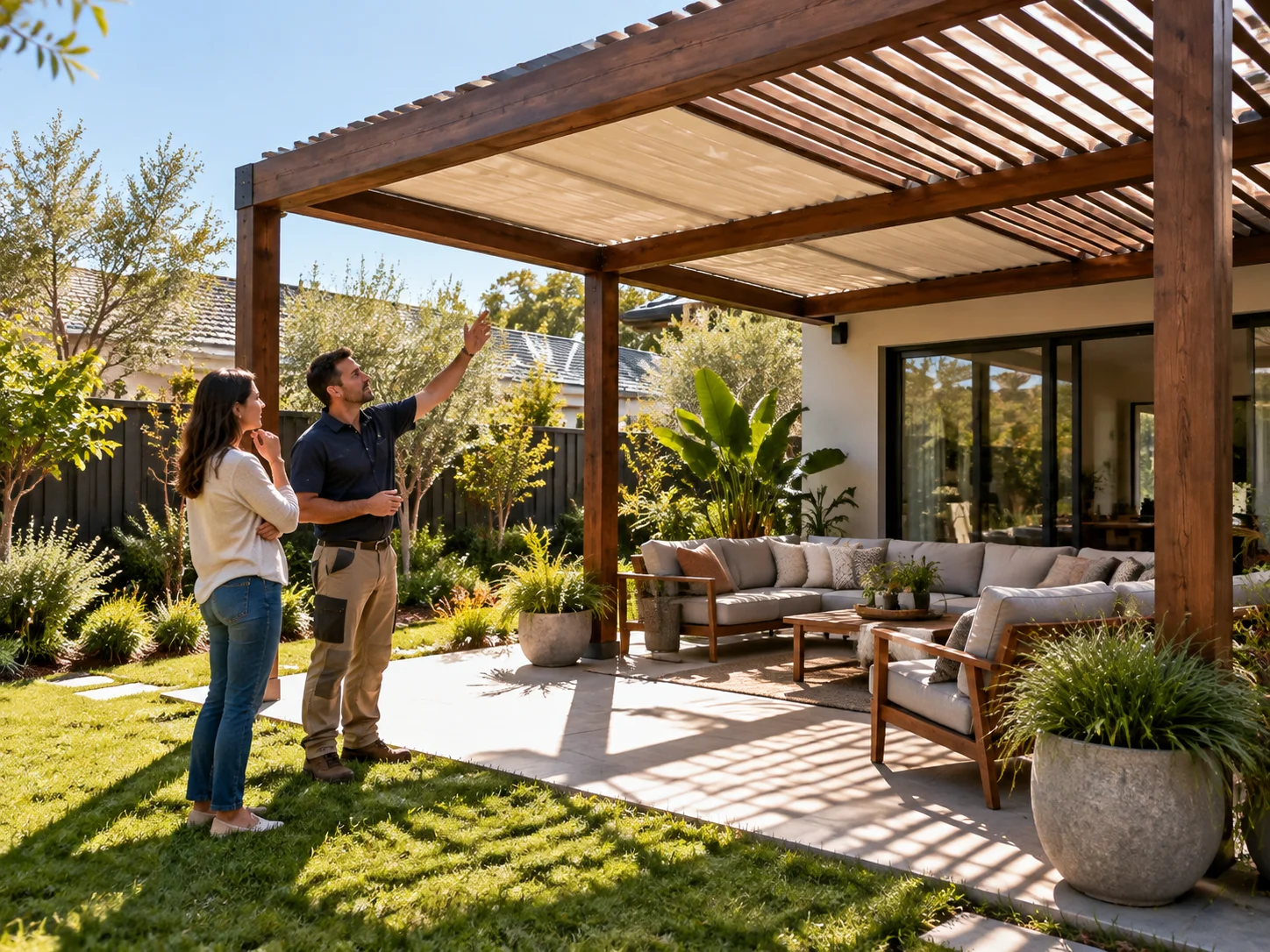
outdoor living

Why Outdoor Living Spaces Increase Everyday Home Enjoyment

Your backyard probably sits empty most nights, and the weather may not be the reason. Bare concrete and two folding chairs don’t give people much reason to stay outside after dinner.

Comfort is what pulls people out there: shade overhead, a table that seats everyone, and somewhere to set a drink down. That is the difference we build at Paper Crown Gallery.

Below we’ll share what a finished yard needs, which pergola ideas suit a crowd, and where furniture and kitchens fit into the plan.c

Outdoor Living Spaces Add Real Value to Everyday Life

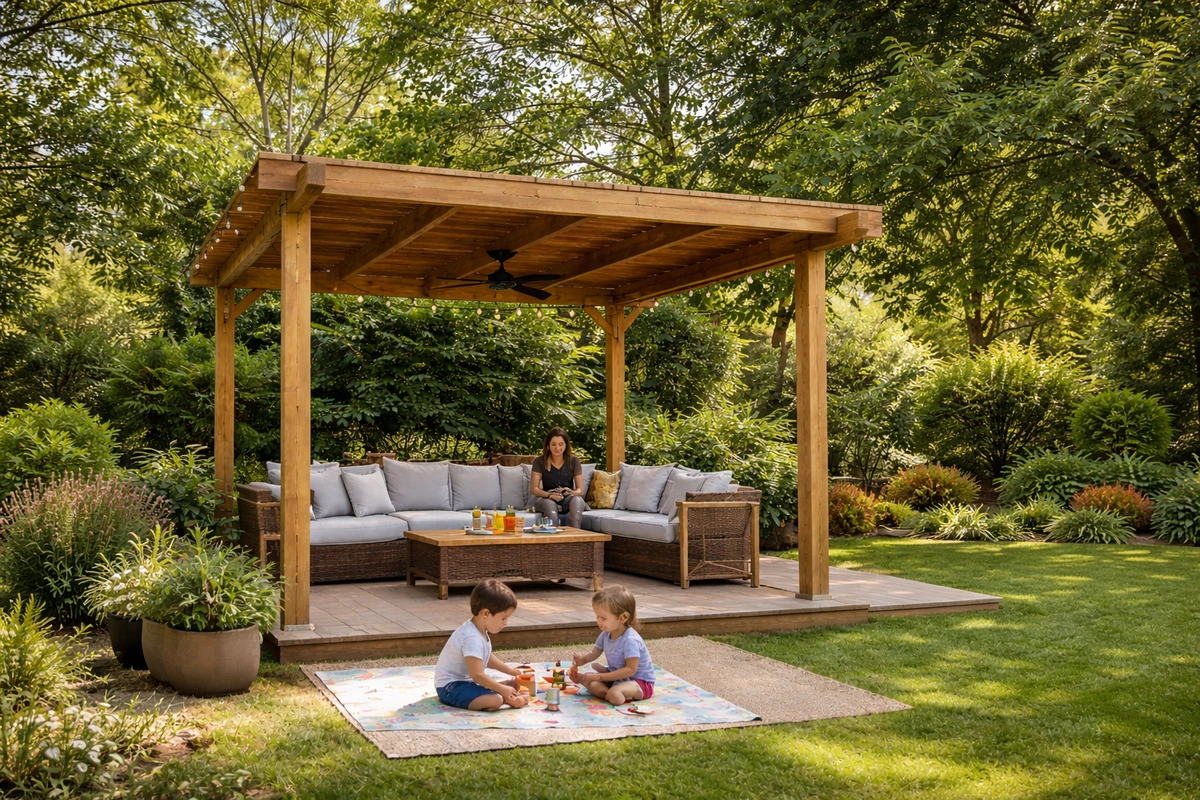
Most homeowners stay indoors when the yard doesn’t feel comfortable or usable. Adding shade, level flooring, and seating for six can make the space easier to enjoy. Once these features are in place, your family may start using that forgotten corner as an outdoor room from May to October.

Outdoor Living Spaces Add Real Value to Everyday Life

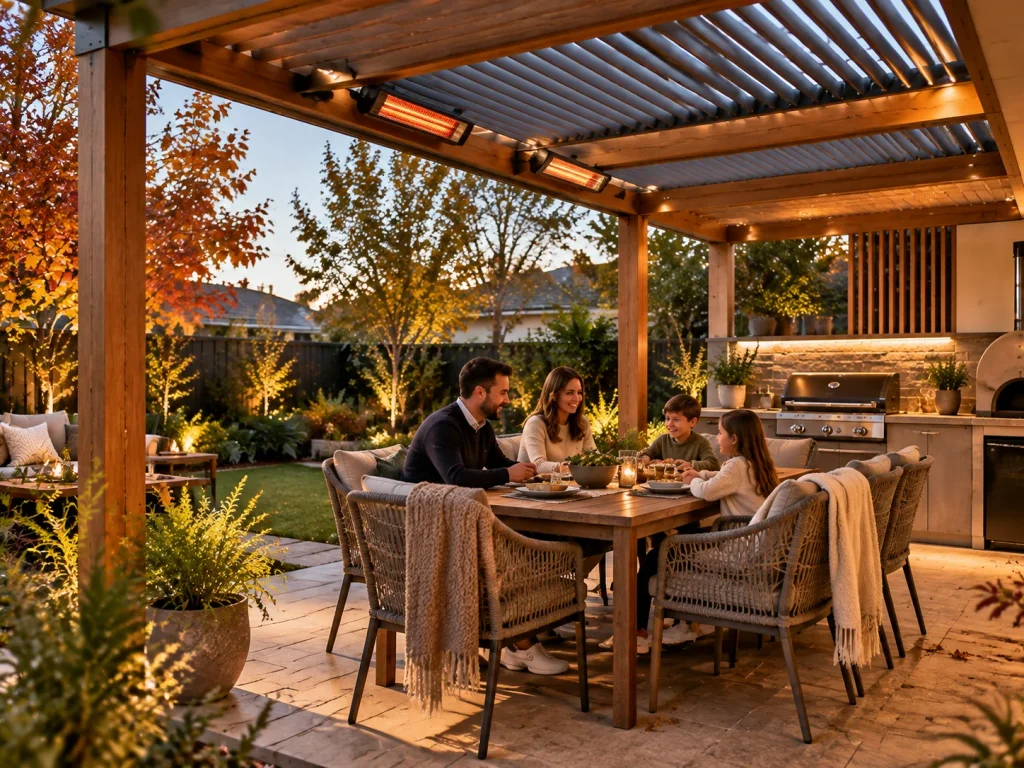
And that regular use can quickly become part of your routine. Dinner can move outside three or four nights a week when a table sits under cover. Memorial Day cookouts can also happen without relying on the perfect weather.

More importantly, a well-designed outdoor space can support your home’s value when you decide to sell (buyers walk the yard first). Appraisers in particular value covered patios and built-in cooking zones, and strong curb appeal follows you into the listing photos.

Cost is another reason to consider an outdoor living area. Pergolas and covered patios cost far less per square foot than framing a new room. They skip insulation, drywall, and ductwork.

What Makes a Backyard Design Feel Like an Outdoor Living Space?

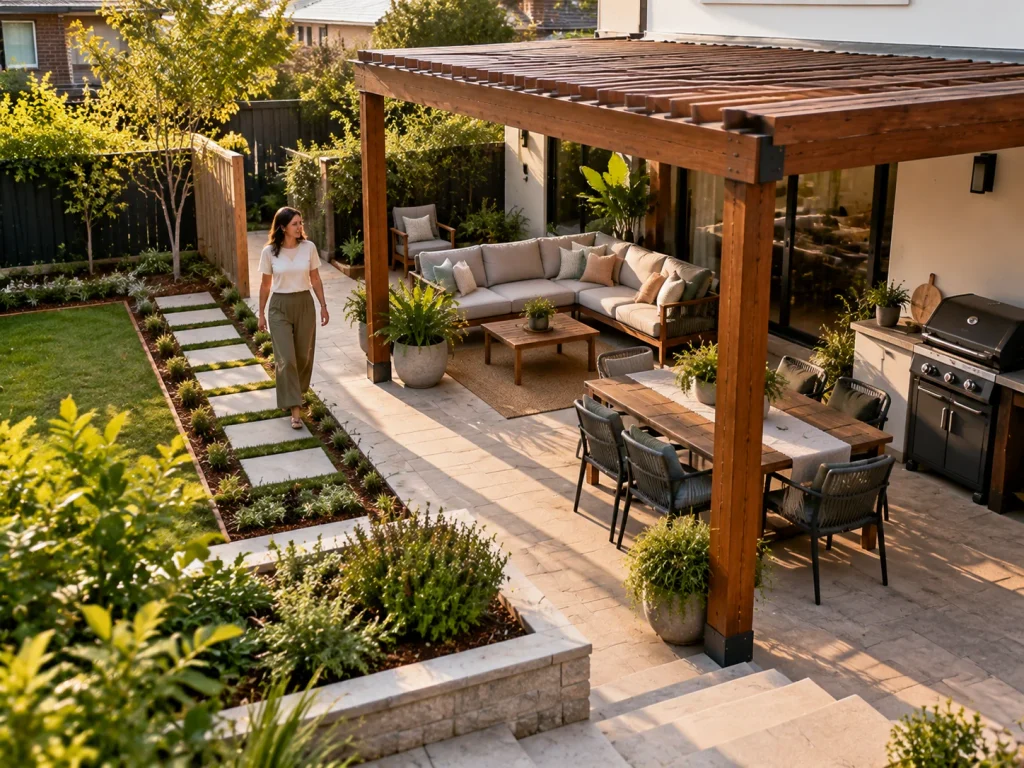
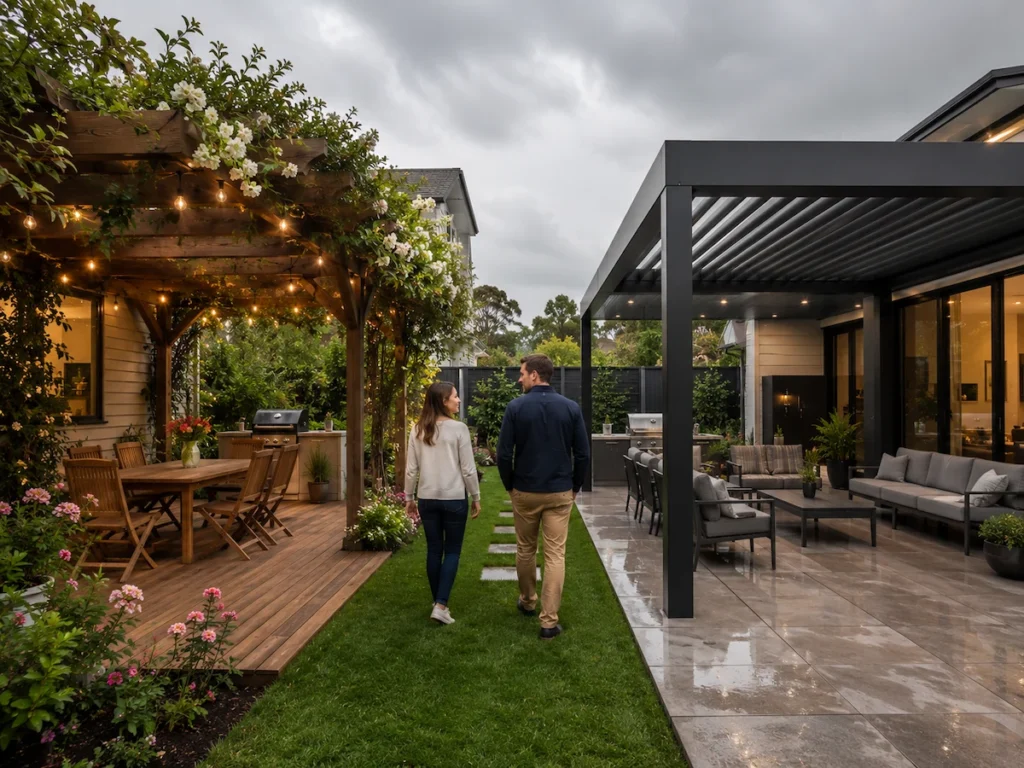
A backyard design feels finished once it has clear zones for lounging, dining, and shade. These areas guide the rest of the design, including where to place the rug, grill, and other features.

We recommend running through this checklist before you buy a single chair:

  • Named Zones: Lounging, dining, and cooking each should get their own footprint, so nobody squeezes past a hot grill to reach a seat.
  • Overhead Cover: Shade keeps the ground under your feet cooler. The EPA reports shaded surfaces can be 20 to 45 degrees Fahrenheit cooler than unshaded ones.
  • Solid Flooring: Level pavers or a poured slab keep table legs steady. Retaining walls can also hold back a slope while providing extra seating.
  • Outdoor Lighting: After dark, string lights overhead and low fixtures along the garden path keep the space useful and easy to move through.

Get these four elements right, and the rest of the design will become easier to plan. On the other hand, if you miss one, even the best furniture can sit unused all summer.

Choosing Pergola Ideas for Outdoor Entertaining

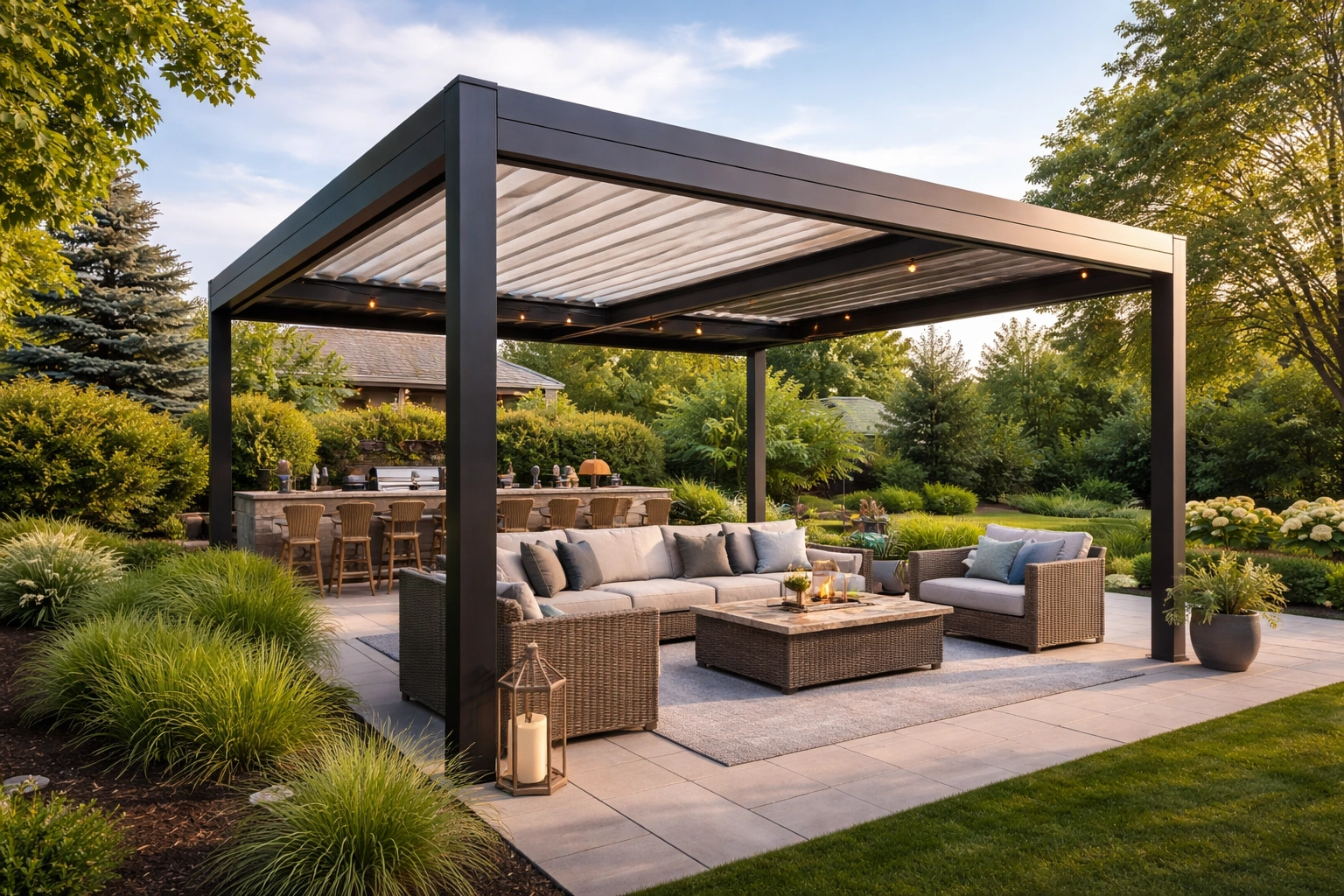
Good pergola ideas can add shade to a plain patio and make it more comfortable for outdoor entertaining. Pergolas, pavilions, and shade sails each create a different look and level of coverage, so the right choice depends on how permanent you want the structure to be.

The three sections below answer what clients ask us first.

Retractable Pergolas Give You Shade Without Losing Natural Light

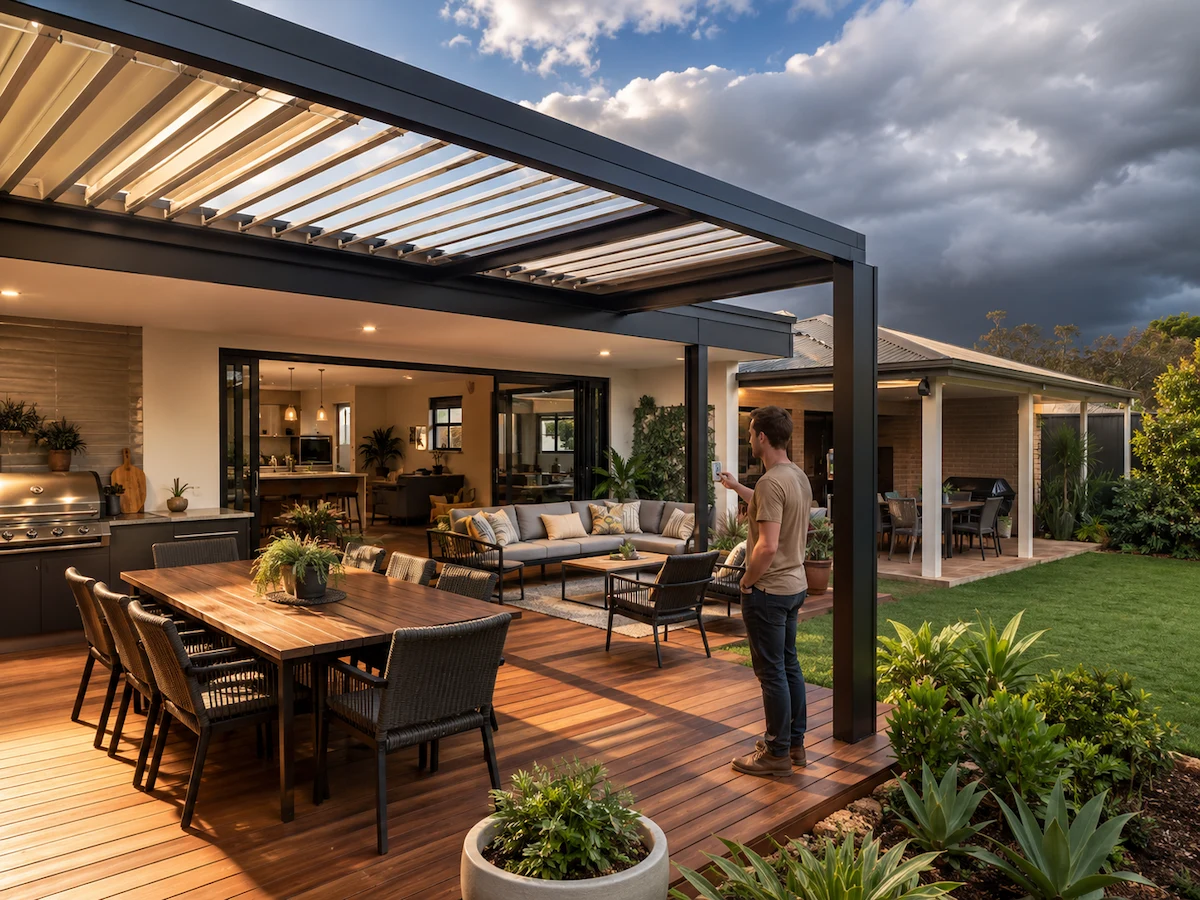
A retractable pergola uses a motorized canopy or louvered roof that opens and closes. This means you get to control the shade hour by hour instead of living with one fixed setting.

Retractable Pergolas Give You Shade Without Losing Natural Light

That setup pays off in spring. When the roof is closed, it keeps the space warmer during breakfast. Later, you can open it to let the afternoon sun reach the herb pots along the rail.

Honestly, this is the upgrade clients tell us they regret skipping (we have yet to meet anyone who misses the old tarp). Louvered aluminium models also direct rainwater through the posts, which keeps the area below dry.

Which Furniture and Products Complete an Outdoor Entertaining Space?

Deep seating and dining tables that fit the space make the area comfortable without making it feel crowded. Adding a few weather-ready pieces, such as outdoor rugs and cushion storage, can make the space more practical while keeping it open.

The furniture you choose also sets the style of the space. A teak dining table paired with an aluminium sling lounger, for example, creates a different look than a matching furniture set. Once the main pieces are in place, the cushions can add another layer of comfort and style.

In our showroom, we point most families toward solution-dyed cushions first because they resist fading in outdoor conditions. Faded cushions can make even good-quality furniture look worn (make sure to ask us about fade warranties).

Join Our Newsletter and Shop the Outdoor Furniture Store

Our newsletter shares seasonal tips, early access to new products, and care advice to help your outdoor space look its best for years. Signing up takes just a minute, and you can read our Privacy Policy to see how we handle your email.

When you are ready to explore your options, you can learn more about our retractable roof pergola installation service. If you have questions about your project, our Customer Service team can help before you get started.

Outdoor Kitchens and Furniture: Contact Us for Custom Design Options

Once the pergola and seating are in place, an outdoor kitchen can be the next step. Many cooking areas start with a simple grill and counter, then expand as your needs grow.

Outdoor Kitchens and Furniture

Compare these three paths before you commit to a footprint.

SetupWhat you getWorth knowing
Grill islandCounter space and storage beside built-in grillsFits most existing patios
Full outdoor kitchenSink, fridge, and a finished cooking wallNeeds water and power lines
Fire featuresA fire pit, warmth, and a second seating zoneCan extend the outdoor season by several weeks

These options also come with different installation needs. A grill island can work with an existing patio, while a full kitchen may need new water and power lines. Fire features can add warmth and give you another place to sit when the weather cools.

While yes, this quality outdoor equipment costs more upfront, it can last longer than cheaper replacements. Contact us for a free consultation, and we can help with the design from start to finish.

Start Planning Your Outdoor Living Space Today

Your yard becomes more useful when shade, comfortable seating, and a place to cook are all in place. After that, the rest comes down to your space, style, and budget.

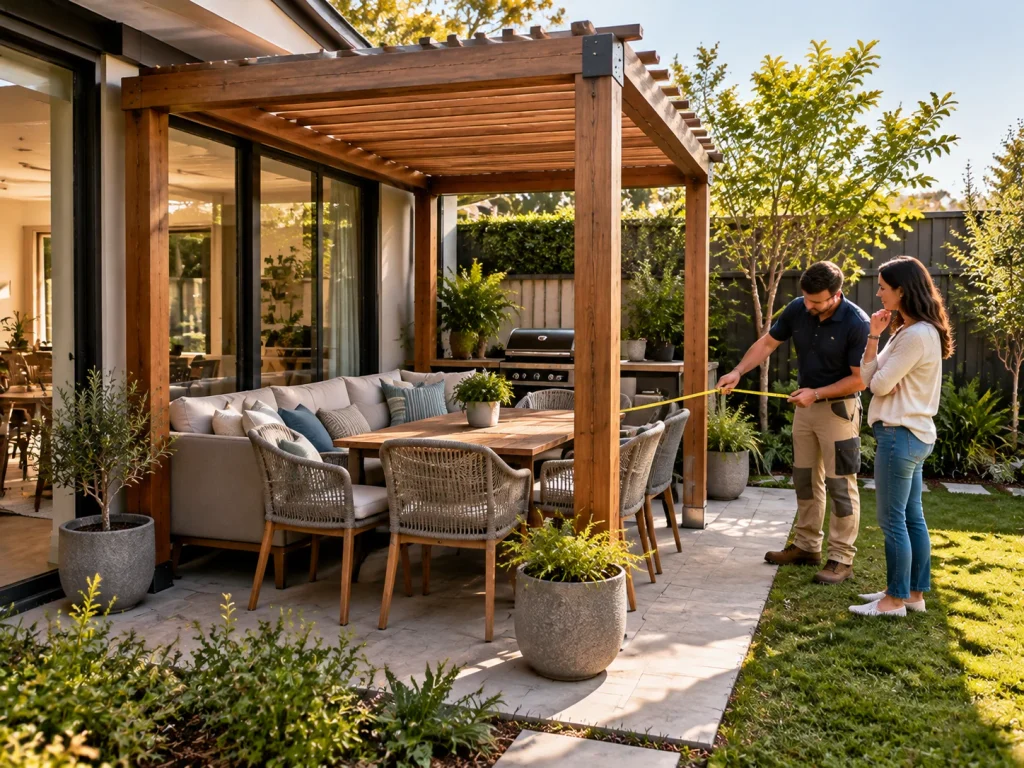
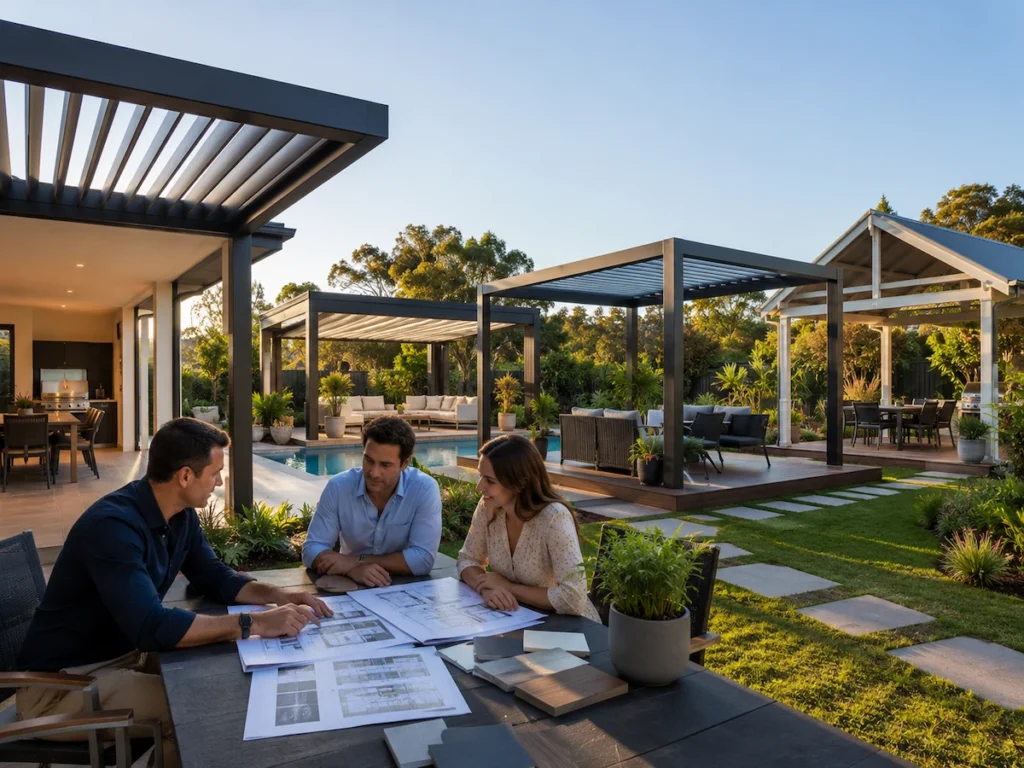
Begin with one zone this season and let the others follow next year. Measure the space first, choose the right cover, and plan the other features around it. With the right setup, even a plain patio can become a place where family and friends want to spend their weekends.

Ready to start? Reach out to Paper Crown Gallery for custom pergolas, outdoor kitchens, and furniture built for the way your family lives.

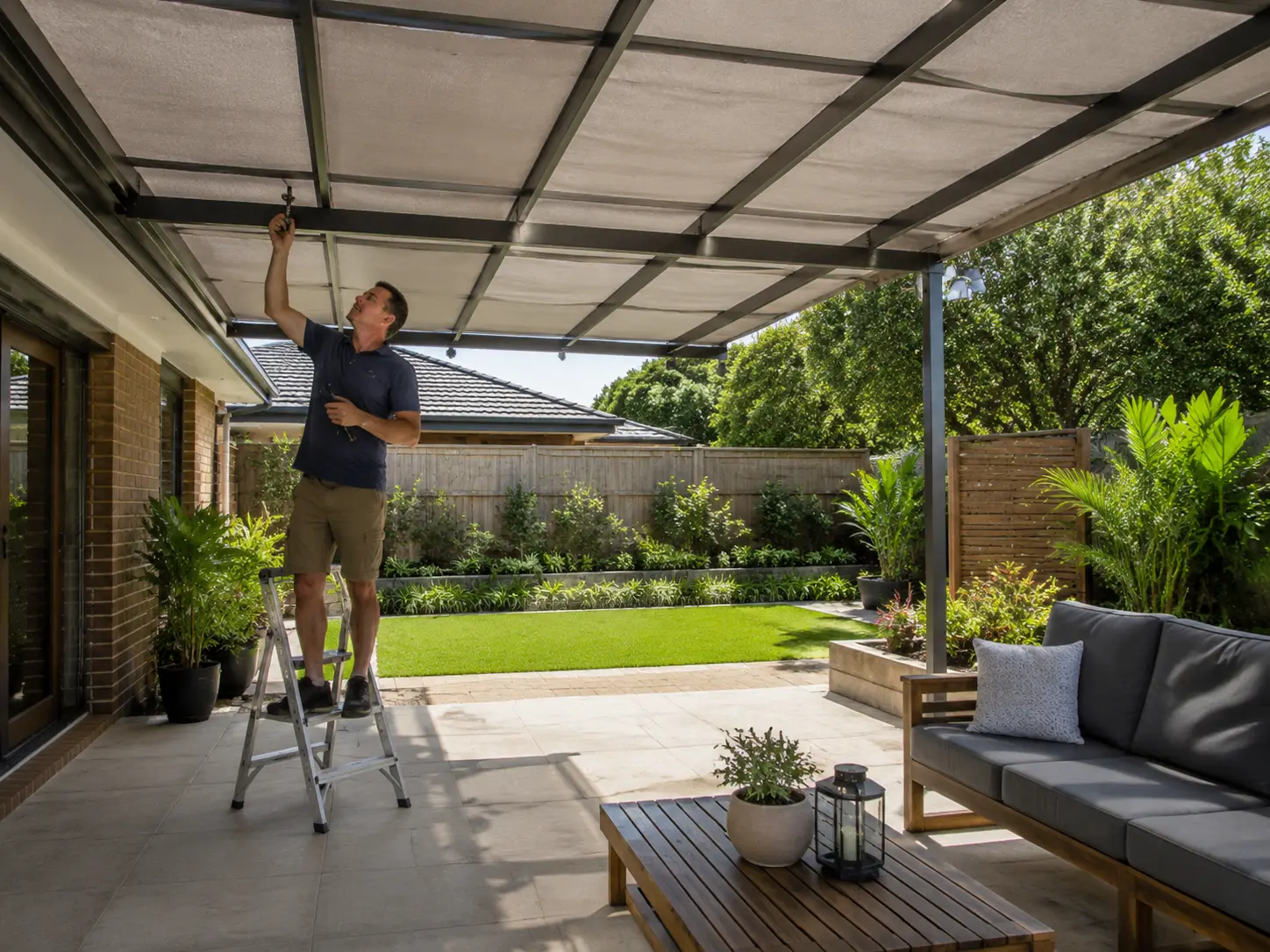
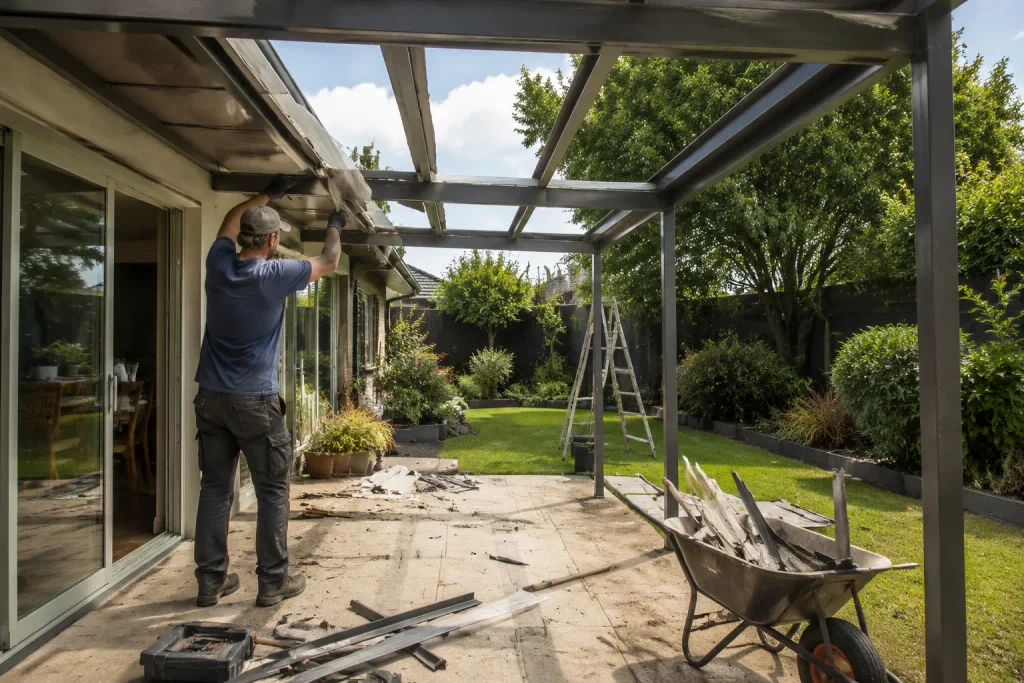
A homeowner fixing a Retractable Shade in his backyard

Why Permanent Shade Is Not Always the Best Outdoor Solution

Permanent shade is not always the best solution because it blocks sun and rain and limits your flexibility. Once a fixed structure goes in, you can’t adjust it when your outdoor space needs change, and that’s where most families run into trouble.

We absolutely get it. We’ve helped Chicago-area homeowners find retractable shade systems that fit their lifestyle year-round, giving them full control over their outdoor space in any season.

In this article, we’ll cover where fixed shade falls short, what retractable pergolas do better, and how to pick the right fit for your space.

If you’ve been settling for less, this one’s for you.

Permanent Shade: Why It Isn’t Always the Answer

A homeowner changing the shade based on the weather

Ever installed a patio cover only to wish you could move it six months later? Most property owners do, because fixed structures don’t adapt to changing needs. A permanent cover structure is like painting your living room before you’ve moved the furniture in. Once you finish it, everything else has to work around it.

And for Chicago residents, that limitation plays out like this:

  • Built for One Setup Only: Most fixed structures aren’t designed to relocate once they’re in the ground. That means if you renovate your patio, add a pergola, or change your layout, the cover stays where it is, even if that spot no longer works for you.
  • No Room to Grow: Fixed covers are built around one aesthetic, color, and style. If your outdoor design evolves, the cover will stay the same, and it’ll clash with every update you make around it.
  • A Costly Obstacle: Chicago residents use their outdoors differently in July than they do in September. A fixed cover can’t adjust to those seasonal shifts, so the structure starts working against you instead of for you.

Frankly, a fixed cover gets more difficult to walk away from with every passing season (we’ve seen people try, and it’s not pretty). UV rays and heavy rain only add to that pressure.

UV Rays, Rain, and What Fixed Structures Can’t Handle

Fixed patio covers take a beating from harmful UV rays and heavy rain every single season. The damage doesn’t appear overnight, though. UV rays work like a slow leak. By the time the damage is obvious, the fabric is already breaking down from the inside (the cover looks fine, but the damage isn’t).

And after two to three years of exposure, fixed cover fabrics can’t block the sun the way they once did. By then, harsh sunlight gets through during summer afternoons, when your patio needs sun protection the most.

Heavy rain then makes things worse. Instead of running off cleanly, it soaks into the weakened fabric.

In that condition, a simple patch job won’t hold. Full panel replacement becomes the only real fix, and that bill lands just as hard as the original installation cost. For Chicago residents, that cycle repeats every few years when Midwest weather stays relentless season after season.

Shade Sails and Fixed Covers: The Practical Limitations

Working with families across Naperville and Hinsdale taught us one thing about shade sails and fixed covers. Both break down under wind pressure and moisture buildup, and wind is always where the trouble starts.

Both failures follow the same pattern:

Shade Sails and Wind

Strong winds put relentless pressure on shade sail fabric. Over time, that sustained force gradually pulls the rope anchors free from the frame. With the anchors loose, the canopy loses its tension and can no longer hold its shape against the wind.

At that point, your patio is left with a structure that flaps around in every storm, offering no real wind protection.

Fixed Covers and Moisture

A shade sail that’s lost its tension sags in the middle, which collects standing water after every rain. Pooled water can also work its way into the fabric and create mold growth, even on mildew-resistant materials.

By the time spring arrives in Chicago, that mold has worked deep enough into the fabric to make the entire cover unusable.

Fixed Shade vs Retractable Pergolas: The Cost Breakdown

A fixed patio cover might run $4,000 at installation, but the real cost reveals itself around year three. The table below shows how fixed shade and retractable pergolas compare when you factor in the full picture.

Factor

Fixed Shade Cover

Retractable Pergola

Average Install Cost

$3,000 to $10,000

$5,000 to $15,000

Avg. Repair Cost (Yr 3)

$1,500 or more

Minimal

Lifespan

5 to 8 years

15 to 20 years

Flexibility

None

Full

Energy Savings

Low

High

As you saw in the table, the lifespan gap between fixed and retractable shades is where the real difference lies. A fixed cover that needs two repairs before year five rarely makes it to year eight. Every repair chips away at whatever savings you thought you had upfront.

Flip the comparison around, and a retractable pergola starts looking like the sounder investment. It runs higher at installation, but it also contributes to long-term energy savings by reducing heat buildup on your patio. That combination of durability and efficiency is something a fixed cover can’t offer over the same timeframe.

The Retractable Canopy and Pergola Roof Alternative

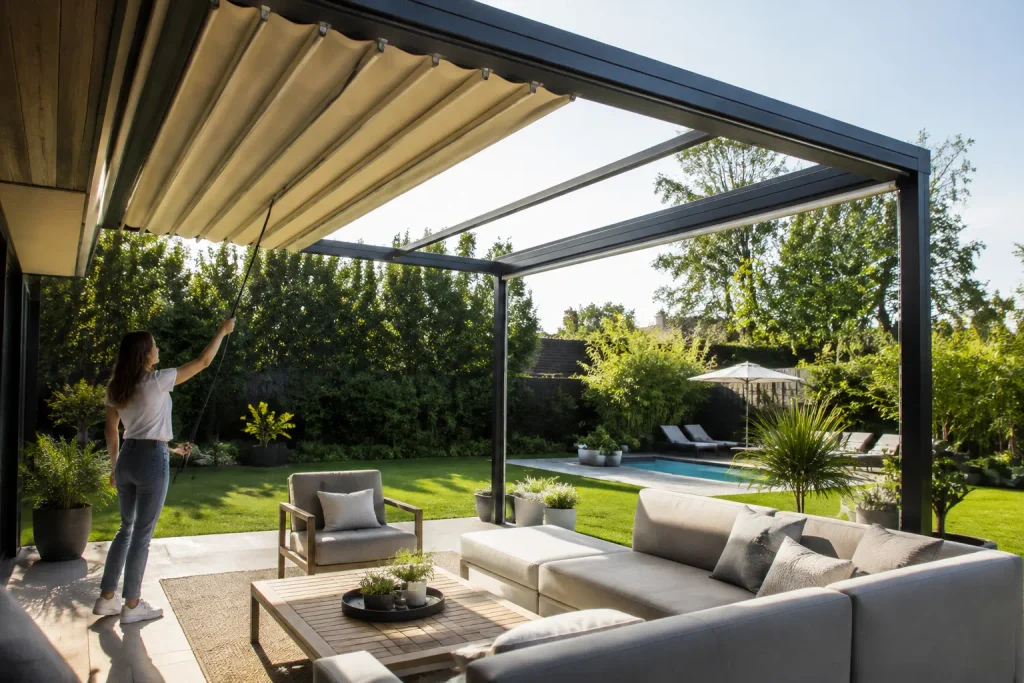
Pulling the retractable shade to protect the outdoor living space

A retractable shade addresses every limitation a fixed cover leaves behind. Unlike a permanent installation, a retractable pergola protects your outdoor living space without locking you into one fixed position.

For example, in Chicago, summers flip between scorching afternoons and sudden storms, and a retractable system lets you respond to both without leaving your seat.

The advantages over fixed shade come down to three practical differences:

  • Open or Close on Demand: A retractable canopy gives you full control over your shaded area as the weather shifts. On a calm morning, you get full sun across your patio. The moment a storm rolls in, the roof closes before the rain reaches your furniture.
  • Fresh Air Without Compromise: Fixed covers force you to choose between shade and fresh air. A retractable pergola roof removes that trade-off entirely. In our experience fitting systems across the Chicago area, families consistently rank open-air shade as the feature they wished they’d had sooner.
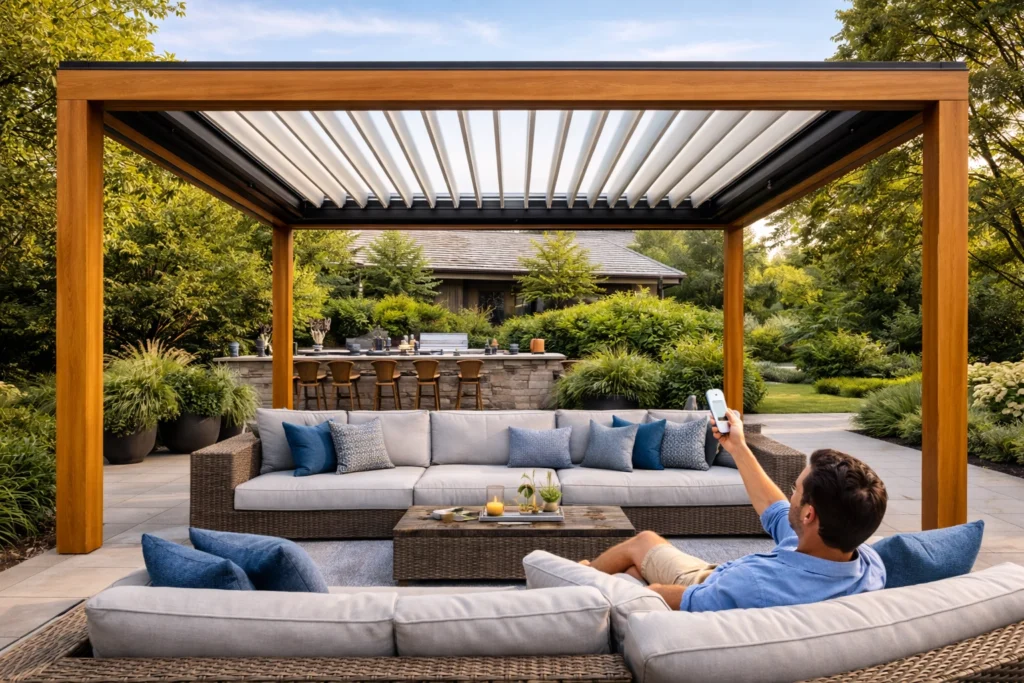
  • Motorized Control at Your Fingertips: With a motorized pergola, adjusting the pergola roof via remote control takes seconds from anywhere in your backyard. Systems that include wind and rain sensors retract automatically when strong winds or heavy rain move in.

And unlike fixed covers, a retractable system gets more useful over time, rather than less, as your outdoor space grows and your lifestyle shifts.

Your Outdoor Renovation: Picking the Right Canopy for Your Space

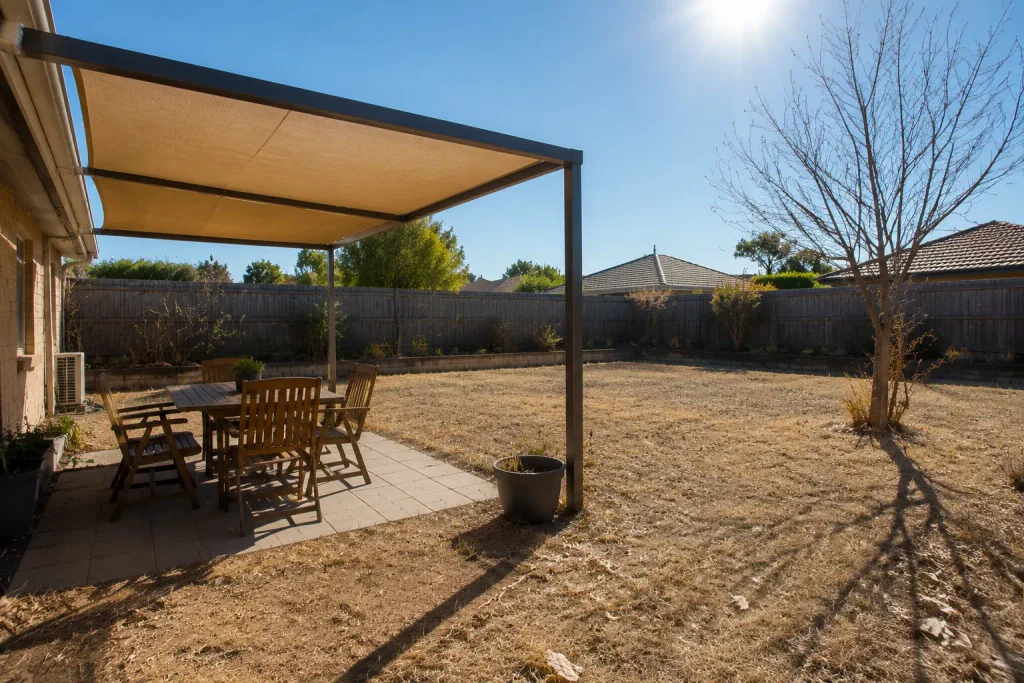
a fixed canopy leaves the patio completely exposed

Every outdoor renovation is different, and the fix that works for one backyard won’t necessarily work for another.

Across Naperville, Hinsdale, and the broader Chicago area, our team has fitted pergolas in all shapes and sizes. One pattern keeps emerging: property owners with larger yards consistently underestimate seasonal wind exposure.

Coverage is the other side of that wind exposure problem. A fixed canopy covers one spot and stays there. As the sun moves across the sky, it leaves the rest of your deck or patio completely exposed.

The EPA notes that shade and vegetation cool surrounding air through evapotranspiration, with urban green areas running an average of 3.0°F cooler. A retractable pergola roof works on that same principle by letting you position shade over the spots on your patio that absorb the most heat.

Going back to what we said earlier, no two outdoor renovations are the same. Our team sizes and fits every retractable pergola around your specific backyard layout, lifestyle, and local weather patterns.

Ready to Rethink Your Outdoor Shade?

Outdoor shade is one of those decisions that looks simple on the surface, with factors like material durability, wind resistance, and long-term costs all playing a role. And once you dig into those factors, the limitations of fixed structures become hard to overlook. The very reason we suggest one flexible installation: a retractable canopy system.

This article laid out why permanent covers wear down, why shade sails fail in strong winds, and where the repair bills come from. A retractable pergola roof sidesteps all of that by giving you control instead of commitment.

For over 30 years, our team at Papercrown Gallery has guided Chicago homeowners through every outdoor covering decision. Reach out today, and we’ll find the right retractable solution for your backyard.

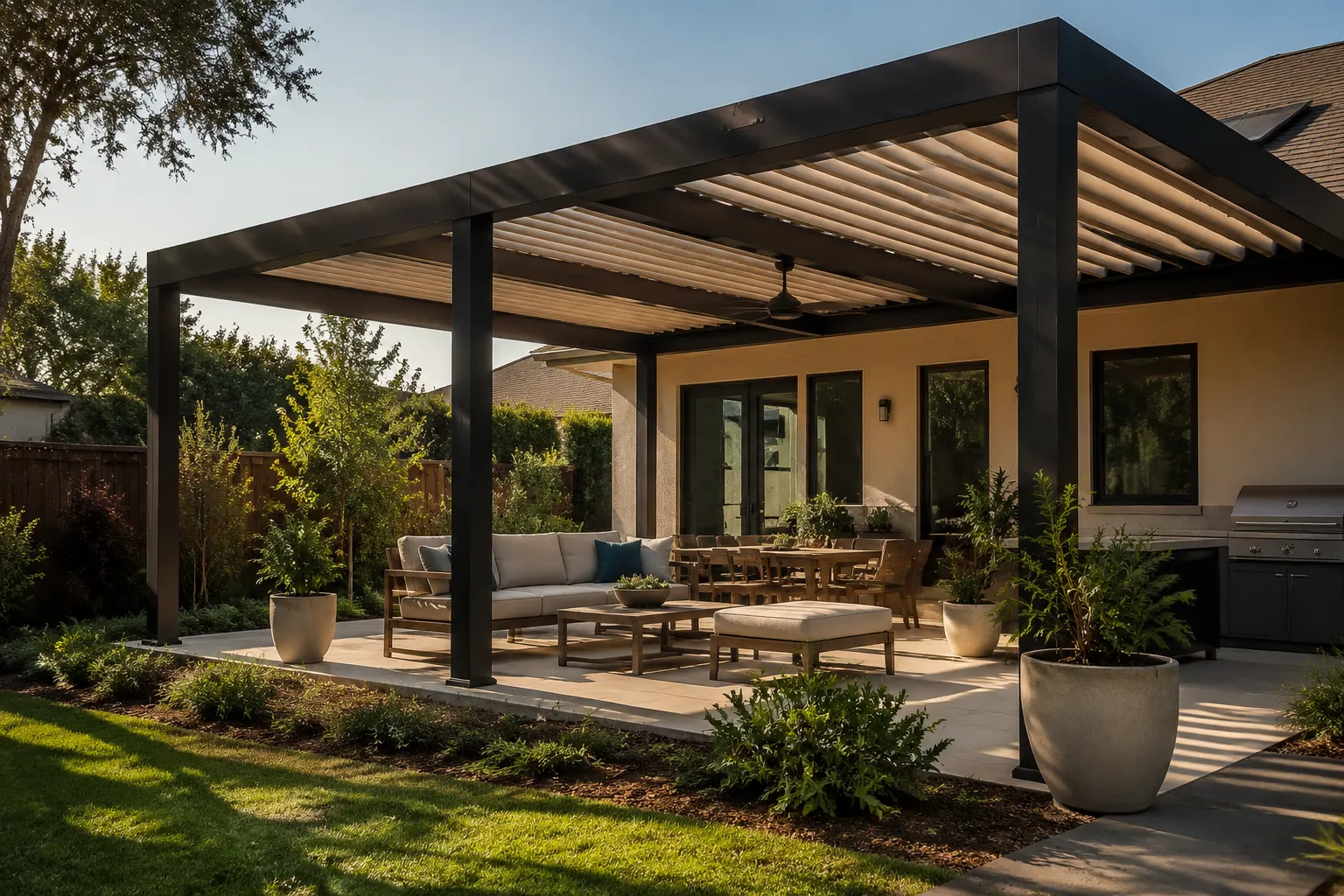
Custom pergola creating an outdoor living space

The Homeowner’s Guide to Choosing a Custom Pergola

A custom pergola sounds like a simple project until you start comparing materials, roof types, and sizes. Once you dig into those details, you’ll find that the wrong frame or roof choice can cost you comfort, durability, or both.

We’re Papercrown Gallery, and we’ve spent over 30 years designing and installing pergolas across the Chicago area. We put this guide together to walk you through sizing, materials, retractable roofs, placement, and hot tub planning.

Also, if you’re still early in the process, our guide on planning your first pergola covers the foundational decisions in more detail.

Sizing a Custom Pergola for Your Property

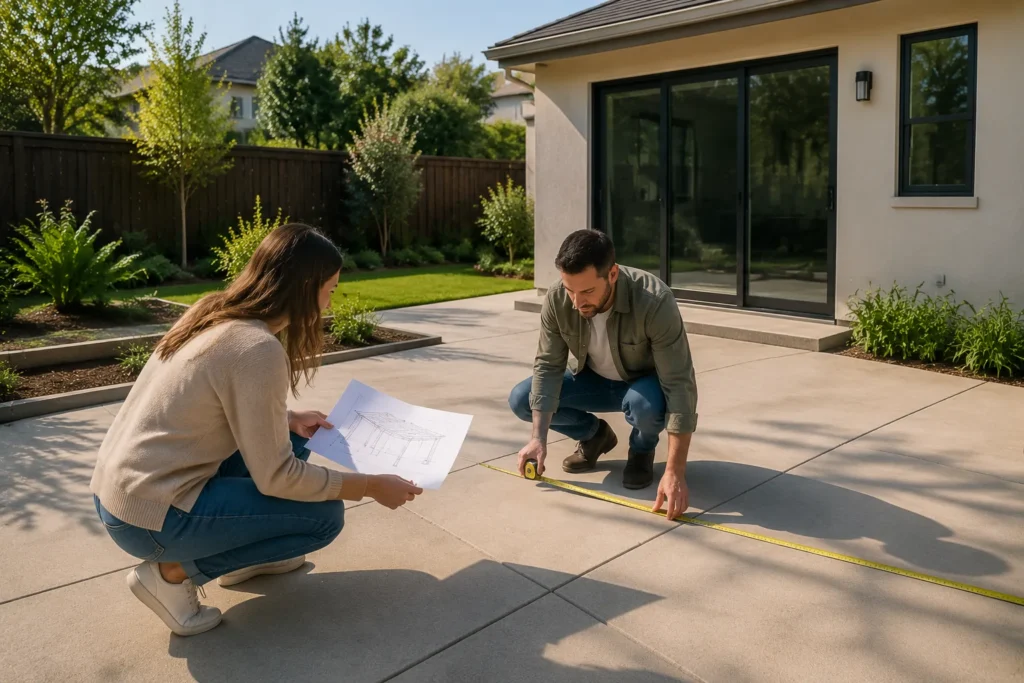
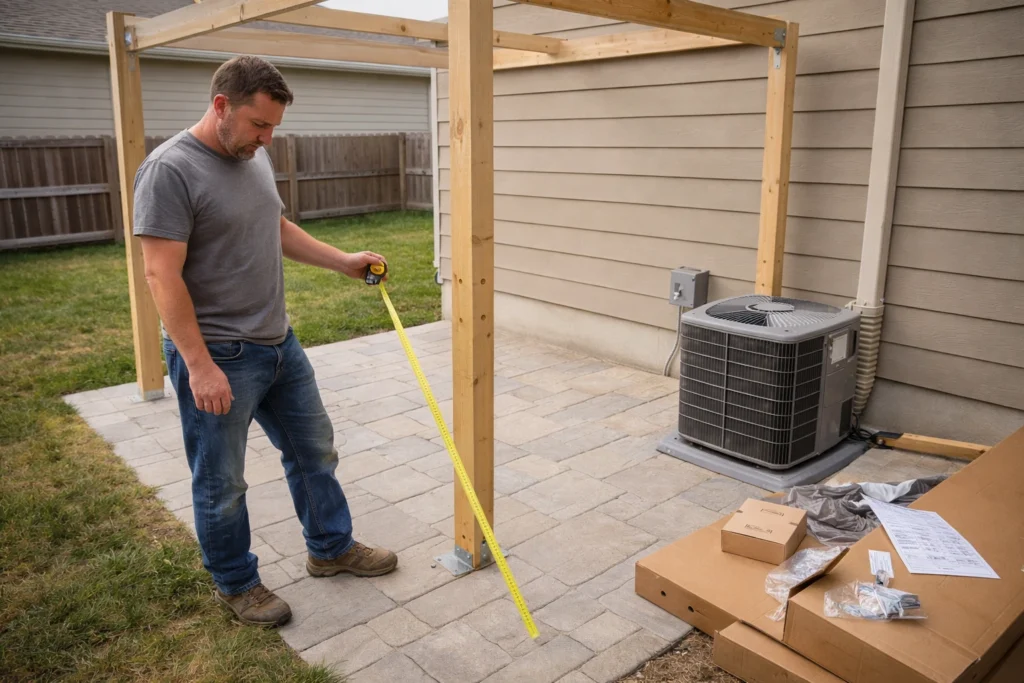
Measuring a backyard area for a custom pergola

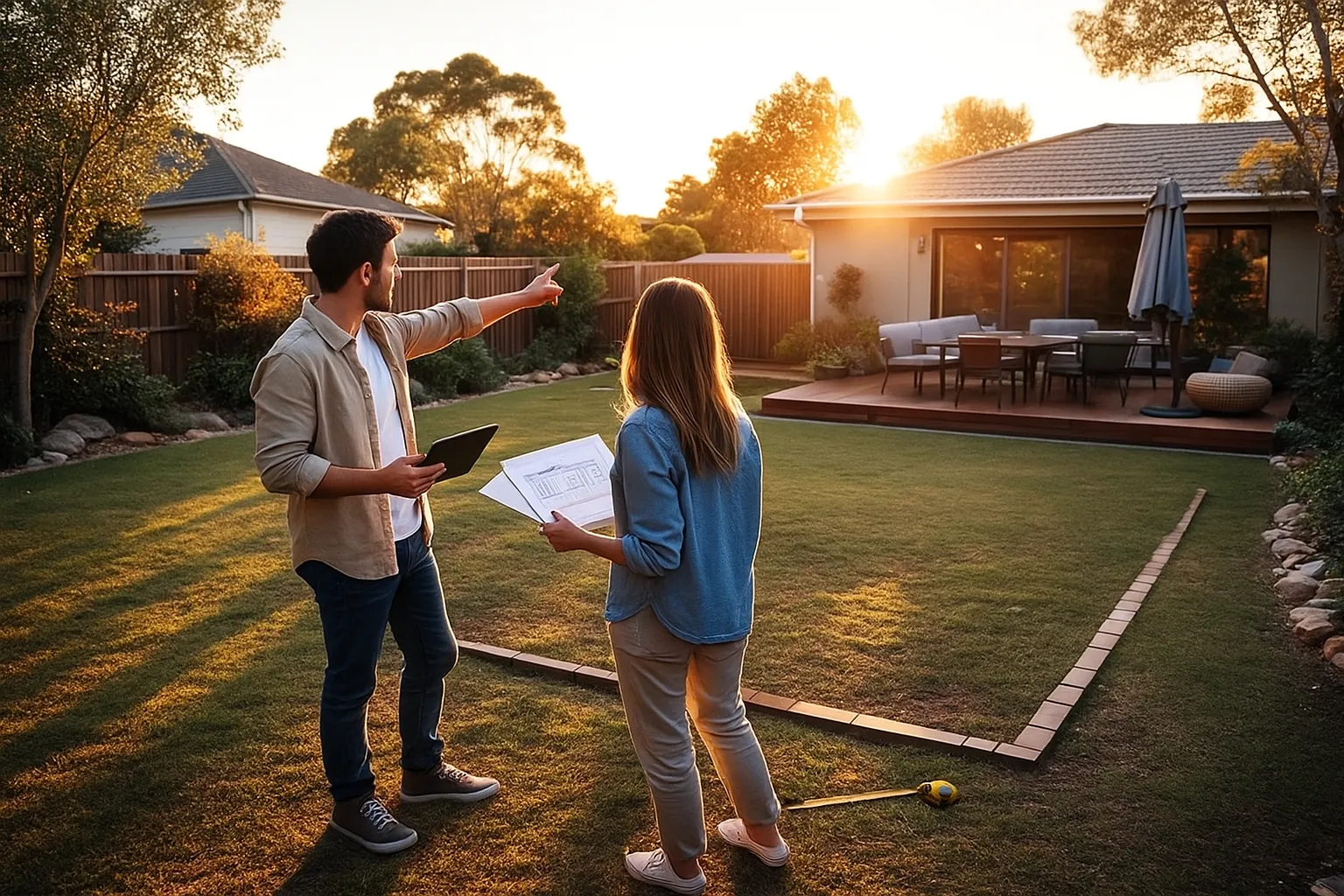
Your pergola size depends on the yard space you have, how you’ll use the structure, and how many guests you plan to host. Measure the usable area first and factor in clearance from fences, walls, and property lines.

A 12×14-foot footprint fits most dining setups for six to eight guests. A lounge layout with sofas and a coffee table will need closer to 14×16. Those two feet might not sound like much, but it’s the difference between a comfortable dinner and bumping elbows every time someone stands up.

On the other hand, a pergola that covers too little of your yard looks like an afterthought (think fancy umbrella, not pergola). One that’s too large eats into the open space your kids or pets still need. That’s why it’s worth testing the footprint first. Before you commit to dimensions, mark the corners in your backyard with stakes or chairs so you can see how the actual size will feel.

Best Materials for Outdoor Structures

The frame material you pick today determines how your pergola looks and performs a decade from now. Each option handles Chicago’s weather differently, so here’s how the three most common choices compare.

MaterialDurabilityMaintenanceCostWeather Resistance
Aluminum20+ years with no rustRinse with a hose once or twice a yearMid to highHandles snow, rain, and heat without warping
Wood (cedar or redwood)10–15 years with upkeepStain or seal every two to three yearsMidAbsorbs moisture and can rot if left untreated
Vinyl8–12 yearsAlmost noneLow to midCracks or yellows after repeated freeze-thaw cycles

Aluminum is the most popular pergola frame in our area, and after installing all three materials across Naperville, Hinsdale, and Oak Park, we can tell you why. It consistently outlasts wood and vinyl in this climate without asking much from you in return.

Now, wood may look beautiful on day one. But customers in the western suburbs often find themselves restoring or resealing sooner than they planned.

Vinyl is the least expensive upfront, though it rarely holds up through more than eight or nine harsh winters. If you want a structure designed to last year-round with minimal upkeep, aluminum is the strongest option for this region.

Once you’ve settled on a frame material, the next big decision is what goes on top.

Why Retractable Roofs Give You More Control

Retractable pergola roof adjusting sunlight and shade

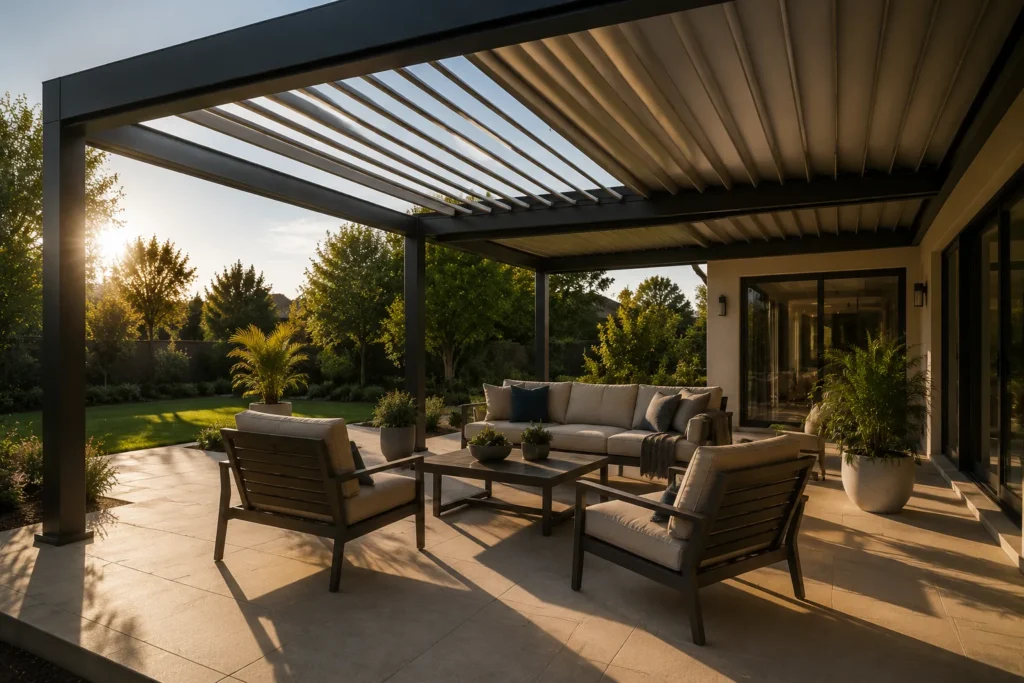
A retractable roof lets you decide how much sun or shade you get at any given moment. Instead of committing to one setting permanently, you can open the roof for full sunlight during a spring brunch and close it when a summer storm rolls in.

Here’s what that flexibility looks like day to day:

  • Motorized Systems With Rain Sensors: These sensors detect moisture and signal the roof to close automatically (most respond within 30 seconds of detecting rain). You won’t have to rush outside every time the sky turns gray, and your cushions, flooring, and outdoor furniture stay dry even during a sudden downpour.
  • Louver Control for Airflow and Light: Motorized louvers let you adjust the angle of your roof panels to control how much light and wind pass through. On a mild day, tilt them open for a cross breeze. When temperatures climb, or a storm rolls through, close them down to block direct heat and rain.
  • Year-Round Use Over Fixed Roofs: A fixed roof blocks sunlight all year, which sounds great in July but leaves your space dark and cold by October. With a retractable roof, you can pull the cover back on a crisp fall morning and let the sunlight back in. And honestly, once you’ve had that option, you won’t want to go back.

The roof you pick shapes how often you’ll actually use your pergola, so it’s worth spending extra time on this one.

Placement and Orientation for Your Outdoor Space

The direction your pergola faces, how close it sits to your home, and how much wind and snow your yard gets all affect day-to-day comfort.

In our experience, south and southwest-facing pergolas perform best in the western suburbs. A south-facing structure gets the most sunlight through fall and winter, which pairs well with a retractable roof that lets you control the shade during hotter months.

The U.S. Department of Energy reinforces this in its Consumer Guide to Home Landscaping, noting that strategic tree placement and shade can reduce:

  • Solar heat gain
  • Lower cooling costs
  • Significantly reduce temperatures around a home

Wind is the other factor most homeowners overlook. In the Chicago area, prevailing winds roll in from the northwest, so face your open side away from that direction. You can check your property’s specific wind and snow loads through the ASCE Hazard Tool, which breaks conditions down by zip code.

From there, adding screens or sliding glass panels on the exposed side will give you extra wind protection and privacy during cooler months.

Planning Around a Hot Tub

Pergola designed around a backyard hot tub

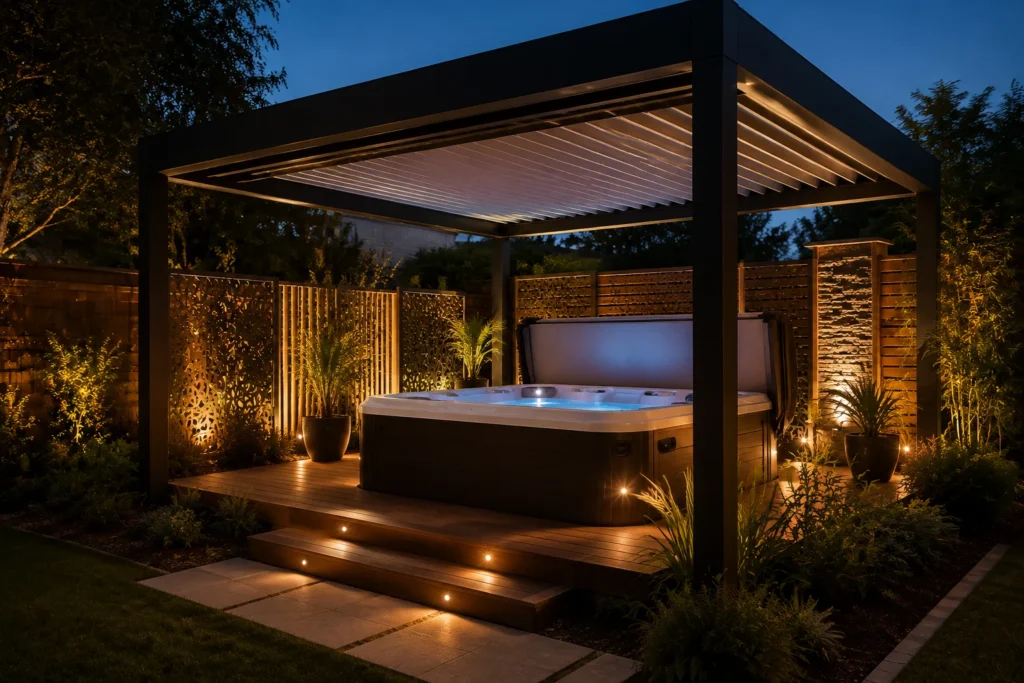
Once you’ve locked in placement, it’s worth thinking about any built-in features that need extra structural support. A hot tub is one of the most popular additions, and it affects your foundation, spacing, and drainage in ways that are easy to underestimate.

Three details deserve attention before the project kicks off:

  • Foundation and Weight Load: A filled hot tub with four people in it can weigh over 4,000 pounds. That kind of load isn’t something you can work around with a thicker paver or an extra post. You’ll need a reinforced concrete pad or a compacted paver base designed specifically for that weight.
  • Clearance on Every Side: Leave at least three feet of open space around the tub for safe entry, exit, and routine maintenance. Anything tighter makes it hard to service the pump, replace a cover, or even climb out comfortably (that’s not a shortcut you want to take).
  • Drainage and Ventilation: Steam from a hot tub rises directly into your roof and frame, and standing water around the base can pool against your pergola’s footings. Slope the surrounding grade away from the structure and leave ventilation gaps between the roof panels and the tub.

Most of these fixes are simple to build into the design phase, but they’re expensive to correct once the concrete is poured. We recommend talking to your installer about all three before the project starts.

What to Expect During Pergola Installation

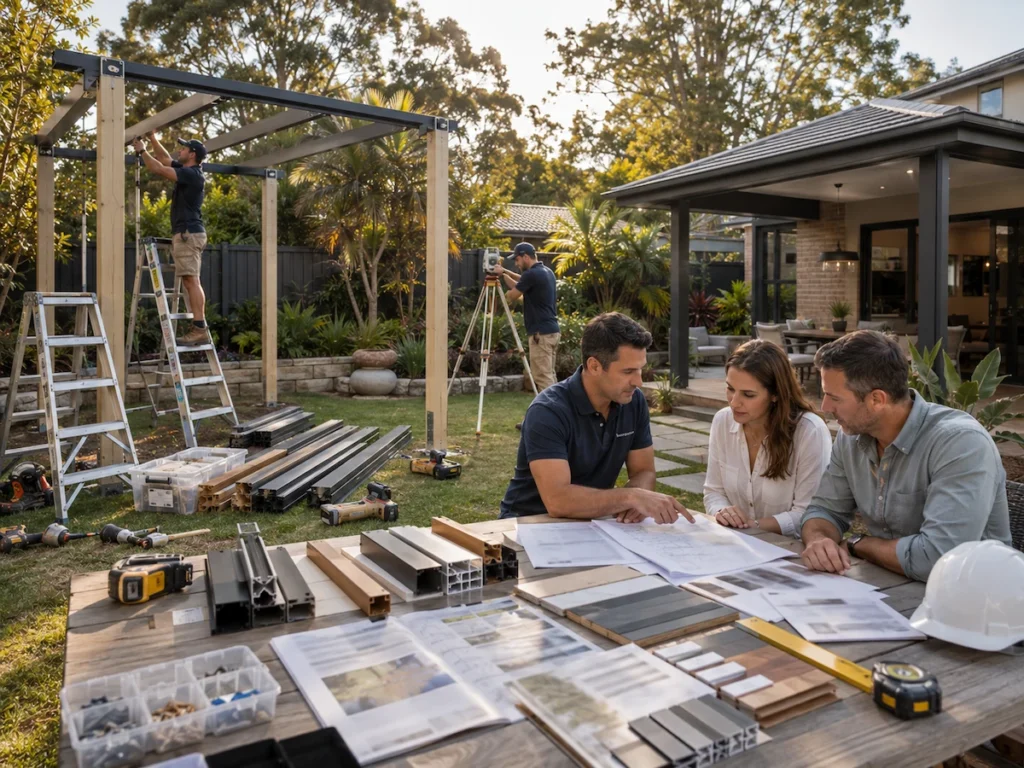
Most custom pergola installations in the Chicago area take three to five days, but the prep work starts earlier. Permits, site grading, and utility checks all need to happen first, so it pays to get them lined up early.

The process usually breaks down into three stages:

  • Permits and Code Compliance: Your installer should file all permits before breaking ground. We’ve seen projects stall for weeks because the permit wasn’t filed early enough, and restarting the approval process can add thousands to the final cost. Your local codes tie back to the International Residential Code requirements for patio covers, which spell out footings, wind loads, and snow load ratings for your area.
  • Site Prep and Construction: A good crew grades the area, marks utility lines, and sets footings. Expect some yard disruption during this stage, but it shouldn’t last more than a day or two on most residential projects.
  • Final Walkthrough and Warranty: After your crew has installed the structure, ask for a full walkthrough of every moving part. Request written warranty coverage that includes the frame, roof, and any motorized components so you aren’t left guessing if something loosens or shifts a year from now.

Every project we run follows the same cleanup process, regardless of the size or the neighborhood. And by the final day, your yard should look the way it did before the build started.

Bringing Your Pergola Ideas to Life

The choices you make now, from the frame on your pergola to the direction it faces, will show up every time you step into your backyard. So, getting even one of those wrong can cost you comfort, money, or both down the line.

If you’re ready to take the next step, Papercrown Gallery is here. Our team will walk you through materials, roof systems, and layout options based on your property and your climate. Reach out for a free consultation, and let’s get your project started.

pergola design

How to Plan an Outdoor Entertainment Area Around Your Lifestyle

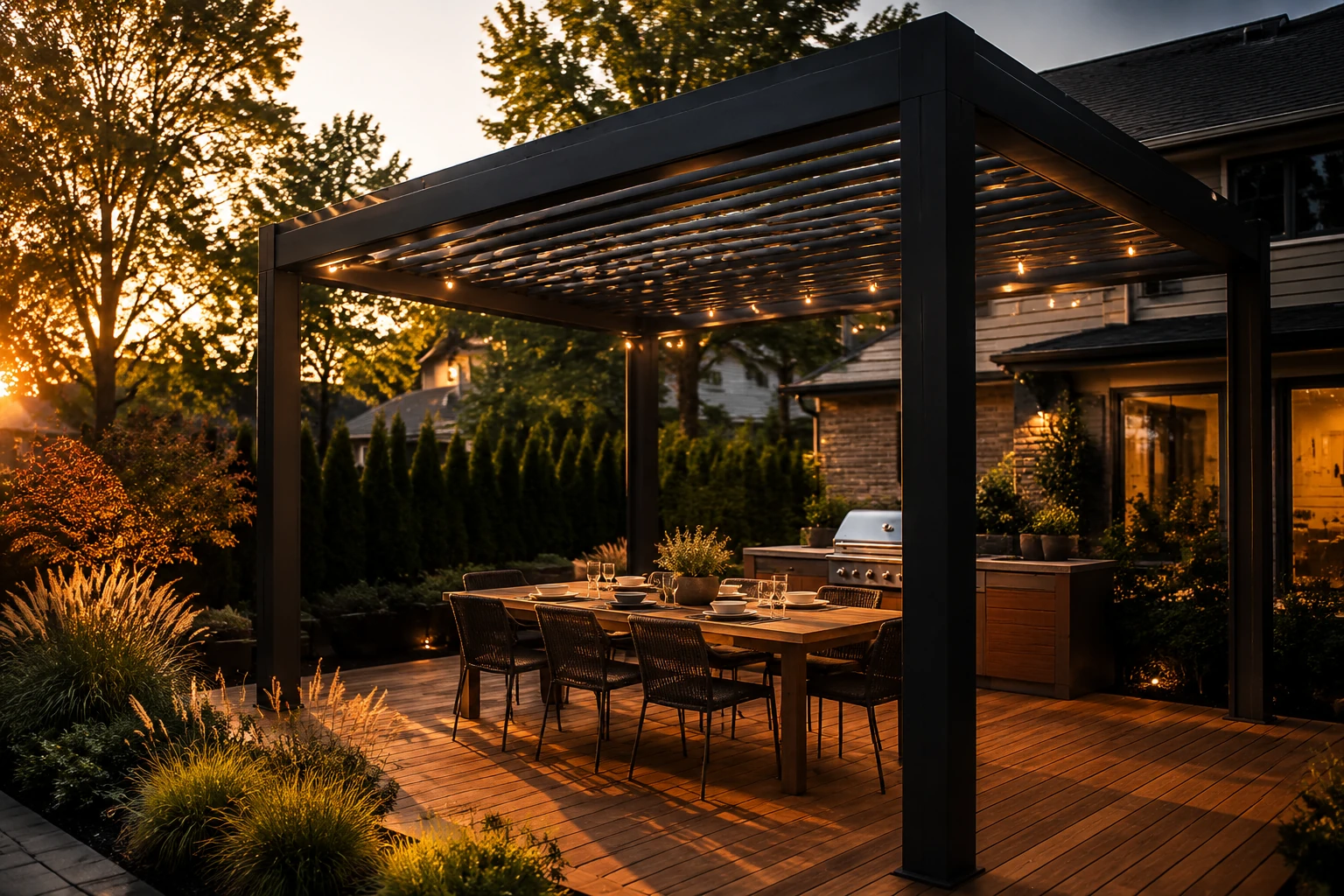
Planning an outdoor entertainment area means matching every design choice to your daily habits and routines. Your pergola design, seating layout, and cooking zones should all reflect your family’s needs. Only then will your backyard become a space you’ll want to use every day.

Unfortunately, a lot of homeowners have photogenic backyards that don’t serve real life. Too little shade, no defined zones, and a cooking setup that fights the flow of guests. The result is a beautiful space that collects dust after the first few weekends.

We’ve helped enough homeowners across the Chicago area to know what separates a backyard people use from one they don’t. In this guide, we’ll cover layouts, shade, outdoor kitchens, lighting, and natural finishing touches.

Dining, Seating, and Flow: How to Zone Your Backyard Right

Dining, Seating, and Flow: How to Zone Your Backyard Right

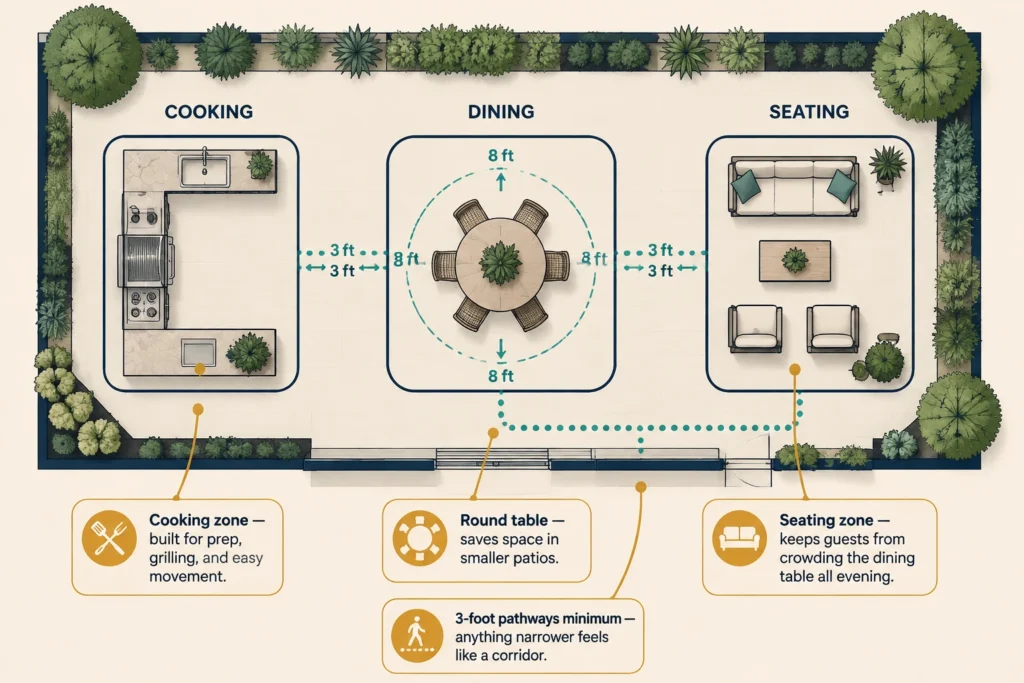
Your backyard’s layout determines how comfortably guests move, eat, and relax in your outdoor space. Think of it like a restaurant that seats guests right next to the kitchen pass. Guests can’t enjoy their meal, and the whole space feels cramped.

To get the most out of your outdoor space, begin by focusing on these areas first:

  • Dining Area: A dedicated dining area keeps meals separate from the cooking zone. Eight feet of clearance around the table gives guests room to pull chairs out and move freely. For smaller patios, a round table uses less space and keeps traffic flow open.
  • Comfortable Seating: A dedicated seating zone keeps guests from gravitating toward the dining table all night. Low sofas and a coffee table create a relaxed spot for drinks and conversation after the meal.
  • Traffic Flow: Clear pathways between your cooking, dining, and seating zones keep guests moving naturally through the space. A good rule of thumb is at least three feet of walkway between each zone. Anything narrower and your backyard starts to feel like a crowded hallway.

These three zones give your outdoor entertainment area its structure. Moving forward, shade and shelter decide how many months of the year you can use that structure.

Shade, Shelter, and Pergola Design for Year-Round Comfort

If you’re a local, you already know what Chicago weather can do. Summers are intense, Midwest storms roll in without warning, and winters around Lake Michigan are brutal. So, starting with year-round comfort in mind is the most practical way to approach any pergola or shelter decision.

A pergola, for instance, adds structured shade to your outdoor area without fully closing off the open feel you want. In our experience working with Chicago homeowners, the ones who plan first always get more use out of their outdoor space year-round.

Covered patios with motorised louvred roofs are a good example of that. They open and close at the touch of a button, so you control how much sun or rain reaches your space without giving up the outdoor feel entirely.

Still, even the right structure needs the right finish and coating to handle freeze-thaw cycles without cracking or warping. And honestly, a pergola without that is like a car without a roof. It looks fine until the first rainstorm (a storm-proof pergola isn’t optional in the Midwest).

Outdoor Kitchen Planning for the Way You Cook and Entertain

Outdoor Kitchen Planning for the Way You Cook and Entertain

A well-planned outdoor kitchen keeps the cook in the conversation and the food close to where guests gather. This will also mean your outdoor kitchen serves you well from the very first cookout.

Your outdoor kitchen comes together through the right cooking setup and a solid counter and storage plan.

Picking a Cooking Setup You’ll Use Every Week

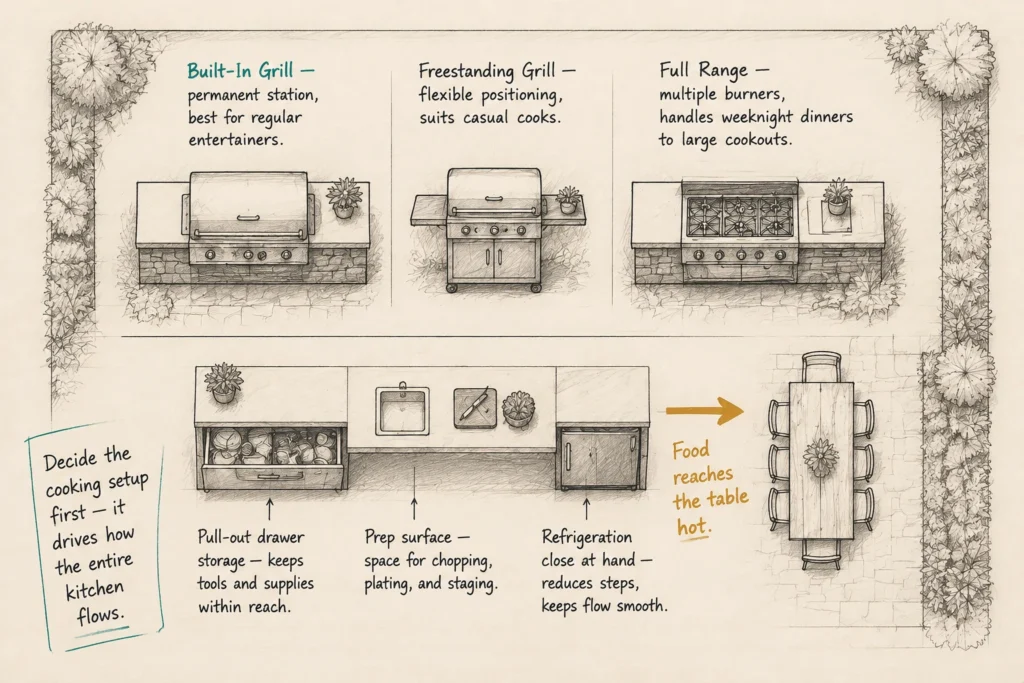
You need to first answer: “How often do you cook outside? Your answer to that question should drive every decision, starting with the grill:

  • Built-In Grill: A built-in grill is ideal for homeowners who entertain regularly and want a permanent cooking station.
  • Freestanding Grill: For casual cooks, a freestanding setup offers the flexibility to reposition based on wind, shade, or gathering size.
  • Full Cooking Range: Multiple burners and a wider surface mean you can handle everything from weeknight dinners to large summer cookouts.

The cooking setup you choose affects how your entire outdoor kitchen flows, so it’s worth deciding before anything gets installed.

Storage and Spacing Solutions

The right counter space, storage, and kitchen placement are what keep your outdoor cooking area running smoothly. Plan these details carefully:

  • Counter Space: With enough counter space, you can prep, plate, and serve without ever feeling rushed or cramped.
  • Storage Solutions: Weatherproof cabinets and pull-out drawers keep tools close without letting clutter spill into your dining zones.
  • Dining Proximity: Your outdoor kitchen’s position near the dining area means food reaches the table while it’s still hot.

A functional, well-placed outdoor kitchen means less time running back inside and more time with your guests. Basically, your backyard should feel that easy every single time you step outside.

Bring in Natural Elements to Complete Your Outdoor Design

Your outdoor design isn’t finished until the natural elements are in place. Decking, greenery, and ground cover are what give your backyard its texture, warmth, and depth. A backyard without them tends to feel sparse, even with good furniture.

To complete your outdoor design, focus on these natural elements:

  • Wood Decking: Wood decking creates a warm, defined surface that grounds your outdoor space visually. Composite decking is worth considering too if you want something that lasts through Chicago summers and winters with minimal upkeep.
  • Easy-Care Greenery: A mix of native shrubs, ornamental grasses, and low-maintenance plants is all it takes to make hard surfaces feel less cold and more inviting. Local nurseries in the Chicago area can point you toward varieties that thrive through Midwest winters.
  • Trees and Ground Cover: A few well-placed trees add privacy, shade, and visual depth to your outdoor space. And if you want a complete planting plan, the EPA’s water-smart landscape design guide covers greenery that suits your home’s surroundings year-round.

A backyard with the right natural elements feels like a natural extension of your home. In practice, that’s what separates a space people photograph from one they actually live in.

Lighting and Flow for Evenings and Special Occasions

Lighting and Flow for Evenings and Special Occasions

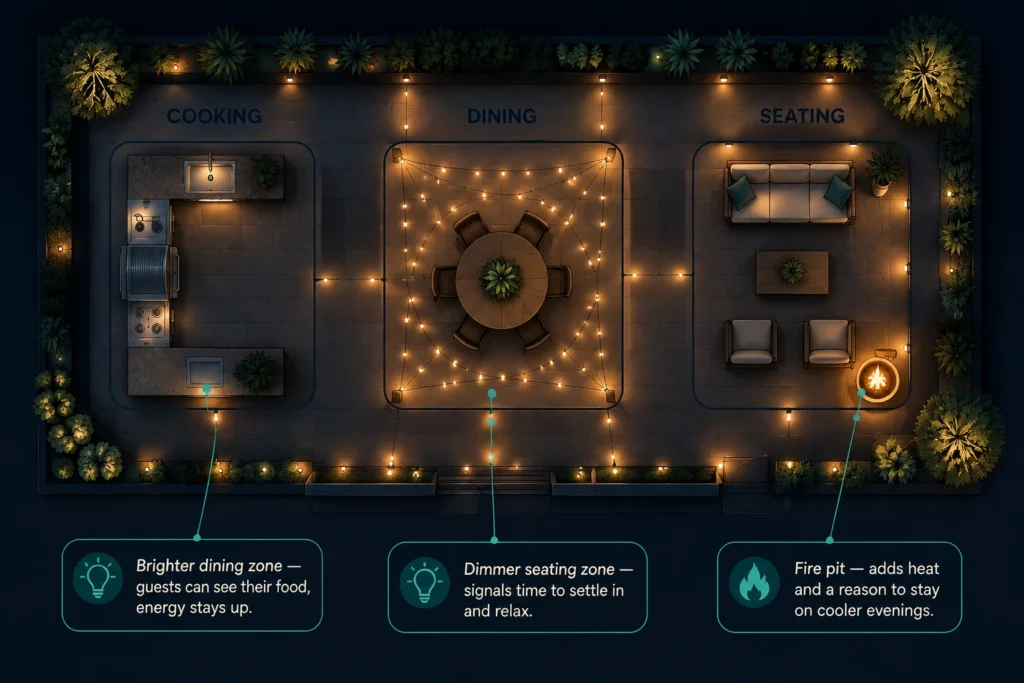
Your outdoor entertainment area doesn’t stop being useful at sunset, but poor lighting will make it feel that way. String lights over your dining area and warm fixtures near your seating zone can fix that. They’ll extend your usable hours and keep each zone clearly defined after dark.

Let’s be real, a brighter dining area helps guests see what they’re eating and keeps the energy up during the meal. On the flip side, a dimmer lounging zone naturally signals that it’s time to settle in and relax (always remember, well-lit spaces get used more often).

For special occasions, string lights paired with ground-level fixtures pull the whole space together beautifully. On cooler evenings, a fire pit takes over where the lighting leaves off, adding reliable heat and giving guests a natural reason to stay.

Proper lighting paired with a nice fire gives your outdoor entertainment area the kind of setup that works on a Tuesday night and a birthday party alike.

Ready to Stop Planning and Start Enjoying?

If you’ve come this far, you’ve caught on to one simple idea: design your backyard around the way you live. The right layout, features, and finishes can create that space for your everyday moments and larger gatherings. We built this guide around that idea.

Along the way, we discussed zoning, pergola design, and outdoor kitchen planning. We also looked at natural elements that tie your outdoor design together and lighting that keeps your space going well past sunset.

Your ideal outdoor space is well within reach, and the team at Paper Crown Gallery is ready to help you get there. Our team designs and installs custom pergolas and outdoor living spaces tailored to Chicago-area homes.

Contact us today and let’s get to work.

Retractable Pergola

Why Retractable Pergolas Are Changing Outdoor Living in Australia

Retractable pergolas are changing outdoor living in Australia by giving homeowners full control over sun, rain, and shade at the push of a button. As a result, you can open the roof on a warm afternoon and close it the moment a storm rolls in.

By comparison, fixed patio covers block sun and rain but remain in the same position after installation. In this case, a retractable pergola lets you adjust the roof as conditions change. So you can decide how much sunlight or shade your outdoor space receives.

In this article, you’ll learn how to choose between wood and metal, pick the right style, and decide if a kit or custom build suits your budget. Keep reading to find the setup that best fits your backyard.

Retractable Pergolas Are Changing Outdoor Living in Australia

Outdoor living becomes more practical when you can adjust your pergola as the weather changes. That’s why homeowners across Australia are replacing fixed patio covers with retractable pergolas that respond to changing conditions in seconds.

A retractable canopy also helps families use the area for more than occasional entertaining. You can open the roof to improve airflow or close it to protect outdoor furniture and create a more comfortable setting for meals, gatherings, or everyday relaxation. Over time, more new homes now include this level of flexibility as a standard feature.

Although a retractable pergola usually costs more upfront than a fixed roof, homeowners often use the space more frequently year-round. For many residents, that broader use makes the outdoor area feel like a more functional extension of the home.

Wood Pergolas vs. Metal Pergolas: Which Fits Your Backyard?

Wood Pergolas vs. Metal Pergolas: Which Fits Your Backyard?

Most people think material choice is only about appearance, but it determines how much upkeep your pergola will need. In practice, wood pergolas suit natural, cozy backyards, while metal pergolas suit low-maintenance, storm-prone climates.

Here’s what each option specifically brings to your yard:

Wood Pergolas Bring Warmth and Character

Timber pergolas add a rustic charm that pairs well with gardens, stone patios, and anything with a bit of natural texture. Meanwhile, cedar and treated pine are among the most popular choices for Australian timber pergolas, as both hold up well in local humidity.

That said, timber needs regular sealing and staining to resist rot, warping, and sun damage over time (skip a season, and you’ll need to replace it). Without ongoing maintenance, their appearance and lifespan can gradually decline.

Metal Pergolas Offer Strength and Low Upkeep

Unlike timber, metal pergolas are built with durability and low maintenance in mind. For instance, aluminum and steel resist rust, pests, and warping better than most timber options. And these qualities make them a practical choice for busy homeowners.

Powder-coated aluminum frames are also available in a wide range of colors, which makes it easier to match a home’s exterior.

In our experience installing both types of pergolas, metal pergolas need little more than an occasional rinse to stay looking good for years. An occasional check of the fixings, protective coating, and any built-up debris will help keep the structure in good condition for years.

Bottom Line: Timber offers a natural appearance but needs regular maintenance, while metal provides long-term durability with less ongoing upkeep.

Popular Pergola Styles for Every Outdoor Space

Not every backyard calls for the same pergola, so style counts just as much as material. The right design should suit your home’s architecture, the available space, and how you plan to use the area.

Considering these, you can choose between flat-roof pergolas, pitched designs, freestanding structures, and louvred systems. Among them, louvred roofs adjust with the push of a button, meaning it’s easy to control shade, ventilation, and light.

A quick breakdown of the main styles you should know before you shop:

  • Attached Pergolas: Best suited to patios and decks beside the house. These pergolas also connect directly to the existing roofline, which creates a natural extension of your indoor living space.
  • For Larger Yards: If you want to anchor a separate entertaining space away from the house, freestanding pergolas are a suitable option. In particular, they are perfect for a terrace near the pool.
  • Full Shade or Full Sun: A louvred roof system lets you rotate the slats on demand, and that offers more control than a fixed structure ever could.

Each of these pergola styles suits a different outdoor layout and lifestyle. So we suggest thinking about the available space, how you’ll use the area, and the level of weather control you want before making a decision.

Popular Pergola Styles for Every Outdoor Space

Pergola Kits vs. Backyard Discovery Custom Builds: What’s the Difference?

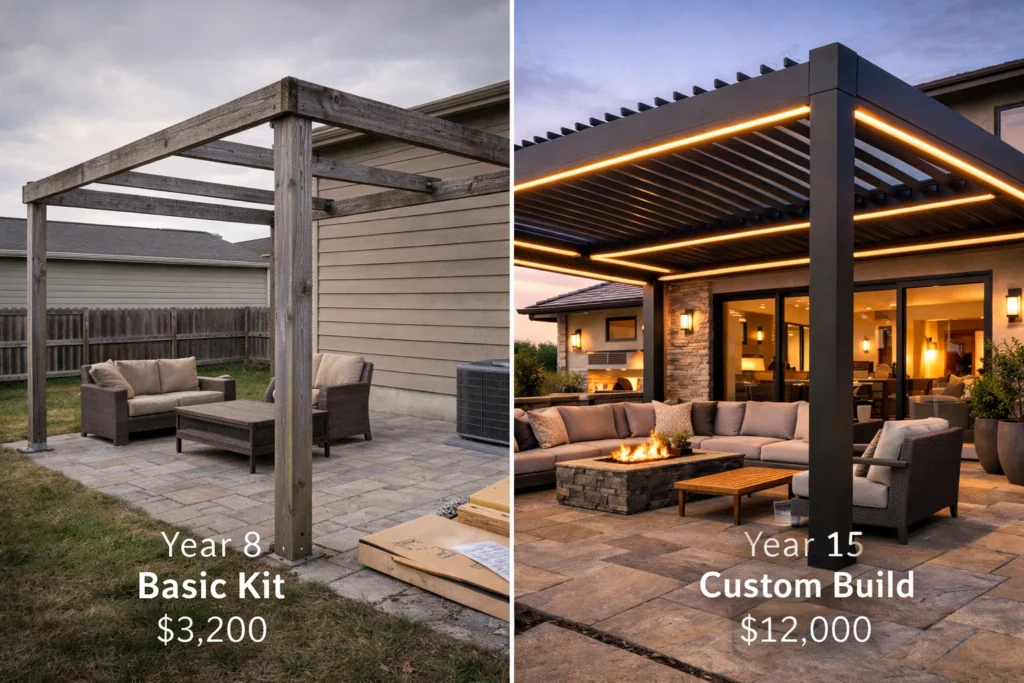
Pergola kits offer a quick, cheaper DIY setup, while custom builds offer exact sizing and features for your yard.

Many brands sell pre-cut, pre-drilled kits designed for homeowners comfortable with a weekend project and basic tools. Although a custom build takes longer and costs more, it can accommodate unusual layouts, uneven ground, and specific design requirements more than a standard kit.

Let’s break down what each option actually looks like once you commit, then compare them side by side.

What a Retractable Canopy Adds to a Pergola Kit

A retractable canopy gives a standard pergola greater flexibility by adapting to changing weather instead of providing fixed overhead cover. In practice, manual and motorized adjustable canopies both retrofit onto most standard pergola kit frames without much trouble.

From our experience installing canopies, most homeowners choose UV-resistant, fade-resistant PVC canopies. They also choose polyester material to handle sun and various weather conditions (the cheap fabric ones fade quickly, so skip those).

Ultimately, easy assembly is the whole point of a kit. That’s why installing the pergola first and adding a canopy later keeps the initial build simple while leaving room for future upgrades.

When a Custom Build Makes More Sense Than a Kit

Uneven ground, odd yard shapes, or development restrictions can rule out a standard kit altogether. From there, a custom build lets homeowners match existing decking, siding, or roofing material to increase their curb appeal.

And once you’ve seen a custom pergola built around an existing deck and door line, a stock kit can feel like a compromise. Why? Well, a custom design allows for features like skylights, built-in lighting, and privacy screens to enhance comfort and everyday use.

Not to mention, they can provide your outdoor living area with more durability and better protection from the elements than most off-the-shelf kits.

Kit or Custom? A Quick Side-by-Side Comparison

Cost and lifespan decide this argument more than looks do. Typically, both options have clear advantages, but they suit different budgets, timelines, and long-term goals.

This table shows how a kit and a custom build compare side-by-side:

FeaturePergola KitCustom Build
Cost RangeBudget-friendly, lower upfront priceHigher upfront, priced for exact specs
LifespanStandard grade, resistant framesBuilt to withstand harsher weather conditions
Best ForSmall yards, quick setupUneven ground, strict development restrictions

Frankly, neither option is the wrong choice. The better fit depends on your budget, yard, and the amount of customisation your space requires.

Pergola Kits vs. Backyard Discovery Custom Builds: What's the Difference?

Ready to Upgrade Your Backyard?

Retractable pergolas give homeowners the benefits a fixed structure never could. Sun, rain, and shade all of it becomes your call instead of the weather’s.

Here are the pergola options at a glance:

  • A timber pergola suits homeowners who value a natural look
  • A metal design reduces ongoing maintenance
  • Custom pergolas offer added flexibility for unusual layouts or specific outdoor needs

With these in mind, you should choose the option that best matches your climate and the way you use your outdoor space.

At Papercrown Gallery, we’ve spent years helping homeowners find the setup that fits their backyard. Reach out to us, and let’s build an outdoor space you’ll enjoy year-round.

Fixed vs Retractable Pergola for Families

Fixed vs Retractable Pergolas: What Works Better for Families

Retractable pergolas give you control over shade and rain, while fixed pergolas offer permanent coverage with less upkeep. Frankly, the weather here changes fast, and your family will skip the backyard entirely if they can’t rely on coverage. Which is why choosing the right option ensures your outdoor space stays comfortable and usable throughout the year.

Plus, research shows patios can boost home value by 8-10%, with an ROI over 80% when well-designed. So the pergola you install today directly affects what buyers see in your property tomorrow.

In this article, we’ll compare fixed versus retractable pergolas to understand the options better. We’ll also cover everything about weather protection, family zone setups, and actual costs.

Let’s find the pergola that works for your backyard.

Fixed vs Retractable Pergola: Understanding Your Options

The main difference between a fixed and retractable pergola comes down to flexibility based on weather and your needs. Most families skip this comparison completely and end up regretting their choice six months later. The reason is that they don’t think about how they’ll use the outdoor space.

Here’s what each pergola type brings to your backyard.

Fixed Pergola With Low-Maintenance Materials

Permanent beams or slatted roofs provide consistent shade without any moving parts to worry about. The frame materials include wood, aluminum, and vinyl, and they remain securely in place once installed. You’ll see them integrate right into existing patios or deck areas.

Plus, traditional pergola designs add architectural character that catches your eye immediately. That’s because plants like wisteria or jasmine grow up the climbing structure naturally over time, creating extra coverage and aesthetics without you doing much work.

Fixed Pergola With Low-Maintenance Materials

How Retractable Pergolas Give You Control

Motorized or manual canopy systems let you adjust shade levels throughout the day based on sun position. So you’re not stuck with one setting.

On top of that, weather-resistant fabric roofs close completely during rain or open fully when you want to enjoy natural light and fresh air. Modern designs also include rain sensors that automatically protect your outdoor space without you lifting a finger. That’s the control level you’re paying for with a retractable pergola.

Weather Protection That’s Effective for Family Life

Families need outdoor spaces that handle unpredictable Midwest weather without constant adjustments. That’s why choosing the right pergola allows your kids to have fun outside even when the weather gets unpredictable.

Take a look at how fixed and retractable pergolas handle rain, sun, and those crazy Chicago storms.

Rain and Sun Coverage Throughout the Seasons

Most aluminum frames on both types resist rust, but the coverage you get varies wildly. To give you an idea, fixed pergolas offer partial shade through slatted roofs but won’t keep you completely dry during downpours. It’s because the gaps between slats let rain through when storms hit hard.

On the other hand, retractable systems close tightly to block rain entirely. Plus, the canopies block UV rays completely, while fixed roofs need fabric inserts for full sun protection.

Dealing with Chicago Winters and Summer Storms

Winter changes everything for a pergola decision. For example, fixed structures handle heavy snow loads better since they have no mechanical parts that freeze or jam.

In reality, retractable canopies should be opened during winter months to prevent ice buildup on the fabric material (ask anyone who lives near the lake). Also, the aluminum tracks can freeze shut if you leave the canopy closed.

Summer storms in the suburbs like Naperville can also hit fast, so automatic rain sensors give instant protection for gatherings. That’s why motorized retractable pergolas cost more upfront but save your outdoor furniture when the weather changes.

Dealing with Chicago Winters and Summer Storms

Keeping Outdoor Furniture and Toys Protected

After three decades working with Chicago-area families, we’ve seen what protects patios long-term. In general, retractable roofs close completely to shield patio furniture, grills, and kids’ toys from unexpected rain damage.

Contrastingly, fixed pergolas need additional tarps or storage solutions since partial coverage leaves items exposed to the elements. You’ll also end up spending more on replacing weathered cushions and rusted equipment every few years.

Besides that, covered spaces mean less time hauling cushions inside and more time enjoying your family-friendly backyard.

Creating Zones in Your Family-Friendly Backyard

Ever notice how kids gravitate to certain spots in the yard while adults prefer others? A well-placed pergola helps separate these zones naturally. And good planning makes sure everyone in the whole family has their own space.

Here’s how pergolas can create these zones.

Play Areas That Parents Can Monitor

Supervision gets easier with the right setup. For instance, shaded pergola zones near kitchen windows let you cook dinner while watching kids on swing sets (no running back and forth between the stove and the yard anymore).

Meanwhile, open retractable roofs during cooler mornings give children full sun exposure for active outdoor play sessions. That’s when kids burn off energy before lunch.

Beyond that, fixed structures with side curtains create defined boundaries so younger kids stay within visible supervised areas. Those curtains can even block the wind on breezy days.

Dining and Entertaining Under Cover

We’ve built pergolas for families in Oak Park, Hinsdale, and Evanston since 1994, and dining spaces always get the most use. In practice, retractable canopies adjust for evening gatherings so guests stay comfortable regardless of temperature drops or sudden showers.

On the contrary, fixed pergolas work great for permanent outdoor kitchens since the structure anchors grills and countertops securely. These types of year-round dining areas that don’t require setup or takedown always become family favorites.

Dining and Entertaining Under Cover

What Families Really Spend on Pergolas

Fixed pergolas typically run $3,000 to $8,000 installed, while retractable systems start around $8,000 and can hit $15,000 with motorized features. The price gap can seem unreasonable at first, but it’s not just upfront costs.

This is what you’ll have to spend on installation and upkeep:

  • Installation Time for Fixed Structures: The job takes two to three days, depending on size and whether it’s being attached to your house. Usually, labor runs $1,500 to $3,000 for most installations. The reason is that attaching to existing structures needs extra reinforcement and flashing work.
  • Electrical Work Adds a Day: Retractable systems need wiring for motorized options, which adds $500 to $1,200 to your total. In practice, most families choose motorized canopies since nobody wants to hand-crank one during a sudden storm.
  • Permit Processing: Most Chicago-area permits cost $50 to $300 for attached structures, but freestanding pergolas often need no approval. If needed, this processing takes about two weeks once you submit the paperwork.
  • Drainage Installation: Professional drainage solutions add $300 to $800 but prevent water damage to posts and patios. Besides that, aluminum pergolas cost 20-30% more upfront than vinyl or wood but last twice as long without rotting or cracking.
  • Monthly Track Cleaning: Retractable models generally need tracks cleaned to remove debris, and this takes about 15 minutes each time. To give you an idea, professional cleaning runs $150 annually if you’d rather skip it. Meanwhile, fixed versions just need occasional wood sealing at $200 every two years.

Ultimately, the investment pays off long-term when you factor in how much more your family uses the backyard. In fact, quality materials and proper installation mean your pergola lasts 5 to even 30 years without major repairs.

Pick the Right Outdoor Space for Your Crew

Fixed pergolas provide durability and low maintenance, while retractable versions offer weather flexibility and control. At the end of the day, both types create valuable family-friendly backyard zones but serve different priorities based on lifestyle needs.

Basically, families who want year-round structure without adjustments should choose fixed options. Meanwhile, households needing adaptable coverage prefer retractable systems. The decision pays off long-term when you pick the pergola that matches how often you’ll use the outdoor area.

If you need more information, visit Papercrown Gallery to explore options for your backyard. Our team designs custom pergolas for Chicago-area families with over 30 years of experience creating outdoor spaces that work. Let’s build an outdoor area that your family will use every single day.

Custom pergola design

Why Custom Pergolas Outperform Off-the-Shelf Options

Custom pergolas outperform store-bought kits because they’re engineered for your exact measurements, your local weather, and the features you need. On paper, box kits promise the same benefits for half the cost, which makes them hard to resist.

In reality, that 12×12 kit leaves two feet of dead space on your 14-foot patio, or the generic brackets start swaying during the first big windstorm. What looked like a money-saving shortcut becomes an expensive do-over within a few seasons.

Custom pergola design changes that completely. It affects how the structure holds up, how it fits your space, and whether you end up upgrading or replacing it in a few years.

First, let’s find out why exact measurements change how your pergola performs.

Custom Pergola Design: What Makes It Different

Custom Pergola Design: What Makes It Different

Custom pergola design means the structure gets built to fit your exact outdoor space instead of forcing you to adapt around fixed store dimensions.

Do you have a 13-foot patio? No problem, your pergola can be 13 feet wide. Similarly, you can even ask designers to work around obstacles like AC units, downspouts, or garden beds, so nothing gets in the way.

But the fit is just the beginning. It’s the materials where custom control really shines.

Material Choices You Control

Box kits lock you into whatever material the manufacturer picked for mass production. Whereas, with custom work, you get to choose what works for your location:

  • Aluminum vs. Wood: Dealing with humid summers? Aluminum won’t rust or warp when moisture hits. Wood, on the other hand, swells and eventually rots in those conditions. But if you’re in a drier climate, cedar holds up beautifully and develops a rich patina over time (and looks incredible doing it).
  • Finish Quality: What you choose here decides how well your pergola holds up to the weather. Powder coating, for example, handles Midwest winters far better than the basic paint most kits use.
  • Climate Matching: You don’t choose materials based on what works “everywhere,” but what performs in your backyard. That way, your pergola handles local conditions without constant repairs.

This level of control becomes even more important when you start adding features that box kits can’t handle.

Features Box Kits Can’t Offer

Motorized systems and integrated lighting need electrical planning before the first beam goes up. That’s why retrofit attempts on box kits usually fail.

When you go custom, these features get engineered into the structure from the start:

  • Motorized louvers: These need electrical wiring and reinforced beams that standard kits just don’t have built in. Without the right support structure, motors stress the frame and fail within a year or two.
  • LED lighting: Hidden channels get built into the structure during fabrication, not added later as an afterthought. That means no exposed wiring or clunky fixtures ruining the clean lines.
  • Smart controls: Rain sensors and automated systems work when they’re planned into the design from day one. Box kits can’t accommodate these upgrades without major reconstruction.

Box kits can handle basic shade, but custom builds handle automation, lighting, and smart systems without the structure falling apart.

Where Pre-Made Pergola Kits Come Up Short

Where Pre-Made Pergola Kits Come Up Short

Pre-made kits fall short in three ways: sizing, materials, and yard flexibility. You’ll notice the size issue first.

You can walk into any big box store, and find kits in 10×10 or 12×12 sizes. But what if your deck is 11×13? Well, tough luck. You can either buy the 10×10 and leave a gap, or grab the 12×12 and have it hang over the edge.

Then there’s the material problem. Those kits use whatever wood or aluminum the manufacturer picked for mass production, not what handles humidity or snow loads in your zip code. In areas with coastal moisture or Midwest winters, that generic cedar or basic aluminum coating won’t hold up the way climate-matched materials would.

And forget working around obstacles. Standard kits don’t account for AC units, downspouts, or utility boxes already taking up space in your yard. Ultimately, you’ll end up moving things around or settling for awkward placement because the kit won’t flex.

Structural Strength: Custom vs. Store-Bought

The advantage of custom engineering becomes clear during harsh conditions like high winds or heavy snow.

Box kit brackets aren’t always designed with sustained wind loads in mind. That’s where custom builds differ. They typically use thicker steel and hardware selected for local wind conditions. That difference often shows up during the first major storm, when lower-grade pergolas start swaying.

Frost heaving is another factor. This is why custom installers typically set posts below the local frost line to prevent shifting as the ground freezes and thaws. In comparison, kit instructions may recommend shallower depths that work in warmer climates but can cause problems after a tough winter. Nobody wants to watch their pergola tilt after one freeze-thaw cycle.

Rafter spacing follows the same principle. When beams are sized and spaced for actual snow loads in your area rather than generic assumptions, the structure handles winter weight without sagging.

We’ve seen plenty of kit pergolas that looked fine in July but needed repairs by March. Whereas custom builds use engineering that matches your location from the start, which is why they’re still standing years later.

The Price Gap: What You Actually Get for Your Money

The Price Gap: What You Actually Get for Your Money

Custom pergolas typically cost $8,000 to $15,000, compared with about $2,000 to $4,000 for basic kits. That upfront gap pays for stronger materials, professional installation, and a structure built to last decades rather than just a handful of years.

For instance, quality aluminum pergolas last 25 to 50 years with minimal maintenance, while basic wooden kits deteriorate within 10 to 15 years.

The lower sticker price can turn into a repeating expense rather than a large one-time investment. Professional installation also often comes with warranties, so you’re not dealing with loose hardware or alignment issues every season.

Resale value narrows the cost gap further. Custom designs deliver an ROI of roughly 50 to 75% when selling your home, while basic kits add minimal appeal to buyers. We’ve seen homeowners who choose custom spend more upfront but get much of that money back when they sell.

Getting Your Backyard Oasis Right the First Time

Custom pergolas outperform box kits because they’re designed for your space, climate, and long-term use. The upfront price is higher, but the payoff is a structure that handles harsh weather, needs fewer repairs, and adds lasting value to your outdoor space.

Before choosing, think about how you’ll use the pergola year-round, local weather demands, and how long you expect it to last. Comparing materials, engineering specs, and installation quality upfront helps avoid costly fixes later.

If you want a pergola tailored to your backyard, reach out to discuss your project and get a quote based on your space and design goals.

Retractable Roof Pergola

How Retractable Roof Pergolas Change Outdoor Living

Retractable roof pergolas enhance your outdoor living because you can use the space comfortably and efficiently throughout the year.

In fact, Buyers touring homes in Naperville and Hinsdale actively ask about these weather-responsive features during showings. 48% of experts reveal that the combination of a porch and patio is what most people desire in a home. And retractable roof pergolas make that patio space usable far beyond the usual three perfect weather months.

In this article, you’ll see the reason homeowners with retractable pergolas use their outdoor spaces more often than those with fixed structures. You’ll also learn how the adjustable louver mechanism functions, the size configuration that works for your patio dimensions, and how these systems compare to shade sails.

Let’s find out all the ways retractable pergolas can upgrade your outdoor space.

What Makes Retractable Roof Pergolas Different?

Retractable roof pergolas use adjustable aluminum louvers instead of fixed crossbeams, which gives you full control over sun and rain. On the contrary, traditional systems force you to accept whatever weather conditions exist.

Here’s what makes these pergola designs work so well.

The Adjustable Louver System Explained

The Adjustable Louver System Explained

Adjustable louvers can rotate from fully open to completely closed, letting you control sunlight angles throughout the day. Usually, each louver panel spans around 24 inches wide and operates smoothly using motorized controls or manual cranks if you prefer hands-on adjustments.

Along with that, you get a motor system that adjusts all louvers simultaneously with a single button press or through smartphone apps. When closed, louvers create a waterproof seal that keeps rain off your outdoor furniture, and when opened, they allow full sun and air circulation through the canopy.

Aluminum vs. Traditional Wood Construction

Aluminum forms a protective layer on its own, resisting corrosion from rain and humidity without needing annual sealing treatments. Conversely, wood pergolas need monthly maintenance and face replacement after 10-15 years due to rot and sun damage (yearly wood treatments run around $300-500 just for materials).

Meanwhile, metal construction stays light yet sturdy enough to handle snow loads that would crack traditional wooden beams. The weight difference is particularly important when you’re mounting a pergola to your home or building freestanding posts in your backyard.

How the Motorized Controls Function

Motor systems adjust all louvers at once with a single button press or smartphone app control options. It has built-in sensors that detect rain and automatically close louvers to protect furniture and cushions below (saves you from running outside during sudden storms).

There’s also a manual override that lets you operate the system during power outages using a simple hand crank mechanism. This backup feature means you’re never stuck with louvers in the wrong position when the power goes out.

Retractable Pergola Benefits for Your Outdoor Space

Homeowners report using their patios 4-5 times more often after installing retractable roof systems. Think about how often you check the weather before planning outdoor time. These pergola systems eliminate that hesitation.

Take a look at the benefits of these pergolas that extend beyond convenience.

  • Extended Furniture Lifespan: Your outdoor furniture and cushions last 3-5 years longer when protected from constant sun bleaching and rain damage. You’ll spend less time replacing weathered pieces and more time truly enjoying your space. 
  • Increased Property Values: Usually, you can get 20-30% of your investment back with quality outdoor structures, according to local real estate data (appraisers specifically note weather-controlled outdoor spaces in their reports). That translates to real equity added to your home’s worth when you decide to sell.
  • Weather-Flexible Entertaining: You create a usable outdoor living space for hosting guests even during light rain or brutal afternoon sun. So you can have your morning coffee outside more often when you dial in the exact shade levels you want, and dinner parties don’t get cancelled because of unpredictable weather.
  • Lower Energy Bills: Pergolas that shade windows and doors keep interior rooms cooler during summer without watching your utility bills skyrocket every August. The aluminum louvers block heat before it penetrates your home, which means your air conditioner can run less frequently throughout the season.

These advantages of retractable pergolas work together to upgrade how you use your backyard. Once you install this system, you’ll wonder how you ever managed with a fixed pergola or simple patio umbrella.

Does An Aluminum Pergola Stand Up to Chicago Winters?

Aluminum pergolas handle extreme weather better than wood or fabric alternatives. They also stay firm through snow, wind, and summer storms. When Midwestern weather throws everything but the kitchen sink at your backyard, aluminum holds steady.

This is how these systems perform when brutal February snowstorms and July thunderstorms roll off Lake Michigan.

Snow Load Capacity and Drainage Design

Snow Load Capacity and Drainage Design

These systems can easily tank February snow loads. Aluminum beams handle 30-40 pounds per square foot, which exceeds typical Chicago snowfall accumulation rates by a comfortable margin.

Plus, closed louvers create a pitched surface that sheds snow and ice rather than collecting weight on top of your pergola. These built-in drainage channels direct melting snow away from your foundation and prevent pooling under the structure. It protects your patio surface from freeze-thaw damage.

Protection from Summer Storms

Wind ratings usually reach 90 mph (the upper limit for moderate wind threat) for quality systems, and they stand firm during severe thunderstorms that blow through from Lake Michigan. After three decades of pergola installations across the Chicago area, we’ve watched these aluminum systems hold their ground through storms that ripped apart neighboring shade structures.

What’s more, rain sensors close louvers within 30 seconds of detecting moisture, and protect your outdoor furniture before you even notice it’s raining. Lightning-safe aluminum construction also includes proper grounding to direct strikes into the earth below your pergola.

Sizing Your Retractable Roof System

Through countless installations in Naperville and Hinsdale, we’ve learned that most homeowners underestimate their coverage needs by about 2 feet. It’s best to get the measurements right from the start to save you from costly adjustments later. Once you nail down the measurements, everything else falls into place.

Let’s walk through the necessary sizing decisions for your outdoor space.

Panel Configuration for Different Spaces

If you have a fompact patios, it needs fewer panels with tighter spacing, while sprawling decks require full coverage systems that span the entire area. Along with that, corner installations use L-shaped configurations to wrap around house angles and protect multiple seating areas (we’ve faced that issue countless times with Hinsdale homes).

On the other hand, freestanding models work for pool areas or gardens away from house mounting points. These standalone pergola structures need their own post systems but offer flexibility for backyards where attaching to the home isn’t possible.

Coverage Area Measurements

Width measurements span between your mounting beams where the canopy attaches above your patio. And projection measures how far the canopy extends outward from your house wall or freestanding posts into the yard.

Usually, single-section canopies work for spaces up to 16 feet wide, while larger areas need two sections to maintain proper structural support.

Pro Tip: Add 6-12 inches beyond furniture edges so rain doesn’t splash onto seating during storms. This buffer zone keeps your outdoor space usable in any weather.

Coverage Area Measurements

Custom Fabric and Color Selection

You can get good fabric options like light-filtering mesh and complete blackout materials, depending on the sun exposure in your backyard. In general, neutral tones like beige and gray match most home exteriors in Naperville and Oak Park neighborhoods.

In contrast, multicolor effects with two fabrics for striped patterns add visual interest to plain yards. You can customize the combinations to match your home’s existing outdoor color scheme and landscaping features around your property.

Composite Materials and Durability

Aluminum pergola frames pair with composite fabric canopies that resist UV damage and mildew growth better than traditional canvas materials. These engineered fabrics maintain their color for 10-15 years without fading, which means your outdoor living space looks newer longer.

The composite construction also handles temperature changes like -20°F Chicago winters and 95°F summer heat without cracking or warping. Each system includes 2-9 panels, depending on your projection length. It comes with two-section installations that feature a 1-inch gap between sections. So it can flex during wind and temperature changes.

Comparing Retractable Pergolas to Shade Sails

Once you understand retractable pergola benefits, you’ll see why they outperform shade sails in durability and function. The upfront price difference looks negligible when you factor in replacement cycles over 10-15 years.

Here’s how these two outdoor shade options stack up against each other:

FeatureRetractable PergolasShade Sails
Installation Cost8,000-$25,000$800-$3,000
Lifespan20-30 years5-7 years
AdjustabilityMinute-by-minute controlFixed once installed
Wind Resistance90+ mph40-50 mph
Additional FeaturesSupports lighting, fans, and heatersCannot support add-ons safely
Property ValuePermanent increaseNo resale appeal
Replacement CostMinimal maintenanceFull replacement every 5-7 years

Shade sails might cost less initially, but you’ll have to buy three or four sets over the lifespan of one aluminum pergola system (one good storm and you’re shopping for new sails). Overall, the advantages are more prominent when you compare long-term outdoor living performance between these two options.

Your Next Step to Better Outdoor Living

Retractable roof pergolas give you weather control, furniture protection, and property value increases that fixed structures can’t match. The aluminum construction handles Midwestern seasons while adjustable louvers let you customize shade and ventilation daily.

After considering all these options, you can start with the measurements of your patio or deck. Then explore fabric colors and panel configurations that fit your home’s style and your family’s needs.

If you’re ready to upgrade your outdoor space with a system built for Chicago weather, Paper Crown Gallery brings over 30 years of pergola experience to every installation on our website. Our design team works with homeowners across Naperville, Hinsdale, and Oak Park to create outdoor living spaces that function beautifully year after year.

pergola planning basics

A Beginner’s Guide to Planning Your First Pergola

You’ve been dreaming about a pergola for months. You’ve scrolled through photos, measured the yard, and priced out materials. But now you’re stuck trying to work out what comes first.

Location? Size? Materials? Each choice seems to depend on the others, which makes it easy to second-guess every decision.

Which is why this guide gives you a simple order to follow so the planning feels clear instead of confusing. You’ll learn how to choose the right spot, pick the right size, and match your materials to your budget before you start building.

What Do You Actually Want Your Pergola to Do?

What Do You Actually Want Your Pergola to Do?

Your pergola should serve the main function you have in mind. It could create a shaded spot for weekend barbecues, frame a relaxing seating area, or support climbing plants. Before you pick a location or buy materials, be clear about the job this structure needs to do, because each purpose affects the design and placement.

Here’s how different purposes shape your planning:

  • Dining and Entertaining Spaces: If hosting is your thing, you’ll need room for tables, chairs, and people to move around comfortably. Most dining pergolas start at 12×12 feet, though bigger backyards can handle 14×16 or larger. String lights overhead turn these spaces into evening hangouts, and the structure makes your backyard feel like an outdoor room.
  • Shade-Focused Pergolas: Looking to escape the afternoon sun? Place your structure where it blocks the harshest heat. A solid roof delivers full shade, while an open framework gives you dappled sunlight. Or go with climbing plants for natural shade that improves as the vines grow in.
  • Garden Accent Structures: These smaller pergolas work beautifully as decorative elements without taking over your patio. They support climbing plants, frame garden paths, or create focal points.

A pergola built for shade won’t work if you actually need an outdoor dining room, so nail down your purpose first. Once you’ve figured that out, picking the right location becomes way easier.

Picking the Perfect Location in Your Backyard Space

Getting the location right from the start saves you from expensive relocations and ensures your outdoor structure actually gets used. To choose the best spot, consider how microclimates, underground utilities, and sun patterns in your backyard will affect your pergola.

Three big factors will guide this decision:

Freestanding or Attached to Your Home

Attached pergolas work best when you want easy access from your house. So you can step out your back door directly onto a covered patio or deck.

Freestanding structures make sense when you’re placing a pergola by the pool, in a garden corner, or anywhere away from the house. You get flexibility to anchor those distant backyard spots without modifying your home’s exterior.

Another advantage of attached designs is that the running electricity for lights doesn’t require trenching power lines across your entire yard (trust us, that gets expensive fast).

Sun Exposure and Shade Patterns

Sun Exposure and Shade Patterns

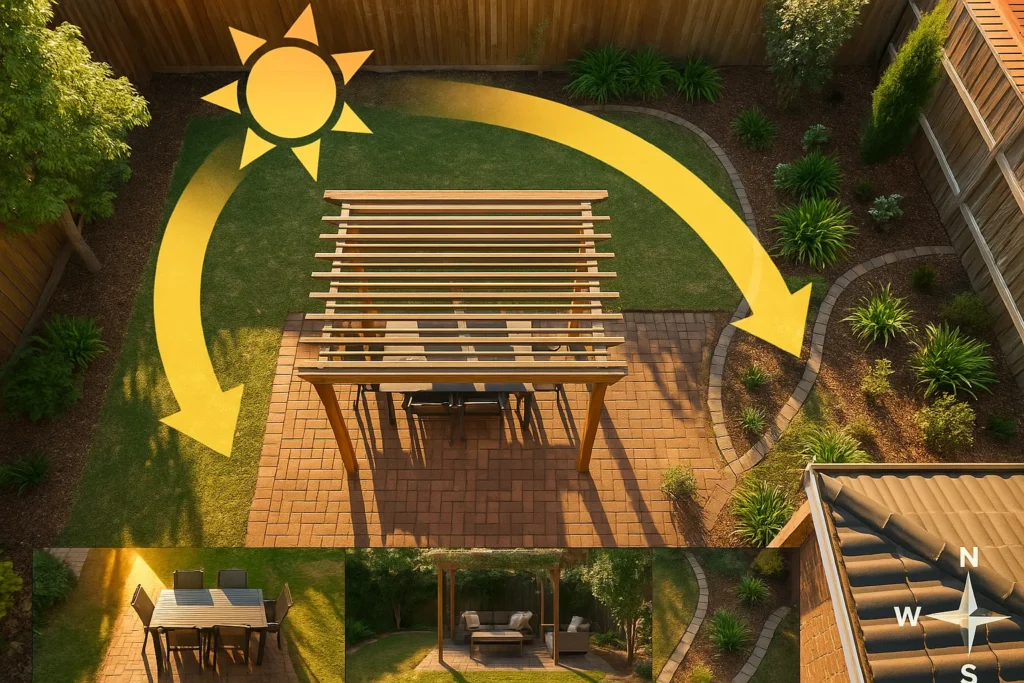
The direction of the sun determines when your pergola feels comfortable. That gorgeous west-facing spot will turn into a sauna by 4 PM in July.

By contrast, east-facing locations catch pleasant morning sun and stay cooler as afternoon temperatures climb, while the southern side offers the most consistent light year-round. The only downside? You may need adjustable louvers to handle the sun’s changing angle between seasons.

Of course, sun direction is only half the equation. You also need to decide how you’ll actually create shade. A solid roof provides full protection from the sun and rain. If you want that dappled sunlight effect, an open framework works best. Want natural shade? Train climbing vines over the top, which improves as the plants grow and mature.

Available Space and Ground Conditions

Remember to check what’s underground before you pick a spot. Hit a sprinkler line or electrical conduit three feet down, and you’re looking at repair costs on top of your pergola budget. Don’t worry, though; a contractor can help identify these.

For cold-weather regions, frost depth requirements determine how deep your footings need to go to prevent winter heaving. Most areas also require structures to sit at least 3-5 feet from property lines, though some neighborhoods have stricter setback rules.

Beyond clearances, pay attention to the actual ground conditions where you’re building. Flat, stable ground makes installation straightforward, while sloped soil means extra prep work and higher costs.

Before you dig, contact your local utility company to get underground lines marked. It’s free and prevents you from accidentally cutting into gas, electric, or water service.

Selecting a Style That Complements Your Home

Selecting a Style That Complements Your Home

Walk past a home where the pergola looks like an afterthought, and you’ll immediately understand why matching your structure to your home’s style is worth the effort.

Once you start comparing options, you’ll notice that the best-looking pergolas echo the architecture around them. From our installations across Naperville and Hinsdale, the structures that blend best are the ones that pick up on a home’s existing lines and materials.

Traditional wood pergolas with decorative brackets suit colonial and craftsman homes beautifully. Cedar or redwood adds natural warmth and ages in a way that feels consistent with those styles.

For more modern properties, clean-lined aluminum pergolas work better. Their slim profiles and minimal ornamentation match contemporary architecture. Similarly, rustic cedar with natural finishes pairs well with ranch-style homes and woodland settings where a more organic look makes sense.

Materials Guide: Balancing Look, Longevity, and Budget

The right material choice means you’ll get to spend your weekends enjoying your pergola instead of maintaining it. Each option balances upfront cost against ongoing work and longevity. Knowing the trade-offs shows what you actually get with each choice.

Let’s compare what you’re actually getting with each material:

 Material Cost Maintenance Longevity Best For
Pressure-Treated Pine$1,500-$3,500 High (stain every 2-3 years) 15-20 years Budget-friendly start, ongoing work required 
Cedar/Redwood $3,500-$6,000 Medium (seal every 3-4 years) 20-25 years Natural rot resistance, ages to silver-gray 
Aluminum $5,000-$10,000 Very Low (occasional cleaning) 30+ years Modern look, won’t warp or rot 
Vinyl/Composite$4,500-$8,500Very Low (hose down yearly) 25-30 years Mimics wood grain, handles weather well 

If you’re working with a tight budget, pressure-treated pine gets your backyard structure started for less money. The trade-off is regular staining every few years to prevent rot and weather damage.

Cedar and redwood offer a middle ground with natural protection built in, though they still need occasional sealing to keep their look. On the other hand, aluminum and vinyl cost more upfront but eliminate the maintenance cycle completely.

These materials handle harsh weather conditions without degrading, which makes them low-maintenance options for homeowners who’d rather use their outdoor space than constantly work on it.

What You Need to Know About Permits and Local Regulations

What You Need to Know About Permits and Local Regulations

Most municipalities require permits for structures over 120 square feet or exceeding 12 feet in height. These rules are based on local building codes, which often follow the International Residential Code from the International Code Council (ICC). That means you’ll need a permit even for your own backyard.

Homeowners’ associations often have their own guidelines about colors, materials, and placement. Plus, some neighborhoods restrict certain styles or require approval for any backyard structures.

Pro tip: Check local regulations early because violations can force expensive changes after construction.

Planning for Features That Make Your Outdoor Space Shine

Once you’ve picked your pergola’s location and materials, it’s time to plan the extras that make the space practical and enjoyable.

Here’s what to focus on:

  • Foundation and Posts: Want a pergola that stays sturdy for years? Start with a solid base. Pergola posts need secure anchoring, whether attached to concrete with lag screws or set directly in the ground.
  • Electrical Wiring and Lighting: Perfect for evening dinners or cozy nights outdoors. Ceiling fans, outlets, and string lights are far easier to install during construction than after the pergola is finished.
  • Privacy Screens: Create a backyard retreat with the right screens. They block views from neighbors while keeping air flowing.
  • Drainage: Water pooling under a pergola can cause long-term problems. Slope the ground slightly away from the structure or add a gravel base to let water drain naturally.

Together, these features make your pergola functional, comfortable, and inviting in every season.
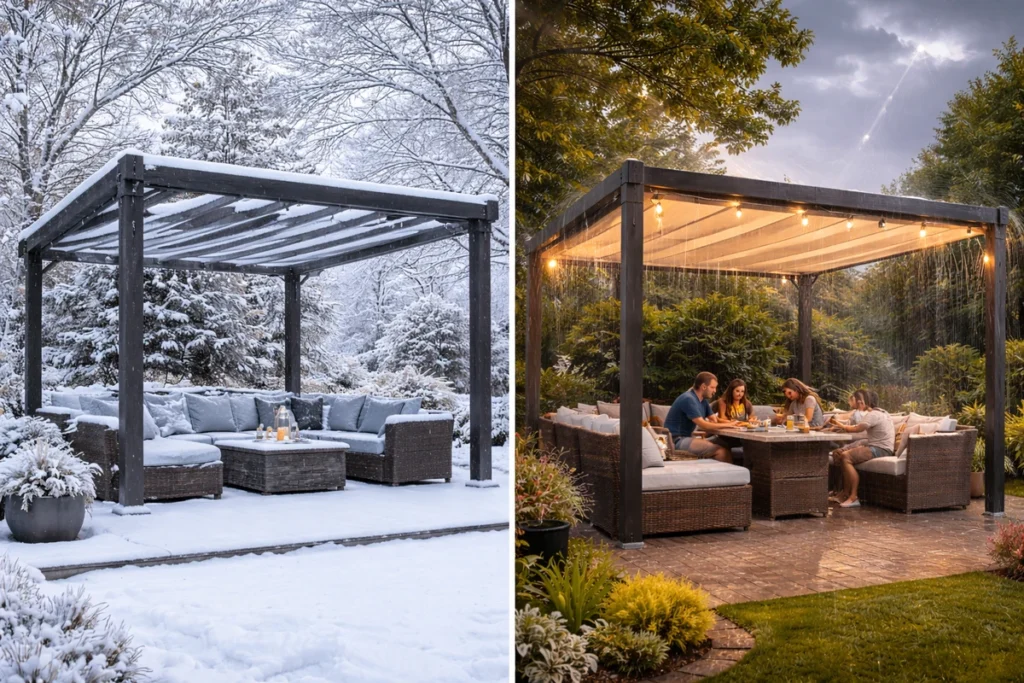
Bring Your Backyard Vision to Life

Now you know what your pergola needs to do, where it should go, and which materials fit your budget. The construction process becomes simpler once these foundational decisions are in place.

Start building with confidence, or work with experienced professionals who can turn your plan into reality. Either way, you’re creating an outdoor space that transforms how you use your backyard.

If you need expert help bringing your vision to life, we’re here for you. Visit Paper Crown Gallery to explore custom pergola options and get started today.

Small patio design

How to Make a Small Patio Feel Bigger With a Pergola

The easiest way to make a small patio feel bigger is to add a pergola. A pergola draws the eye upward, adds structure, and makes your outdoor living space feel open rather than boxed in.

Sounds like a big project, right? It’s simpler than you think. With the right size, height, and a few thoughtful small patio design choices, your compact backyard or deck can feel twice as spacious.

In this guide, we’ll walk you through practical ideas for pergolas, furniture, plants, and lighting. By the end, you’ll know exactly how to make a compact outdoor space feel open and functional.

First up: why a pergola often outperforms other shade options.

Why Choose a Pergola Over Other Shade Options?

A pergola is the best shade option for small patios because it provides cover without blocking views or eating up floor space.

Umbrellas and shade sails tend to create visual clutter. They block sightlines and make a small space feel even tighter. A pergola, on the other hand, keeps views open above and around you. So your patio feels connected to the rest of your yard rather than cut off from it.

And here’s the thing. A pergola’s open slat design filters sunlight gently instead of casting a heavy, dark shadow as solid porch covers do. That means you get relief from the sun without that closed-in feeling.

Beyond letting light in, the airy frame frees up space, so you don’t have to deal with bulky umbrella stands or poles intruding into your seating area.

Custom Pergola Sizing: Finding the Right Fit for Compact Yards

Custom Pergola Sizing: Finding the Right Fit for Compact Yards

The right pergola size makes your patio look balanced and intentional instead of cramped or awkward.

A pergola that’s too wide crowds the patio edges and leaves no space for walkways or potted plants. We’ve seen this mistake more times than we can count. Homeowners get excited, go big, and suddenly their yard feels smaller than before.

On the other hand, one that’s too narrow has the opposite problem. It looks like an afterthought and fails to anchor your seating area properly. Your furniture ends up spilling past the frame, which throws off the whole look.

So what’s the sweet spot? Measure your patio footprint first, then leave at least 18 inches of clearance around the pergola edges. This keeps proportions balanced and gives you room to move comfortably. If you have a courtyard or pool nearby, factor that into your landscape design as well.

The Height Factor: How Pergolas Create the Illusion of Space

Picture standing under a low ceiling versus a tall one. The tall space feels bigger, right? Your pergola works the same way.

A taller pergola draws your gaze upward, so you notice the height instead of the limited square footage on the ground. This alone makes even a tight space feel more open, and for most small patios, a ceiling height between 9 and 10 feet hits the mark.

Anything lower can have the opposite effect. Low pergolas press down visually and make compact patios feel cramped. If your build space is limited, go up instead of out. That extra height gives your eyes room to travel, and suddenly, even a 10×10 patio feels much more spacious somewhere.

Go Vertical: Climbing Plants and Gardens on Your Pergola Frame

Go Vertical: Climbing Plants and Gardens on Your Pergola Frame

Growing plants upward lets you enjoy lush greenery without giving up a single square foot of patio floor. Still, filling your patio with planters can take up valuable space and require extra work. Using your pergola’s frame provides sturdy support for climbing vines while keeping the ground clear.

Of course, not every plant is suited for climbing. Some grow too fast, others get too heavy and drag down the frame. These climbing plants stay manageable and look beautiful on pergolas: climbing roses, star jasmine, and clematis.

  • Climbing Roses: If you’re going for a romantic, elegant look, Alchymist or May Queen are great options. They need regular trimming, but the payoff is stunning color and fragrance all season. You can check out the Royal Horticultural Society list to see which varieties suit your climate and garden best.
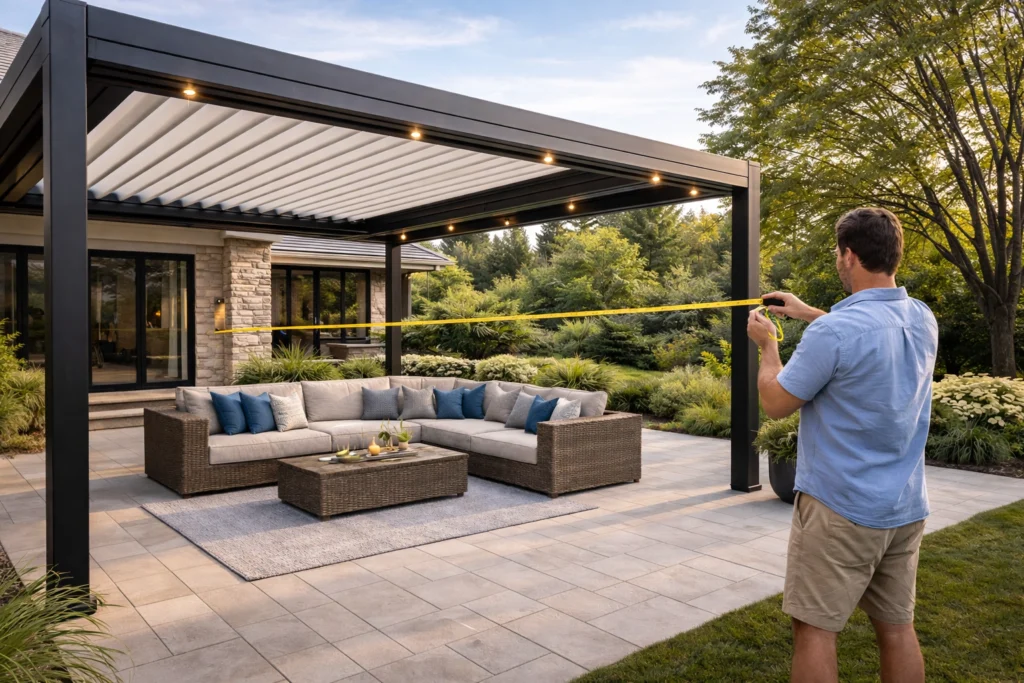
  • Star Jasmine: From what we’ve seen working with homeowners, Star Jasmine stays manageable year-round. It won’t get unruly, which makes it easier to maintain on smaller pergolas.
  • Clematis: For showy blooms without the weight, Jackmanii is a patio-friendly option. It wraps neatly around posts and won’t drag down your pergola frame.

Whichever you choose, place taller plants at the base of each post and let them climb naturally. Within a season or two, you’ll have a living canopy that softens the structure and adds character to your garden.

Compact Furniture and Outdoor Rugs Under Your Pergola

What’s the fastest way to make a small pergola area feel cluttered? Furniture that’s too big for the space. You thought a six-seater outdoor sofa would look nice, or maybe a large coffee table. Before you know it, your patio feels cramped and difficult to move around (we’ve all been there).

The right seating and a well-placed outdoor rug can fix that. These two go hand in hand to define your space without overwhelming it. We’ll look at each one in turn.

Adirondack Chairs and Other Space-Friendly Seating

Adirondack Chairs and Other Space-Friendly Seating

The right chairs give you comfortable seating without making your pergola zone feel stuffed. Here are a few space-friendly options to consider:

  • Adirondack Chairs: These have a compact footprint that fits neatly in corners or pairs without dominating the area.
  • Foldable Chairs: Need extra seats for a gathering? Fold them out. Want more floor space? Tuck them away in seconds.
  • Bench Seating: A slim bench along one edge provides plenty of seating without blocking pathways. Add a few throw pillows for extra comfort.

For smaller patios, stick to two or three seating pieces max. You want room to move, not an obstacle course under your pergola.

Using Rugs to Define Zones Without Walls

An outdoor rug is one of the easiest ways to separate lounging and dining areas under your pergola. There are two ways to use them:

  1. Under Your Seating Group: Placing a rug beneath your chairs or bench separates the lounge zone from open patio areas without building anything.
  2. A Separate Dining Spot: Want a separate dining spot? A smaller rug under a bistro table carves that out without any construction.

These soft boundaries make your pergola area feel like multiple rooms, even though there are no actual walls.

Pro Tip: Choose polypropylene rugs so they resist water and stains, holding up well under a pergola exposed to rain or spills. Also, pick colors that incorporate your personal style and tie in with the rest of your decor.

Can You Fit a Fire Pit or Dining Table Under a Pergola?

Yes, you can add a fire pit or dining table under your pergola if you choose compact sizes that fit your patio footprint.

It comes down to picking pieces that add function without taking up all your room. You don’t need a full outdoor kitchen or a dining table for six to dine outdoors comfortably.

A two-seater table works perfectly for morning coffee or evening drinks, and a compact fire pit creates a cozy focal point without hogging much room.

That said, going too big can backfire quickly. Oversized fire pits or large six-seater tables will cramp the area fast, and you’ll feel the squeeze every time you try to walk around. Stick to pieces that leave at least a few feet of clearance around them, so you can move freely and the space still feels open.

After Dark: Lighting Tricks That Make Your Outdoor Space Feel Open

After Dark: Lighting Tricks That Make Your Outdoor Space Feel Open

Your pergola is set up, your furniture is in place, and everything looks great during the day. But what about after dark? You can’t enjoy barbecues or evening gatherings without proper lighting. Try these three options to brighten your patio:

  • String Lights: Long, colorful, and perfect for draping across pergola beams. They soften the ceiling line and trick the eye into seeing more height.
  • Uplights: Position these at post bases. They’ll highlight your structure while adding vertical depth to the whole setup.
  • Lanterns or Candles: These are your portable glow-makers. Scatter them around seating areas for warmth without overpowering the rest of your patio.

Try to avoid one harsh light source that flattens everything. Layered lighting keeps your patio feeling open and relaxed, even after the sun sets.

Your Small Patio, Only Bigger

Small patios can be tricky. Limited square footage, awkward layouts, and the constant battle between wanting more furniture and needing room to move. But with a few thoughtful choices, even the tightest outdoor space can feel open and functional.

We covered pergola height and shade, climbing plants, compact furniture, outdoor rugs, and lighting tricks that add depth after dark. Together, they open up even the smallest patio.

If you’re ready to get started, we’re here to help. Visit us at Paper Crown Gallery for custom pergola options. Let’s make your small backyard work better for you.