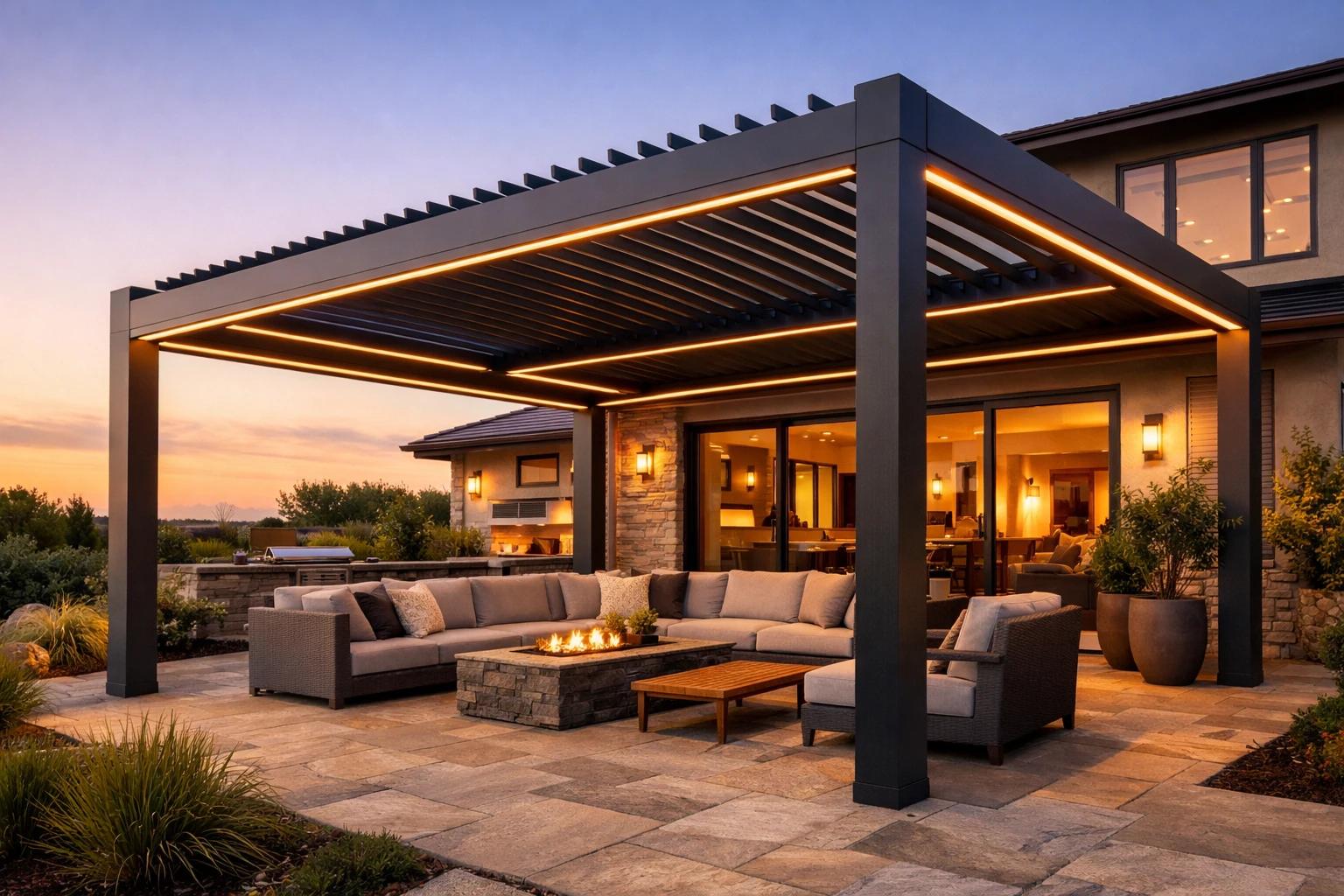
Custom pergolas outperform store-bought kits because they’re engineered for your exact measurements, your local weather, and the features you need. On paper, box kits promise the same benefits for half the cost, which makes them hard to resist.
In reality, that 12×12 kit leaves two feet of dead space on your 14-foot patio, or the generic brackets start swaying during the first big windstorm. What looked like a money-saving shortcut becomes an expensive do-over within a few seasons.
Custom pergola design changes that completely. It affects how the structure holds up, how it fits your space, and whether you end up upgrading or replacing it in a few years.
First, let’s find out why exact measurements change how your pergola performs.
Custom Pergola Design: What Makes It Different
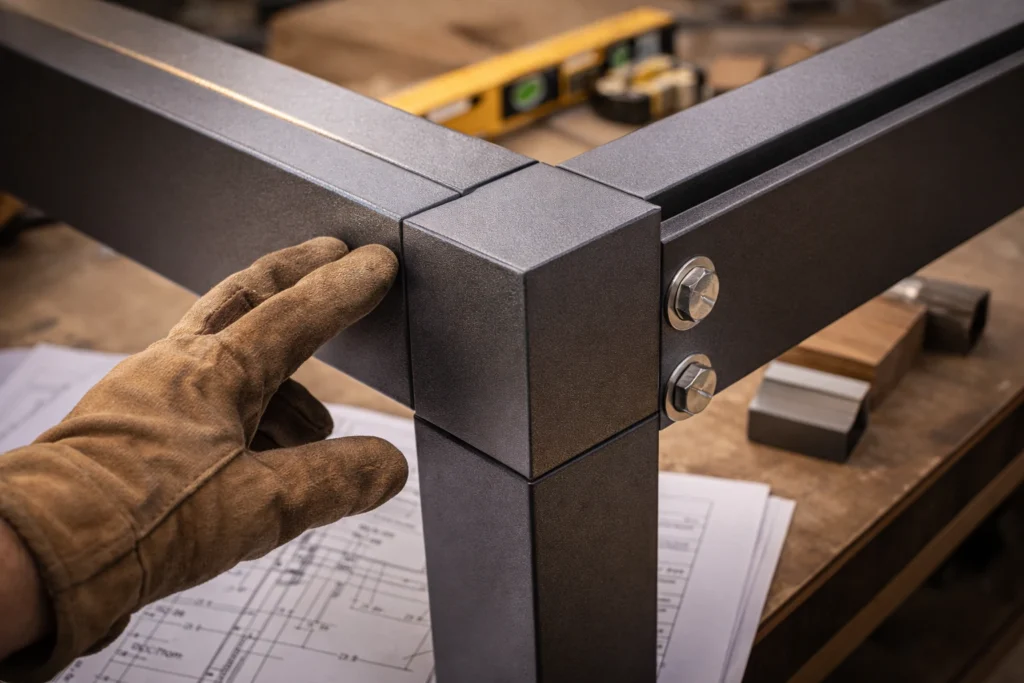
Custom pergola design means the structure gets built to fit your exact outdoor space instead of forcing you to adapt around fixed store dimensions.
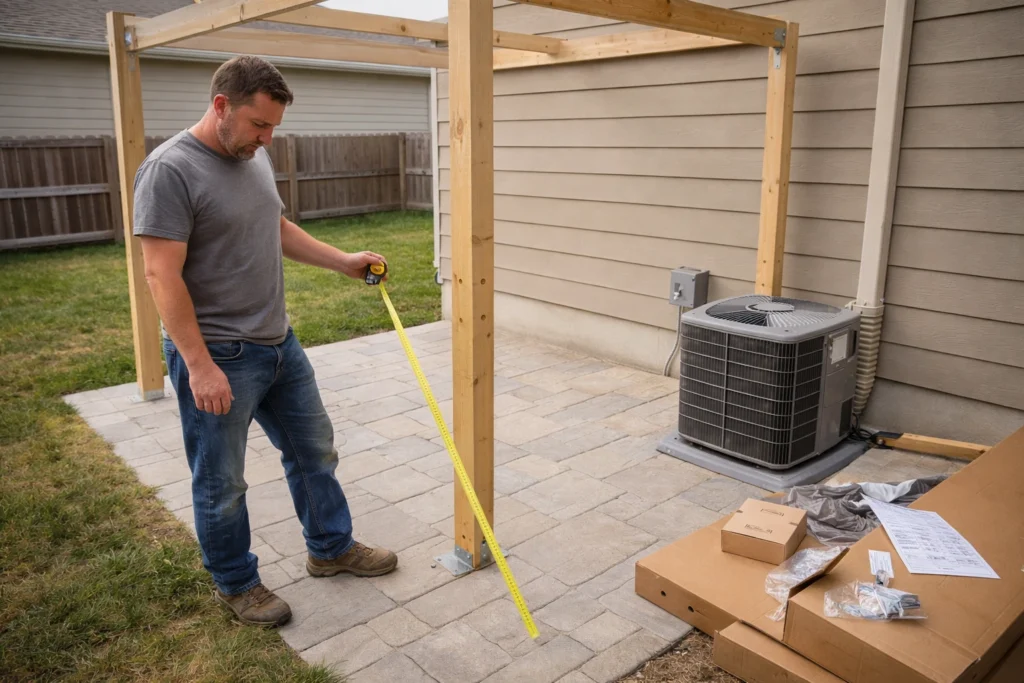
Do you have a 13-foot patio? No problem, your pergola can be 13 feet wide. Similarly, you can even ask designers to work around obstacles like AC units, downspouts, or garden beds, so nothing gets in the way.
But the fit is just the beginning. It’s the materials where custom control really shines.
Material Choices You Control
Box kits lock you into whatever material the manufacturer picked for mass production. Whereas, with custom work, you get to choose what works for your location:
- Aluminum vs. Wood: Dealing with humid summers? Aluminum won’t rust or warp when moisture hits. Wood, on the other hand, swells and eventually rots in those conditions. But if you’re in a drier climate, cedar holds up beautifully and develops a rich patina over time (and looks incredible doing it).
- Finish Quality: What you choose here decides how well your pergola holds up to the weather. Powder coating, for example, handles Midwest winters far better than the basic paint most kits use.
- Climate Matching: You don’t choose materials based on what works “everywhere,” but what performs in your backyard. That way, your pergola handles local conditions without constant repairs.
This level of control becomes even more important when you start adding features that box kits can’t handle.
Features Box Kits Can’t Offer
Motorized systems and integrated lighting need electrical planning before the first beam goes up. That’s why retrofit attempts on box kits usually fail.
When you go custom, these features get engineered into the structure from the start:
- Motorized louvers: These need electrical wiring and reinforced beams that standard kits just don’t have built in. Without the right support structure, motors stress the frame and fail within a year or two.
- LED lighting: Hidden channels get built into the structure during fabrication, not added later as an afterthought. That means no exposed wiring or clunky fixtures ruining the clean lines.
- Smart controls: Rain sensors and automated systems work when they’re planned into the design from day one. Box kits can’t accommodate these upgrades without major reconstruction.
Box kits can handle basic shade, but custom builds handle automation, lighting, and smart systems without the structure falling apart.
Where Pre-Made Pergola Kits Come Up Short
Pre-made kits fall short in three ways: sizing, materials, and yard flexibility. You’ll notice the size issue first.
You can walk into any big box store, and find kits in 10×10 or 12×12 sizes. But what if your deck is 11×13? Well, tough luck. You can either buy the 10×10 and leave a gap, or grab the 12×12 and have it hang over the edge.
Then there’s the material problem. Those kits use whatever wood or aluminum the manufacturer picked for mass production, not what handles humidity or snow loads in your zip code. In areas with coastal moisture or Midwest winters, that generic cedar or basic aluminum coating won’t hold up the way climate-matched materials would.
And forget working around obstacles. Standard kits don’t account for AC units, downspouts, or utility boxes already taking up space in your yard. Ultimately, you’ll end up moving things around or settling for awkward placement because the kit won’t flex.
Structural Strength: Custom vs. Store-Bought
The advantage of custom engineering becomes clear during harsh conditions like high winds or heavy snow.
Box kit brackets aren’t always designed with sustained wind loads in mind. That’s where custom builds differ. They typically use thicker steel and hardware selected for local wind conditions. That difference often shows up during the first major storm, when lower-grade pergolas start swaying.
Frost heaving is another factor. This is why custom installers typically set posts below the local frost line to prevent shifting as the ground freezes and thaws. In comparison, kit instructions may recommend shallower depths that work in warmer climates but can cause problems after a tough winter. Nobody wants to watch their pergola tilt after one freeze-thaw cycle.
Rafter spacing follows the same principle. When beams are sized and spaced for actual snow loads in your area rather than generic assumptions, the structure handles winter weight without sagging.
We’ve seen plenty of kit pergolas that looked fine in July but needed repairs by March. Whereas custom builds use engineering that matches your location from the start, which is why they’re still standing years later.
The Price Gap: What You Actually Get for Your Money
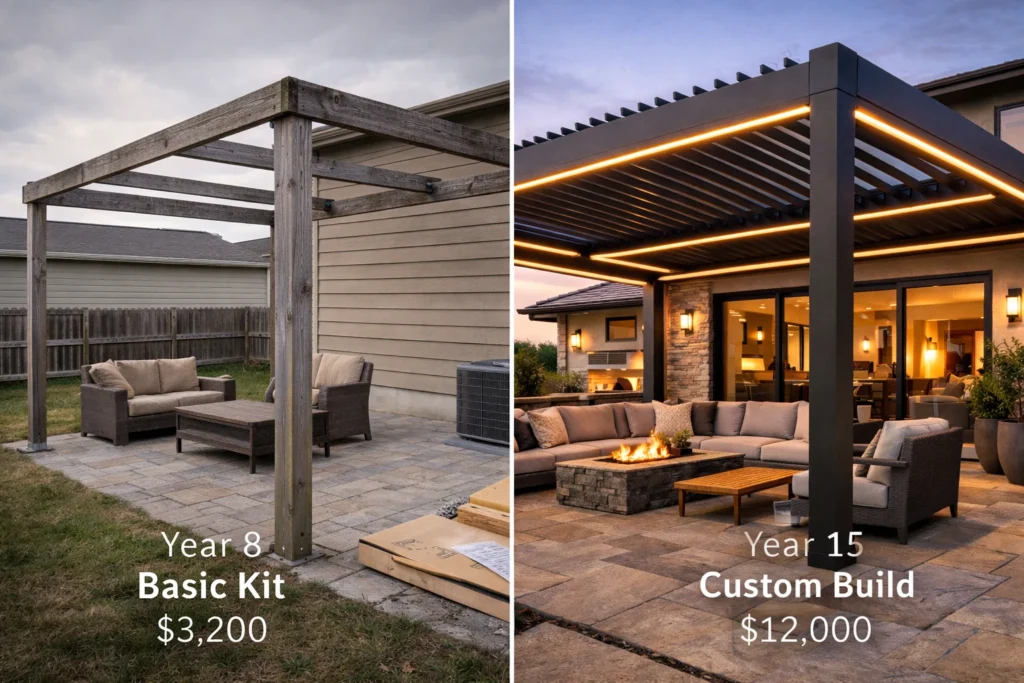
Custom pergolas typically cost $8,000 to $15,000, compared with about $2,000 to $4,000 for basic kits. That upfront gap pays for stronger materials, professional installation, and a structure built to last decades rather than just a handful of years.
For instance, quality aluminum pergolas last 25 to 50 years with minimal maintenance, while basic wooden kits deteriorate within 10 to 15 years.
The lower sticker price can turn into a repeating expense rather than a large one-time investment. Professional installation also often comes with warranties, so you’re not dealing with loose hardware or alignment issues every season.
Resale value narrows the cost gap further. Custom designs deliver an ROI of roughly 50 to 75% when selling your home, while basic kits add minimal appeal to buyers. We’ve seen homeowners who choose custom spend more upfront but get much of that money back when they sell.
Getting Your Backyard Oasis Right the First Time
Custom pergolas outperform box kits because they’re designed for your space, climate, and long-term use. The upfront price is higher, but the payoff is a structure that handles harsh weather, needs fewer repairs, and adds lasting value to your outdoor space.
Before choosing, think about how you’ll use the pergola year-round, local weather demands, and how long you expect it to last. Comparing materials, engineering specs, and installation quality upfront helps avoid costly fixes later.
If you want a pergola tailored to your backyard, reach out to discuss your project and get a quote based on your space and design goals.