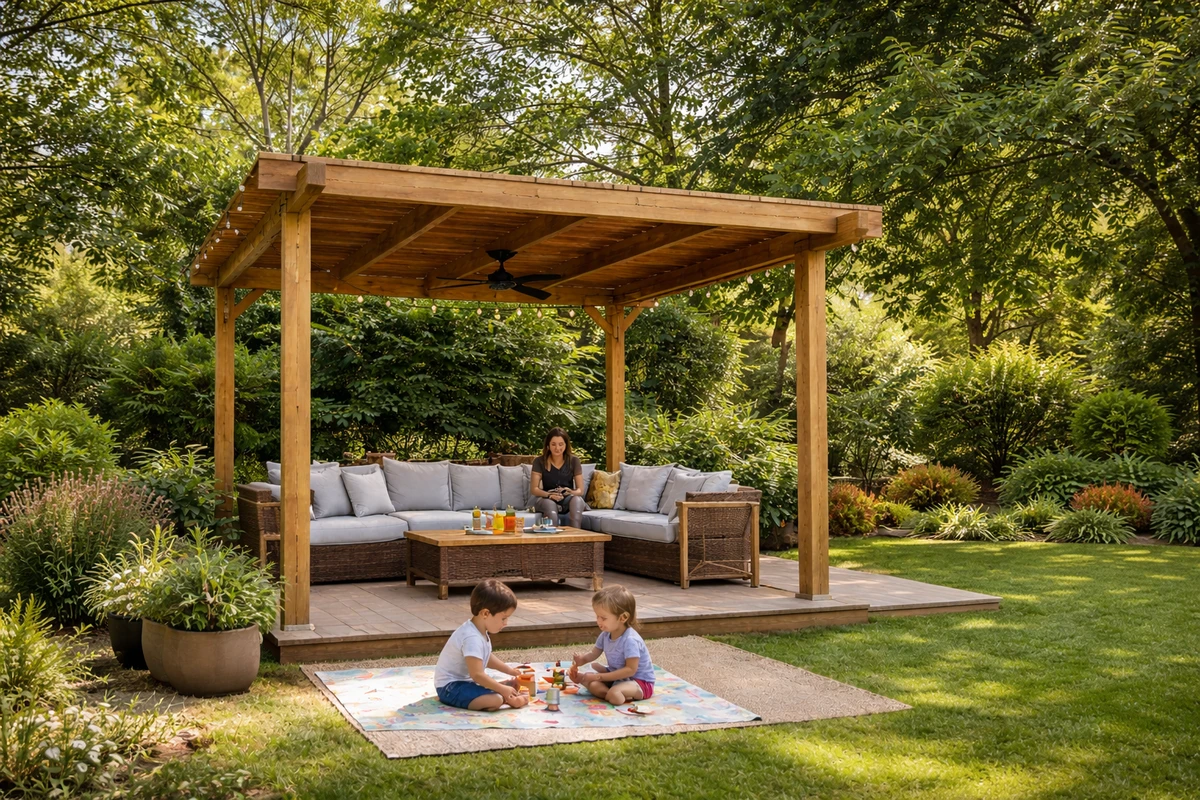
Retractable pergolas give you control over shade and rain, while fixed pergolas offer permanent coverage with less upkeep. Frankly, the weather here changes fast, and your family will skip the backyard entirely if they can’t rely on coverage. Which is why choosing the right option ensures your outdoor space stays comfortable and usable throughout the year.
Plus, research shows patios can boost home value by 8-10%, with an ROI over 80% when well-designed. So the pergola you install today directly affects what buyers see in your property tomorrow.
In this article, we’ll compare fixed versus retractable pergolas to understand the options better. We’ll also cover everything about weather protection, family zone setups, and actual costs.
Let’s find the pergola that works for your backyard.
Fixed vs Retractable Pergola: Understanding Your Options
The main difference between a fixed and retractable pergola comes down to flexibility based on weather and your needs. Most families skip this comparison completely and end up regretting their choice six months later. The reason is that they don’t think about how they’ll use the outdoor space.
Here’s what each pergola type brings to your backyard.
Fixed Pergola With Low-Maintenance Materials
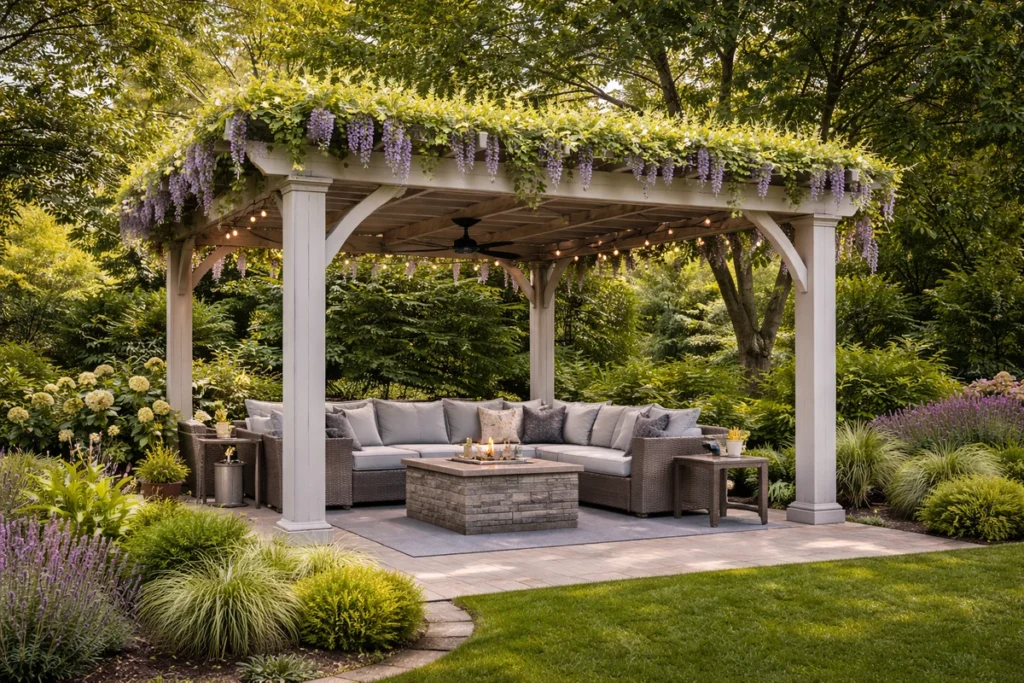
Permanent beams or slatted roofs provide consistent shade without any moving parts to worry about. The frame materials include wood, aluminum, and vinyl, and they remain securely in place once installed. You’ll see them integrate right into existing patios or deck areas.
Plus, traditional pergola designs add architectural character that catches your eye immediately. That’s because plants like wisteria or jasmine grow up the climbing structure naturally over time, creating extra coverage and aesthetics without you doing much work.
How Retractable Pergolas Give You Control
Motorized or manual canopy systems let you adjust shade levels throughout the day based on sun position. So you’re not stuck with one setting.
On top of that, weather-resistant fabric roofs close completely during rain or open fully when you want to enjoy natural light and fresh air. Modern designs also include rain sensors that automatically protect your outdoor space without you lifting a finger. That’s the control level you’re paying for with a retractable pergola.
Weather Protection That’s Effective for Family Life
Families need outdoor spaces that handle unpredictable Midwest weather without constant adjustments. That’s why choosing the right pergola allows your kids to have fun outside even when the weather gets unpredictable.
Take a look at how fixed and retractable pergolas handle rain, sun, and those crazy Chicago storms.
Rain and Sun Coverage Throughout the Seasons
Most aluminum frames on both types resist rust, but the coverage you get varies wildly. To give you an idea, fixed pergolas offer partial shade through slatted roofs but won’t keep you completely dry during downpours. It’s because the gaps between slats let rain through when storms hit hard.
On the other hand, retractable systems close tightly to block rain entirely. Plus, the canopies block UV rays completely, while fixed roofs need fabric inserts for full sun protection.
Dealing with Chicago Winters and Summer Storms
Winter changes everything for a pergola decision. For example, fixed structures handle heavy snow loads better since they have no mechanical parts that freeze or jam.
In reality, retractable canopies should be opened during winter months to prevent ice buildup on the fabric material (ask anyone who lives near the lake). Also, the aluminum tracks can freeze shut if you leave the canopy closed.
Summer storms in the suburbs like Naperville can also hit fast, so automatic rain sensors give instant protection for gatherings. That’s why motorized retractable pergolas cost more upfront but save your outdoor furniture when the weather changes.

Keeping Outdoor Furniture and Toys Protected
After three decades working with Chicago-area families, we’ve seen what protects patios long-term. In general, retractable roofs close completely to shield patio furniture, grills, and kids’ toys from unexpected rain damage.
Contrastingly, fixed pergolas need additional tarps or storage solutions since partial coverage leaves items exposed to the elements. You’ll also end up spending more on replacing weathered cushions and rusted equipment every few years.
Besides that, covered spaces mean less time hauling cushions inside and more time enjoying your family-friendly backyard.
Creating Zones in Your Family-Friendly Backyard
Ever notice how kids gravitate to certain spots in the yard while adults prefer others? A well-placed pergola helps separate these zones naturally. And good planning makes sure everyone in the whole family has their own space.
Here’s how pergolas can create these zones.
Play Areas That Parents Can Monitor
Supervision gets easier with the right setup. For instance, shaded pergola zones near kitchen windows let you cook dinner while watching kids on swing sets (no running back and forth between the stove and the yard anymore).
Meanwhile, open retractable roofs during cooler mornings give children full sun exposure for active outdoor play sessions. That’s when kids burn off energy before lunch.
Beyond that, fixed structures with side curtains create defined boundaries so younger kids stay within visible supervised areas. Those curtains can even block the wind on breezy days.
Dining and Entertaining Under Cover
We’ve built pergolas for families in Oak Park, Hinsdale, and Evanston since 1994, and dining spaces always get the most use. In practice, retractable canopies adjust for evening gatherings so guests stay comfortable regardless of temperature drops or sudden showers.
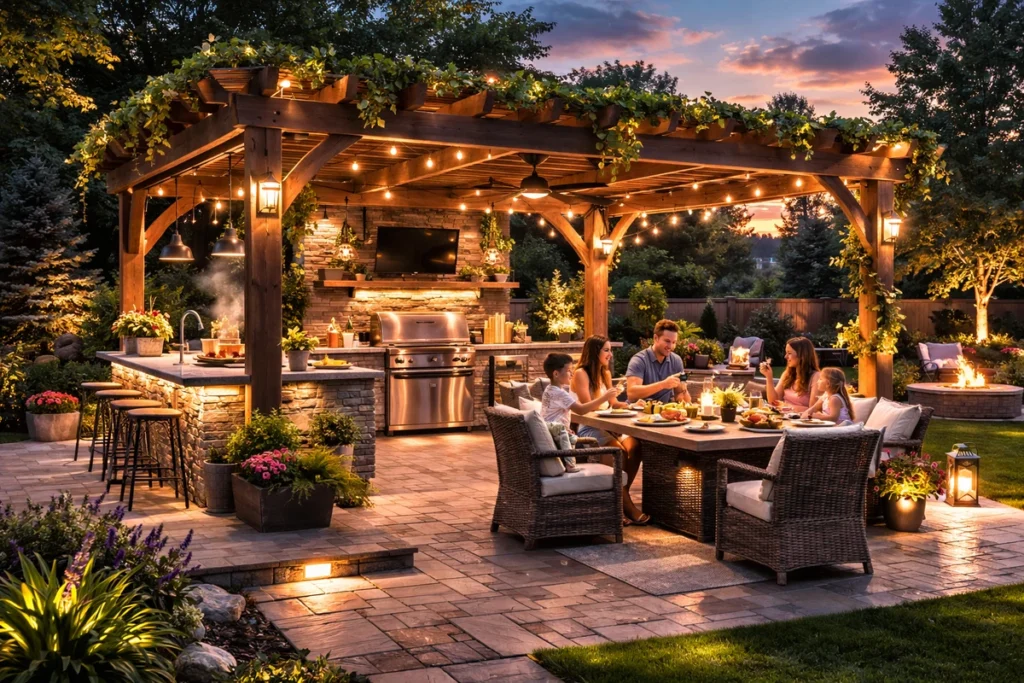
On the contrary, fixed pergolas work great for permanent outdoor kitchens since the structure anchors grills and countertops securely. These types of year-round dining areas that don’t require setup or takedown always become family favorites.
What Families Really Spend on Pergolas
Fixed pergolas typically run $3,000 to $8,000 installed, while retractable systems start around $8,000 and can hit $15,000 with motorized features. The price gap can seem unreasonable at first, but it’s not just upfront costs.
This is what you’ll have to spend on installation and upkeep:
- Installation Time for Fixed Structures: The job takes two to three days, depending on size and whether it’s being attached to your house. Usually, labor runs $1,500 to $3,000 for most installations. The reason is that attaching to existing structures needs extra reinforcement and flashing work.
- Electrical Work Adds a Day: Retractable systems need wiring for motorized options, which adds $500 to $1,200 to your total. In practice, most families choose motorized canopies since nobody wants to hand-crank one during a sudden storm.
- Permit Processing: Most Chicago-area permits cost $50 to $300 for attached structures, but freestanding pergolas often need no approval. If needed, this processing takes about two weeks once you submit the paperwork.
- Drainage Installation: Professional drainage solutions add $300 to $800 but prevent water damage to posts and patios. Besides that, aluminum pergolas cost 20-30% more upfront than vinyl or wood but last twice as long without rotting or cracking.
- Monthly Track Cleaning: Retractable models generally need tracks cleaned to remove debris, and this takes about 15 minutes each time. To give you an idea, professional cleaning runs $150 annually if you’d rather skip it. Meanwhile, fixed versions just need occasional wood sealing at $200 every two years.
Ultimately, the investment pays off long-term when you factor in how much more your family uses the backyard. In fact, quality materials and proper installation mean your pergola lasts 5 to even 30 years without major repairs.
Pick the Right Outdoor Space for Your Crew
Fixed pergolas provide durability and low maintenance, while retractable versions offer weather flexibility and control. At the end of the day, both types create valuable family-friendly backyard zones but serve different priorities based on lifestyle needs.
Basically, families who want year-round structure without adjustments should choose fixed options. Meanwhile, households needing adaptable coverage prefer retractable systems. The decision pays off long-term when you pick the pergola that matches how often you’ll use the outdoor area.
If you need more information, visit Papercrown Gallery to explore options for your backyard. Our team designs custom pergolas for Chicago-area families with over 30 years of experience creating outdoor spaces that work. Let’s build an outdoor area that your family will use every single day.