Outdoor structures support more family time by giving everyone a shaded, comfortable spot to gather right in the backyard. Kids keep playing, and the adults keep talking, because nobody’s squinting into the sun.
Yet plenty of yards sit unused because the space is just too uncomfortable to enjoy once the sun swings around. At Paper Crown Gallery, we help families plan outdoor spaces that get used daily.
This guide covers which structures earn their keep, how to zone a yard so kids and adults share it, and how common patio projects compare. You’ll also see where one small first build beats a full redesign.
Outdoor Structures Give Your Family a Reason to Stay Outside
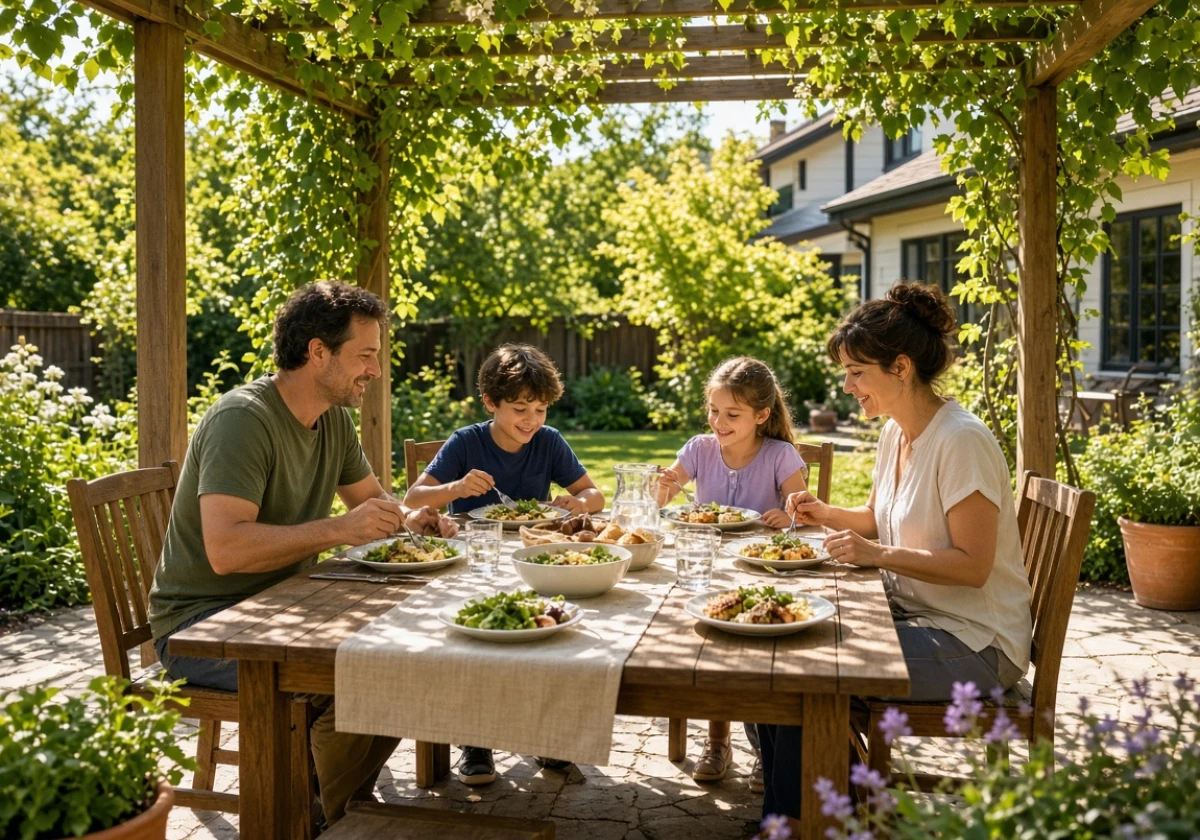
Comfort is what keeps an outdoor area in use, and the missing piece is usually shade. Public parks show how much people value places to spend time outside.
An estimated 227 million adults or a household member visited their local park or recreation facility in 2025, according to the NRPA Engagement with Parks Report. Parks work because they are built for family gatherings, with shade, seating, and something for children to climb all in one place.
Three structures bring that same playground pull into your own backyard, each in a different way.
Pergolas and Pavilions That Shade Your Seating Area
Set a pergola over your seating area and it cuts the glare, which keeps the table usable all afternoon. The CDC’s sun safety guidance puts it plainly: shade under an umbrella, tree or shelter reduces your risk of skin cancer.
Pavilions go further with a solid roof, so light rain won’t end lunch. Cedar posts and shingles tie the build back into your landscape design (it should read as part of the house already).
In practice, anyone who has sized one of these for a real yard starts with the furniture, so measure what you already own before you order either one. Add room to pull a chair out on every side, then size the structure to that footprint.
Why Kids Stay Busy Longer in a Playhouse or Treehouse
A playhouse gives children a setting for their imaginary adventures. An empty lawn offers nothing to be, while a treehouse becomes a lookout, a shop, or a pirate ship by lunchtime.
That kind of imaginative play also runs without you. Parents get to finish a conversation for once, which is usually the real win (your coffee might even stay hot for a change).
Beyond the fun of it, keep the door wide and the windows low so younger children can join in. If you’re anything like most parents, you’ll test the deck rail on a raised platform twice before anyone climbs up.
Swing Sets and Climbing Structures That Grow With Children
Swing sets earn their cost over years when the frame accepts new attachments. Start with swings and slides for toddlers, then add rings, rope ladders, rope bridges, or monkey bars as they get taller.
Jungle gyms work the same way, and all that pulling and hanging builds real strength and hand-eye coordination. If you’ve bolted play sets together on a sloped lawn, you know the posts need leveling first.
Make sure the soft surface reaches past the full arc of the swing. Rubber mulch or artificial grass under that fall zone decides whether a slip ends in tears or a shrug.
What Backyard Play Area Ideas Work for Kids of Every Age?
Swings, sandboxes, a low rock wall and simple water play all scale from toddler years into double digits. Four options stretch across the widest age range, and each earns its spot differently.
- A Swing Set with Add-Ons: Hang a bucket seat for a baby beside a standard seat for an older child. One frame then takes a trapeze bar or climbing rope once they outgrow both. Choose a frame rated for at least 150 kg total load so it handles two children and future attachments without needing replacement.
- Sandbox with a Lid: Covered sand stays dry and keeps cats out between visits. Toddlers scoop and pour while older children build, so one box serves two stages at once. A 1.5 by 1.5 metre frame fits most yards and holds enough sand for two children to dig without crowding each other.
- A Low Rock Wall: Grips a few feet off the ground let a four-year-old practise while a nine-year-old races. Move the grips higher as their reach improves. Lay rubber mulch or soft turf underneath, since climbing walls produce the same kind of falls as swing sets.
- Simple Water Play: Water tables, a hose and a few cups cool everyone down through a long afternoon for far less than a trip to the splash pad. Tip the leftover water onto the garden bed instead of the lawn. Keep a stack of old towels by the back door so nobody tracks wet feet through the house.
Link two of these with a short obstacle course of logs and stepping stones, and put a mud kitchen at the end. That turns plain play areas into something that changes every week.
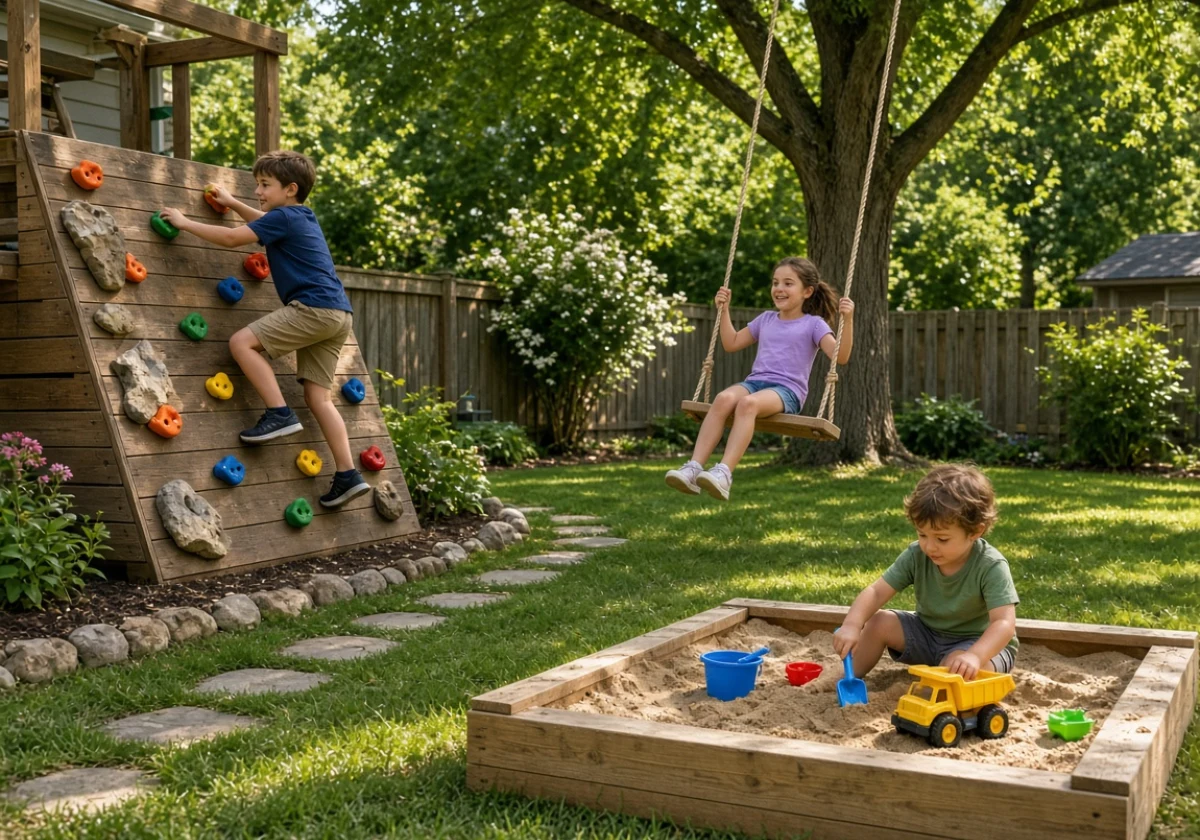
Family Outdoor Spaces: How to Create Zones Everyone Can Enjoy
Zoning is the simplest piece of outdoor design there is, since it only means giving each activity its own corner with clear sight lines running between them.
Start with the seating area closest to the back door, since that’s where you carry food and drinks. Put the play zone at the far end in full view from your chair, and leave the middle open for the outdoor activities that need room to run.
From there, let the surfaces mark the edges instead of fences. Pavers under the table, grass across the middle, and rubber mulch under the climbing frames show everyone where each zone starts (kids read the ground, not the plan you drew).
Vegetable beds along one side also give older kids a job and hold them in the yard longer. They pick strawberries and cherry tomatoes and eat them standing up, which is exactly the point.
Lighting finishes a kid-friendly layout, because most outdoor play activities stop when the light does. From experience, the yards families use daily are the ones where the kitchen window looks straight at the backyard play space.
Comparing Patio Ideas for Year-Round Outdoor Living
Patio upgrades sound pricey, yet some of these projects cost less than a weekend away. Your pick depends on what you’re trying to beat in your outdoor living space, whether that’s glare, rain, or a cold evening.
The table below lines up four upgrades against what each one gives you in return:
| Patio Upgrade | What It Adds | Works Best In | Relative Effort |
|---|---|---|---|
| Shade sail | Fast cover over a seating area | Summer glare | Low |
| Pergola | Filtered shade with room for vines | Spring through fall | Medium |
| Pavilion | Solid roof and a dry floor | Rain and year-round use | Higher |
| Fire pit corner | Warmth that pulls everyone back out | Fall and winter nights | Low to medium |
Of every home improvement on this list, shade is the one that changes a daily habit fastest, because it decides whether the table gets used at noon. Basically, a shade sail buys you this weekend, while a pavilion buys you every weekend after it.
Beyond shade, whichever season you lose most should decide the first pick, and the next piece can wait until that one proves itself.
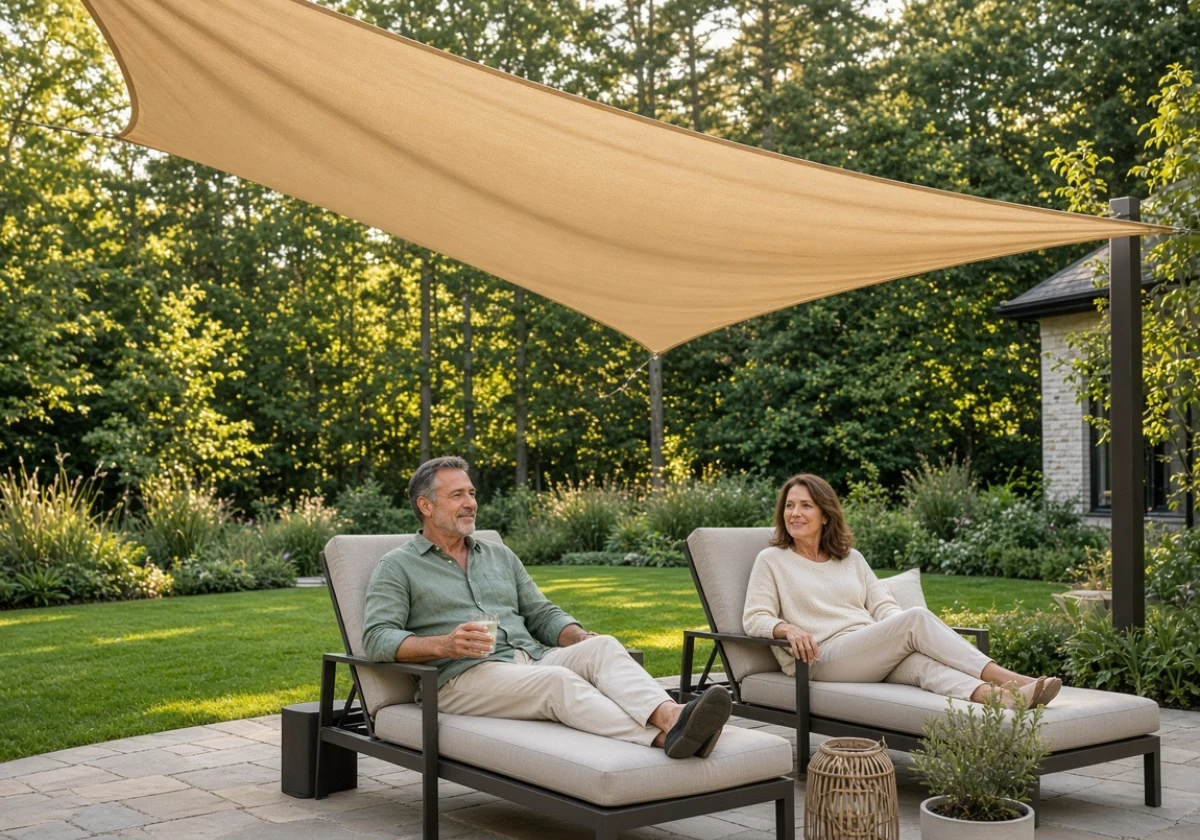
Start Small and Build More Family Time Outside
One structure changes how a whole backyard gets used. Shade and a place to sit remove the main reason everyone drifts back inside. So pick the corner your family already heads for, and put the first project there. A pergola, a sandbox, or a swing frame changes how the yard gets used from the first weekend.
Paper Crown Gallery shares practical ideas for families planning outdoor spaces at home. Contact the team to talk through your yard and settle on a layout that fits how your family really lives.